
Trump says the Iran ceasefire is ‘OVER.’ What now?
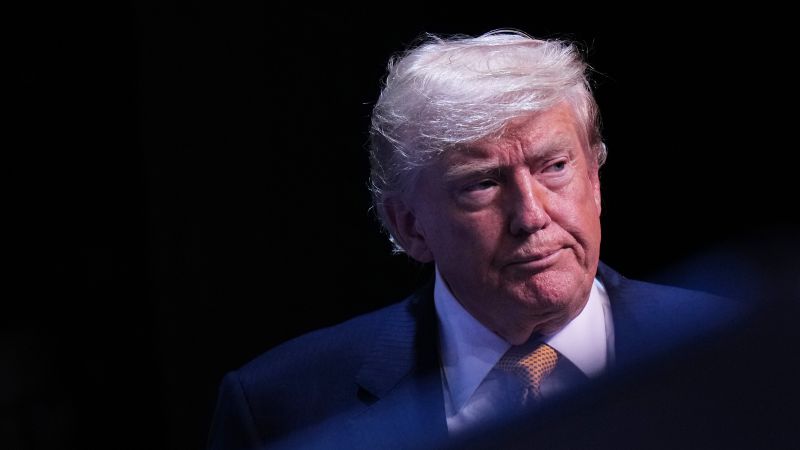
Trump Declares Iran Ceasefire Terminated: Navigating the Crossroads
Trump says the Iran ceasefire is OVER – The conflict in Iran appears to have shifted into another critical chapter. Following over three months of struggling to maintain a fragile and complicated dual ceasefire arrangement, President Donald Trump signaled on Wednesday that the temporary truce might be coming to an end. He reinforced this position more decisively by Friday. Through his social media platform, the president communicated that while American negotiators would persist in discussions, Tehran had received a clear message: the Cease Fire is OVER!
This declaration raises immediate questions about the future trajectory of American involvement and the political landscape surrounding the military campaign. Several considerations emerge as we analyze what this development could mean for Washington.
A Warning Rather Than a Declaration
Similar to many of Trump’s public statements, the permanence of this announcement remains uncertain. By Friday morning, aerial bombardments had noticeably decreased, indicating that comprehensive warfare has not necessarily resumed. The president’s assertion that diplomatic channels would remain open suggests he genuinely hopes to avoid renewed hostilities and continues pursuing his vision of a comprehensive peace agreement.
Additionally, Trump revived his earlier threats to strike critical Iranian civilian facilities during this week—actions that could potentially constitute violations of international law. This makes it plausible that declaring the ceasefire finished serves primarily as a strategic warning rather than a definitive conclusion. It represents another effort to pressure Iran into compliance and secure terms favorable to American interests.
Historically, such approaches have yielded mixed results. The question naturally arises: why would this attempt succeed where previous ones faltered?
Strategic Dilemmas for Washington
Accepting Trump’s statement at face value reveals a pivotal moment requiring difficult decisions. One option involves returning to comprehensive military operations with the expectation of extracting meaningful concessions from Tehran. This appears to be the alternative presented by the president and his administration based on their previous statements.
However, Trump contradicted this possibility on Wednesday when he remarked, “I don’t think it’s going to start again,” referring to large-scale combat operations. He further clarified, “We’re not looking for long term.” These comments suggest impatience with the ongoing situation.
The president has also begun building arguments that the military campaign has already achieved its primary objective of denuclearizing Iran, even without securing physical nuclear materials or establishing a comprehensive long-term agreement. This narrative resembles someone eager to conclude their involvement.
The Strait of Hormuz Question
A second major consideration involves whether Washington will reimpose its blockade of the Strait of Hormuz. The recent deterioration of the ceasefire stemmed largely from Iranian attacks on shipping vessels in that region. Administration officials have maintained that the blockade provided substantial leverage by exerting economic pressure on Iran.
If Tehran fails to honor its commitments under the memorandum of understanding to completely reopen the strait, logical reasoning suggests the United States should restore the blockade as a countermeasure. Yet, no such action has materialized thus far.
This brings us to the central challenge: what additional measures will the US implement regarding the strait? Evidence indicates that Iran’s unwillingness to relinquish control of this vital waterway represents a primary factor in the ceasefire’s instability. The conflict has demonstrated Iran’s capacity to disrupt global commerce by threatening maritime traffic through the strait—a route that remained operational before Trump initiated hostilities.
This leverage presents ongoing complications not only for the current conflict but also for American and Gulf ally interests throughout the Middle East for years to come. Negotiations may prove insufficient to address this issue, yet resolution remains essential.
Legal Implications at Home
Beyond Middle Eastern strategy, the ceasefire’s potential termination carries significant domestic legal consequences. A genuine conclusion to the truce would likely necessitate determining whether the administration must obtain congressional approval for continued military action.
Under the War Powers Act, Congress must either formally declare war or authorize military force within sixty days of hostilities commencing—or ninety days if the president requests an extension. The administration has historically avoided this obligation by asserting that the conflict was “terminated” when the initial ceasefire commenced on April 7, despite military forces remaining deployed in the region and occasionally conducting retaliatory operations.
With the ceasefire apparently concluded and the ninety-day deadline having passed in late May, the administration faces renewed pressure to seek congressional authorization. Reasonable interpretation suggests this is now required. Unless officials argue that the timeline reverts to April 7 or that the United States has entered an entirely new conflict phase.
Defense Secretary Pete Hegseth previously testified before Congress that the statutory clock effectively paused during the ceasefire period. Regardless of which interpretation prevails, Trump’s declaration creates immediate legal questions that will likely dominate domestic political discourse in the coming weeks.
“The Cease Fire is OVER!” — President Donald Trump, via social media announcement
“I don’t think it’s going to start again” — President Trump on Wednesday regarding large-scale war resumption
“We’re not looking for long term” — President Trump emphasizing his administration’s preference for a swift resolution
