
Michigan Democrats are angry at their party. Abdul El-Sayed thinks he knows why
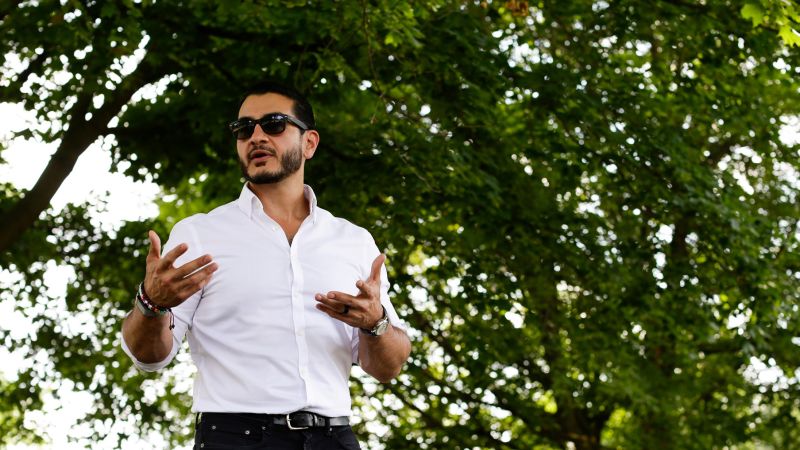
Michigan Democrats Angry at Party: El-Sayed’s Analysis
Michigan Democrats are angry at their party’s establishment, and former Michigan Attorney General Abdul El-Sayed believes he understands why. Within Democratic circles, prominent voices have expressed serious concerns that El-Sayed could jeopardize their ability to maintain control of a pivotal Senate seat during the upcoming autumn elections. The former public health professional is determined to demonstrate that these critics fundamentally misread what constituents truly desire from their government. With the August 4 contest approaching, Michigan’s Democratic Senate primary has emerged as perhaps the most consequential matchup of 2026, pitting the party’s ascending progressive movement against a more traditional establishment prioritizing electoral viability.
The Contenders Emerge
Following state Senator Mallory McMorrow’s withdrawal from the competition on Sunday, the field has narrowed to a direct confrontation between two distinct visions for Democratic leadership. El-Sayed, who enjoys backing from Vermont Senator Bernie Sanders, New York Representative Alexandria Ocasio-Cortez, and numerous other progressive luminaries, faces off against Representative Haley Stevens. Stevens brings moderate credentials and a demonstrated history of securing victories in Republican-leaning districts.
Whichever candidate emerges victorious will encounter former Republican Representative Mike Rogers during the November general election. According to El-Sayed’s perspective, framing this contest strictly as a center-versus-left ideological battle obscures a more significant reality: voters spanning the political spectrum share deep frustration with current leadership.
Voter Concerns Beyond Ideology
“This ideology thing — people think too deeply into it,” El-Sayed explained during a CNN interview shortly before addressing supporters at a Grand Rapids rally last week. “I don’t think most voters walk around thinking where they stand on the ideological spectrum.”
He continued, emphasizing that everyday citizens focus on practical matters rather than abstract political positioning. “I think most voters are just being like, ‘Damn, I can’t afford my health care.’ ‘Damn, I’m worried about losing my job.’ ‘Damn, this AI stuff feels scary. Who’s going to do something about that?'”
El-Sayed argues that many constituents feel disconnected when politicians emphasize limitations rather than possibilities. “Those voters are alienated, he said, when politicians ‘talk to you about what you can’t have and shouldn’t fight for.'” He believes his approach demonstrates that honesty, directness, specificity, and courage in advocating for ordinary Americans can generate substantial political momentum.
Progressive Momentum and High Stakes
The progressive wing has experienced considerable success recently, partly propelled by New York City Mayor Zohran Mamdani. Democratic socialists recently removed three incumbent House members from deep-blue districts in New York and Colorado during primary elections. However, Michigan presents far greater consequences than those contests, given its status as a perpetual swing state.
Democrats essentially must retain the seat of retiring Senator Gary Peters to maintain any realistic pathway toward achieving the four-seat net gain necessary for Senate majority control in November’s midterm elections. Washington Democrats harbor concerns that selecting El-Sayed—who, while not officially a democratic socialist, shares substantial policy alignment with that faction—might alienate sufficient moderate voters to endanger the contest against Rogers.
Policy Positions Under Scrutiny
El-Sayed’s platform includes support for Medicare for All, elimination of Immigration and Customs Enforcement, and cutting United States assistance to Israel. This latter position has drawn attention from the American Israel Public Affairs Committee, whose super PAC has invested millions in advertisements promoting Stevens. Additionally, El-Sayed has campaigned alongside pro-Palestinian Twitch broadcaster Hasan Piker, who characterized Hamas as a “lesser evil” compared to Israel and previously remarked that “America deserved 9/11,” though he subsequently retreated from that statement and admitted it was “inappropriate.”
Controversy also surrounds El-Sayed’s past positions on police funding. He removed tweets advocating for police defunding and promoted that stance during 2020 interviews, despite recent assertions that he never held such views. A digital advertisement produced by the Senate GOP’s campaign organization highlighted several of these positions and characterized El-Sayed as “too radical for Michigan.”
Style and Leadership Differences
“The Republicans don’t want to run against me, which is why they’re propping up his campaign,” Stevens told CNN
