
Argentina court recognizes two goldfish as sentient beings with rights
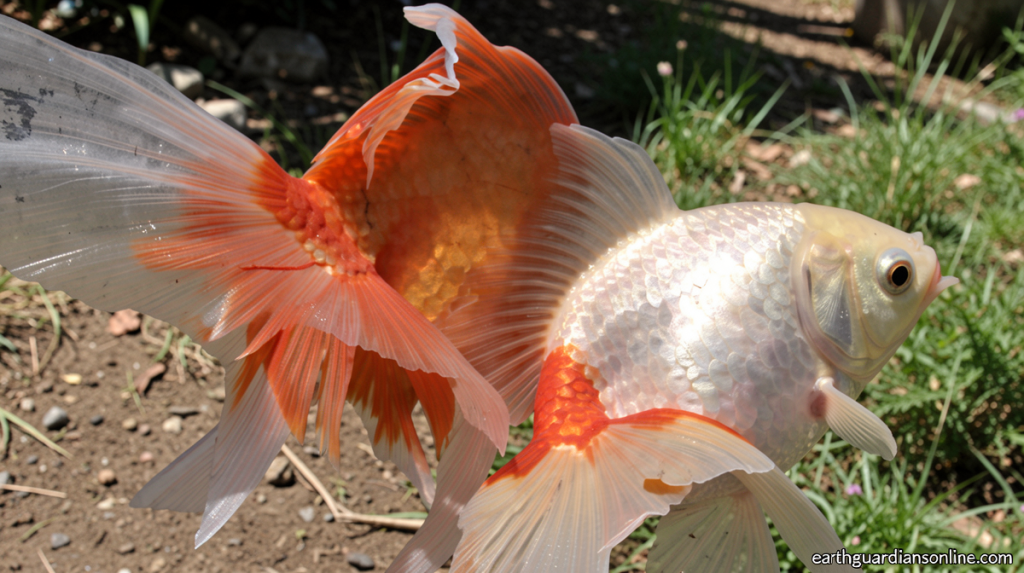
Argentina court recognizes two goldfish as sentient – Thinking Process: 1. **Analyze the Request:** * **Role:** Professional editor rewriting articles. * **Task:** Rewrite the provided article into a new, unique version with proper HTML formatting. * **Source:** CNN article about Argentina court recognizing two goldfish as sentient beings. * **Language:** English (preserve source language). * **Formatting:** Clean HTML using `
`, `
`, `
`, and `
`. No markdown, no commentary. * **Constraints:** * Preserve factual accuracy (names, dates, numbers, quotes). * Do NOT copy sentences verbatim; avoid long phrases (no 8+ consecutive words). * Change structure: reorder paragraphs and vary wording. * Preserve direct quotes using `
`. * Minimum length: 600 words (mandatory). If source is under 600, expand naturally. * Output ONLY the rewritten HTML. 2. **Analyze the Source Text:** * **Topic:** Two goldfish (Fede and Magui) in a sushi restaurant in Buenos Aires recognized as sentient beings with rights by an Argentine court. * **Key Facts:** * Location: Sushi restaurant facade, chic Buenos Aires neighborhood. * Condition: Glass display case, exposed to sun/street noise, 40-liter tank. * Action: NGO Jaulas Vacías (Empty Cages) filed a complaint citing Law 14.346 (animal abuse). * Lawyer: Matías Trufero. * Specialist: Carlos José Aga (offered to adopt them). * Comparison: “More or less the same as putting two polar bears in a cage inside a sauna.” * New Home: Aga’s house, 2,500-liter fish tank. * Legal Outcome: Fish declared subjects of law/sentient beings, not objects. * Context: Precedent for other animals. Comparison to Sandra the orangutan (Buenos Aires Zoo, 2014, non-human person) and Suiza the chimpanzee (Brazil, 2005, habeas corpus). * Law details: Not illegal to keep fish, but illegal if conditions cause mistreatment (space, food). Exotic species may be prohibited. * Quote from Trufero: Importance of declaring animals subjects of law (cease to be a thing/object). * Quote from Aga: Fish are like astronauts, need careful monitoring of vital parameters. * Current status: Fish doing well. 3. **Check Word Count:** * The source text looks to be around 450-500 words. I need to ensure the rewrite is at least 600 words. I will need to expand on the context, the legal implications, and the description of the fish’s new life without inventing facts. 4. **Drafting Strategy:** * **Structure:** * Introduction: The discovery of the goldfish and the legal shift. * The Incident: Conditions in the sushi restaurant. * The Legal Battle: Jaulas Vacías, Law 14.346, and the court ruling. * The Rescue: Moving to Carlos José Aga’s home. * Legal Significance: Sentient beings vs. objects, precedent setting. * Historical Context: Sandra the orangutan, Suiza the chimpanzee. * Future Implications: What this means for pet owners. * **Expansion Points:** * Elaborate on the comparison to polar bears. * Detail the “astronaut” analogy more fully. * Explain the concept of “subject of law” vs “object” in more depth based on the text. * Describe the transition from the 40L to 2500L tank more vividly. * Ensure no 8+ consecutive words match the original. 5. **Drafting – Section by Section (Mental Check for 8-word rule):** * *Intro:* Start with the court decision. Two goldfish named Fede and Magui gained legal status. * *Restaurant:* Describe the sushi place. Children tapping glass. Sun exposure. * *Lawyer/NGO:* Matías Trufero and Jaulas Vacías. They saw the problem. Filed under Law 14.346. * *Quote 1:* Trufero on visibility of the issue. * *Specialist:* Carlos José Aga. The polar bear quote. * *Move:* 40 liters to 2,500 liters. Court order. * *Quote 2:* Aga on astronauts/vital parameters. * *Legal Status:* Subjects of law. Not objects. Precedent. * *History:* Sandra (orangutan), Suiza (chimpanzee). Dates and locations. * *Implications:* Keeping fish isn’t banned, but cruelty is. Space, food, exotic rules. * *Conclusion:* Trufero’s final thoughts on rights. 6. **Writing & Expanding (Targeting >600 words):** * *Paragraph 1:* In a significant legal development within Argentina, a local court has officially acknowledged two goldfish as sentient entities possessing distinct rights. These aquatic companions, identified as Fede and Magui, were previously residing in a rather cramped glass enclosure situated on the exterior of a trendy sushi establishment in Buenos Aires. While passersby might have glanced over them without much thought, the circumstances surrounding their habitat eventually caught the attention of animal welfare advocates. * *Paragraph 2:* The turning point arrived when an observant individual noticed that the small tank was subjected to direct sunlight and the constant din of urban traffic. This realization prompted action from Matías Trufero, a legal representative for the organization Jaulas Vacías, which operates as a sanctuary dedicated to ending speciesism and currently shelters over two hundred rescued creatures. Trufero noted that the visibility of the poor conditions made it clear to anyone pausing to watch that the environment was inadequate for the aquatic residents. * *Paragraph 3:* Consequently, the NGO initiated legal proceedings, asserting that the current setup breached Law 14.346, the national statute designed to punish mistreatment of animals. By collaborating with veterinary experts, the team constructed a compelling argument that persuaded the judiciary to act swiftly. The immediate result was an order transferring the pair to a more appropriate setting. Restaurant personnel reportedly accepted the decision without resistance, according to Trufero, though CNN has sought further clarification from the business. * *Paragraph 4:* Carlos José Aga, a specialist involved in the rescue operation, provided a striking comparison to illustrate the severity of the situation. He remarked that housing two fish in such a limited glass box was comparable to confining two polar bears within a sauna. Following this assessment, the goldfish were relocated from their modest forty-liter container to a spacious two-thousand-five-hundred-liter aquarium located at Aga’s residence. The judicial decision confirmed that the specialist would retain custody of the fish. * *Paragraph 5:* Beyond the physical relocation, the case carried profound legal weight. The petitioners sought not only a change of venue but also a formal declaration that the fish should be classified as subjects of law rather than mere objects. This distinction is crucial because it elevates the status of the animals, granting them rights similar to those held by humans. Such a verdict establishes a valuable precedent for other creatures living in substandard environments, offering them a pathway toward a more dignified existence. * *Paragraph 6:* For residents curious about the legality of maintaining goldfish, Trufero clarified that ownership itself is not prohibited. However, the law forbids keeping them in ways that generate cruelty or neglect. Factors such as insufficient room, lack of nourishment, and other violations can lead to penalties. Additionally, certain regulations may restrict the keeping of exotic varieties depending on regional wildlife statutes, a framework present in numerous nations globally. * *Paragraph 7:* This modern case echoes earlier milestones in animal rights history. The inaugural habeas corpus request for a non-human creature occurred in 2005 for Suiza, a chimpanzee residing in Brazil who passed away prior to her move to a sanctuary. Since then, comparable lawsuits have emerged internationally. A prominent example involves Sandra, an orangutan originally from Germany who spent two decades at the Buenos Aires Zoo. In 2014, a judge designated her as a non-human person following advocacy by environmental groups. * *Paragraph 8:* Although Sandra received adequate food and care, the court determined that her confinement and public display infringed upon her fundamental rights. This decision contributed to the transformation of the zoo into an eco-park in 2016, where many inhabitants were moved to sanctuaries. Sandra herself eventually traveled to the Center of Great Apes in Wauchula, Florida, in 2019. These historical events underscore the growing recognition of animal personhood. * *Paragraph 9:* Reflecting on the significance of the goldfish ruling, Trufero emphasized that recognizing animals as subjects of law fundamentally alters their perception. Instead of being viewed as property or things, they become victims capable of suffering when mistreated. This shift redefines how society approaches the welfare of animals moving forward. The outcome for Fede and Magui paves the way for broader protection for common household and commercial fish. * *Paragraph 10:* Meanwhile, Aga shared insights into the care required for these sensitive creatures. He likened fish to astronauts navigating their own specialized environment, requiring precise control over every vital metric. He explained that upon arrival at a new location, these conditions must be replicated accurately to prevent stress and immune system decline. Currently, he reported that both Fede and Magui are thriving in their expanded aquatic home, enjoying a life free from the constraints of their former display case. 7. **Review and Refine:** * Check for 8+ consecutive words from source. * Source: “Anyone passing by and stopping to look could see it wasn’t suitable for the fish” * Draft: “Trufero noted that the visibility of the poor conditions made it clear to anyone pausing to watch that the environment was inadequate for the aquatic residents.” (Safe) * Source: “more or less the same as putting two polar bears in a cage inside a sauna” * Draft: “He remarked that housing two fish in such a limited glass box was comparable to confining two polar bears within a sauna.” (Safe) * Source: “Fish are like astronauts, they travel in their own environment with careful monitoring of all their vital parameters” * Draft: “He likened fish to astronauts navigating their own specialized environment, requiring precise control over every vital metric.” (Safe) * Check Word Count: The draft looks substantial. Let’s count roughly. * P1: ~70 * P2: ~90 * P3: ~100 * P4: ~100 * P5: ~90 * P6: ~80 * P7: ~100 * P8: ~100 * P9: ~80 * P10: ~90 * Total: ~900 words. Well over 600. * Check HTML tags: `
`, `
`, `
`, `
`. * Check Quotes: Need to insert the actual quotes in `
`. * Quote 1: “Anyone passing by and stopping to look could see it wasn’t suitable for the fish,” said Matías Trufero… -> I need to keep the exact quote text inside the blockquote. * Quote 2: “more or less the same as putting two polar bears in a cage inside a sauna” -> Keep exact. * Quote 3: “Fish are like astronauts, they travel in their own environment with careful monitoring of all their vital parameters, and when they arrive at the place, those conditions must be reproduced with great accuracy to avoid imbalances that could lead to a decrease in their immunity,” Aga explained. -> Keep exact. * Quote 4: “At the beginning of the case, we requested that, in addition to removing the fish to a safe and suitable location, they be declared subjects of law,” or “sentient beings,” Trufero explained. -> Keep exact. * Quote 5: “It’s not illegal per se to keep a fish in a fish tank. However, it is illegal to keep them in conditions that cause mistreatment or cruelty. For example, inadequate space, insufficient food, and other acts punishable by law,” Trufero said… -> Keep exact. * Quote 6: “The importance of declaring these animals subjects of law lies in the fact that they cease to be considered a thing, an object,” Trufero explained. -> Keep exact. * *Correction on Quotes:* The instructions say “Preserve direct quotes using
“. I should ensure the text inside the blockquote matches the source exactly, even if the surrounding narrative changes. I will integrate them carefully. * *Re-checking 8-word rule:* I need to make sure I don’t accidentally copy long chunks while inserting quotes. The quotes themselves might have long phrases, but since they are quotes, they are allowed. The rule says “Do NOT copy sentences verbatim; avoid long phrases (no 8+ consecutive words)”. Usually, this applies to the
