
Why did veterans of Israel’s most famous secret operation boycott its commemoration?
Veterans Boycott Entebbe Commemoration Over Netanyahu
Why did veterans of Israel s most celebrated military operation choose to boycott its golden anniversary celebration? Matan Vilnai, the deputy commander of the legendary Entebbe rescue mission, found himself unable to join the festivities marking half a century since the operation. While many prepared to honor the bravery of the past, he chose to look toward the present struggles facing the nation. He informed CNN that his own personal celebrations had ceased following the traumatic events of October 7. With thousands of soldiers currently deployed in combat zones and reservists serving extended tours, he questioned the appropriateness of a grand ceremony. He asked rhetorically whether such joy was warranted given the ongoing sacrifices being made by the military.
Remembering the Night of July 4, 1976
Fifty years prior, on the fourth day of July in 1976, Israeli forces embarked on a perilous journey. Commandos traveled nearly two thousand five hundred miles through hostile airspace to reach Uganda. They landed under the cover of darkness at the Entebbe airport. Within a single hour, the team liberated one hundred and two captives. These individuals were being held by hijackers originating from Germany and Palestine. The captors sought the freedom of numerous convicted criminals. Tragically, three hostages perished during the intense firefight, including the young leader Yonatan Netanyahu. He was only thirty years old at the time of his death. His brother, Benjamin, would later rise to political prominence in the wake of this tragedy. The mission, originally called Operation Thunderbolt, was renamed Operation Yonatan to honor the fallen commander.
Veterans Speak Out Against Current Leadership
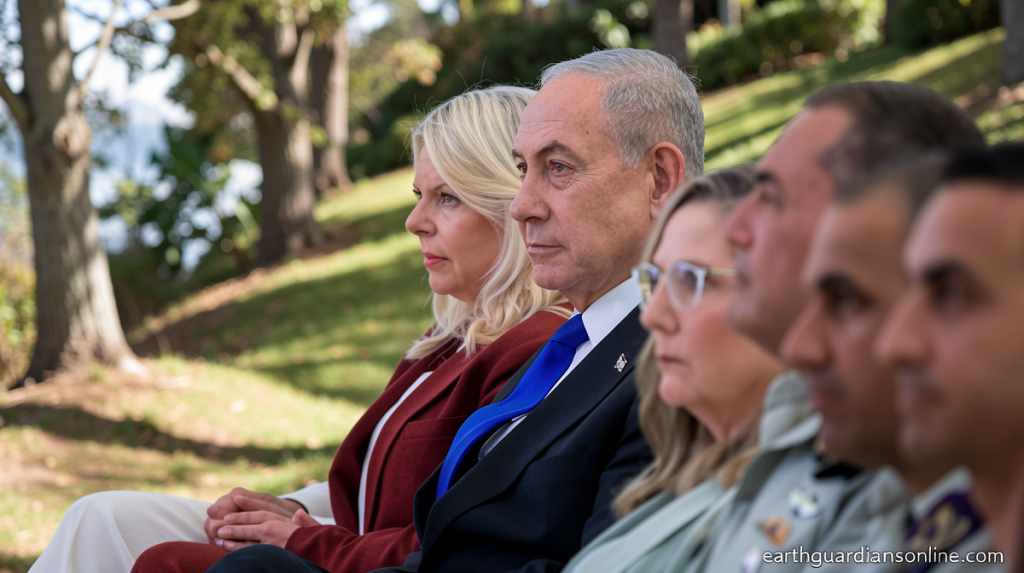
This Sunday, the commemoration took place at the presidential residence. President Isaac Herzog hosted the gathering for dignitaries and survivors. However, numerous participants from the original raid declined to attend. They viewed Prime Minister Benjamin Netanyahu as the primary reason for their absence. An open letter expressed their sentiment clearly. They refused to act merely as decorative figures while critical issues remained unresolved. The veterans accused the prime minister of abandoning the hostages kidnapped by Hamas in 2023. They also criticized his support for mass draft exemptions for ultra-Orthodox men, even as reservists fight on multiple fronts.
There isn’t a day I don’t think about Yoni, there isn’t a day that I don’t consult with Yoni, Netanyahu said at the ceremony, connecting the Entebbe raid to Israel’s campaign against Iran.
Netanyahu addressed the crowd, emphasizing his personal bond with his fallen brother. He stated that he consults Yoni every single day. He drew parallels between the 1976 success and current efforts against Iran. He claimed that force remains the best response to terror. He asserted that they are systematically dismantling the Iranian axis of evil. Despite these words, most of the men who once served beside his brother were not present to hear them. Uri Sagi, a former military intelligence chief who commanded Golani Brigade during the Entebbe mission, was among those who stayed away. He represented a generation of soldiers who felt disconnected from the current political direction.
The boycott highlighted a growing divide between Israel s military veterans and its political establishment. Many of the original raiders felt that their legacy was being overshadowed by contemporary controversies. They believed that honoring the past should not come at the expense of acknowledging present failures. The Entebbe operation had united the nation in pride and celebration. Now, fifty years later, the same event became a platform for expressing dissent. The veterans wanted their voices heard, not just their presence acknowledged at ceremonial events.
As Israel continues to face multiple security challenges, the question of how to honor its military heritage while addressing current crises remains unresolved. The boycott of the Entebbe commemoration serves as a reminder that history is not static. It evolves with each generation that interprets it through their own experiences and values. For these veterans, the celebration felt hollow without the full participation of those who made history.
