
Justices Kagan and Barrett discuss security, emergency docket and ethics in rare appearance before Congress
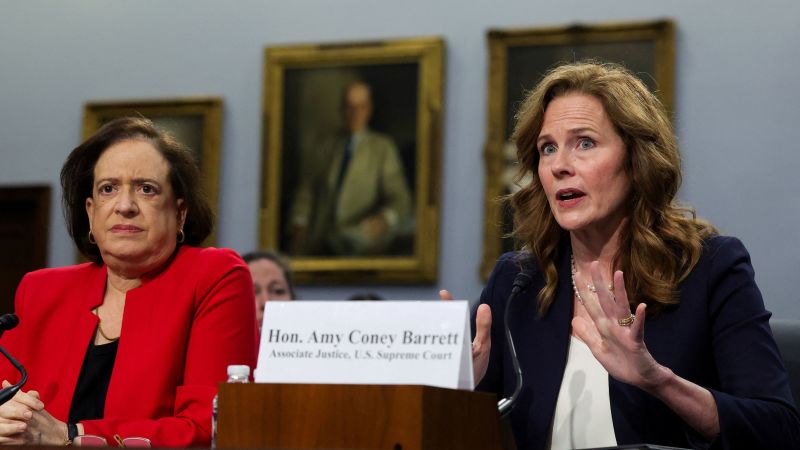
Justices Kagan and Barrett Discuss Security and Ethics Before Congress
Justices Kagan and Barrett discuss security – Justices Kagan and Barrett discuss a range of critical issues during a rare joint appearance before Congress, marking one of the most significant congressional hearings in recent Supreme Court history. The two justices provided lawmakers with detailed insights into security challenges, ethical guidelines, and procedural matters affecting the nation’s highest court. Their testimony offered citizens and legislators alike a window into the daily realities of serving on the Supreme Court bench.
Security Concerns and Personal Threats
Justice Amy Coney Barrett opened the proceedings with a compelling appeal for enhanced security funding to protect the Court and its members. During her testimony, she shared personal anecdotes that illustrated the growing threats facing Supreme Court justices. One particularly memorable incident involved a false emergency call that summoned dozens of police vehicles to her suburban Washington home, creating an unexpected spectacle for her family.
“I didn’t expect that performing this service was going to put me in the position of explaining to my children what a bulletproof vest was and why I had to wear one,” Barrett told a House appropriations subcommittee.
The swatting incident occurred when one of Barrett’s teenage sons answered the front door to leave for an evening out. Local authorities had been dispatched based on a fabricated report claiming gunfire and raised voices could be heard inside the residence. Barrett praised the Supreme Court police detail for their swift coordination with suburban Washington police, which prevented any attempt to forcibly enter her home during the emergency response.
Security funding requests currently total approximately $921 million, representing a $29 million increase over previous allocations. This comprehensive package includes nearly $15 million specifically earmarked to expand Supreme Court Police capabilities for protecting justices and their families at their residences. Additionally, $6 million has been designated for constructing a dedicated facility to screen visitors before they access the Court building, enhancing security protocols for all who enter the historic structure.
Ethics Framework and Enforcement Challenges
Beyond security matters, legislators questioned the justices about the Court’s 2023 ethics framework, which has faced ongoing scrutiny from both supporters and critics. While the code represented a response to various controversies, some lawmakers have characterized it as insufficiently robust for ensuring transparency. Representative Rosa DeLauro, a Connecticut Democrat, voiced frustration with the current system’s limitations during the hearing.
“It’s entirely self-policing,” complained Rep. Rosa DeLauro, a Connecticut Democrat. “Every other body has that,” DeLauro said of an enforcement mechanism. “It’s just the Supreme Court that doesn’t.”
The exchange between the two justices proved particularly illuminating for understanding the Court’s position on ethics reform. Justice Kagan indicated her support for incorporating some form of enforcement mechanism into the ethics code, acknowledging the practical challenges involved in implementation. However, she noted that determining how to oversee the nine justices sitting at the pinnacle of the federal judiciary presents considerable complexity.
“I will say that’s an extremely difficult question for a pretty obvious reason,” Kagan said. “I don’t think that you’d want an enforcement system that is controlled by the executive branch or by the legislature.”
Justice Barrett expressed somewhat more hesitation regarding enforcement mechanisms, though she affirmed her commitment to the existing code. She noted, “I’m less certain,” while emphasizing her dedication to ethical standards. The justices also addressed the emergency docket, judicial diversity, and the relative quiet surrounding major ethics scandals that emerged three years ago, particularly those involving Justice Clarence Thomas and undisclosed luxury travel arrangements.
Justices Kagan and Barrett discuss these matters with the understanding that public confidence in the Court depends on both transparency and independence. Their testimony highlighted the delicate balance between maintaining judicial autonomy while responding to legitimate concerns about accountability. As Congress considers potential reforms, the justices’ perspectives will likely influence the direction of any future legislation addressing Supreme Court ethics and security.
