
Trump administration follows through on pledge to rework panels about slavery at George Washington’s Philadelphia home
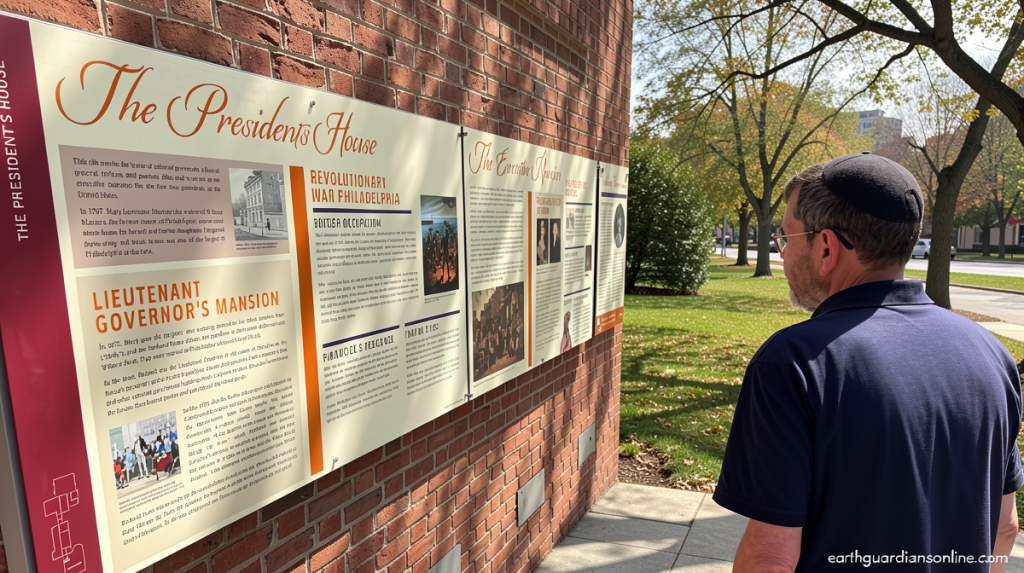
Slavery Panels at Washington’s Philadelphia Residence Undergo Federal Reinstallation
Controversial Changes Spark Legal and Community Debate
Trump administration follows through on pledge – The Trump administration has moved forward with its commitment to revise and subsequently reinstall informational panels concerning slavery at the historic location of President George Washington’s Philadelphia residence. Local critics have expressed concern that the newly installed displays, which replace those that had been on view since 2010, present a sanitized version of slavery’s history. These updated panels were placed on Wednesday morning within the very space where the Declaration of Independence received its adoption on July 4, 1776.
Philadelphia Mayor Cherelle L. Parker voiced her disappointment regarding the manner in which the previous panels were taken down. She stated that the federal government removed the displays overnight while darkness covered the area. According to the mayor, while a federal court decision permitted this action, the nighttime removal demonstrated that officials recognized the move as shameful and a violation of community trust. The original panels, first installed in 2010, narrated the experience of nine enslaved individuals who resided within the home alongside George and Martha Washington during the 1790s, a period when Philadelphia briefly served as the nation’s capital.
Overnight, under the cover of darkness, the federal government removed panels at the President’s House that told a thorough history of Philadelphia. It was allowed to do this by the decision of the federal court, but that it did so at night shows it understands this action is shameful, that it violates community trust.
These earlier panels underwent modifications following President Donald Trump’s issuance of an executive order in 2025. That directive instructed federally owned or controlled historic sites to avoid displaying information that might “disparage Americans past or living” and instead emphasize the “greatness of the achievements and progress of the American people.” Despite initial installation of the revised panels earlier in the year, a lower court compelled the federal government to remove them in February. However, a three-judge panel of the US 3rd Circuit of Appeals overturned this ruling on July 3, allowing the work to proceed.
A government website featuring photographs of the new panels indicated that they would retain information regarding the enslaved people who dwelled in the residence. Additional content would cover the abolitionist movement, the Constitution’s treatment of slavery, the conclusion of slavery within Pennsylvania, and how both Washington and his successor John Adams perceived and handled slavery. The display would also incorporate details about the 20th century Civil Rights movement.
Nevertheless, the replacement panels omit certain elements present in the earlier versions. Notably absent are a map illustrating slave trade routes and a comprehensive timeline documenting slavery’s progression. The new displays also sidestep critical headlines like “The Dirty Business of Slavery” that characterized previous installations.
Philadelphia initiated legal action against the federal government concerning the removal of previously included information. The city contended that the federal government must engage in consultation before implementing changes to the President’s House Site. Meanwhile, Justice Department attorneys maintained that the administration possesses sole authority to determine which narratives appear at National Park Service properties.
Parker said the city intends to seek a rehearing “on serious legal issues” presented in the appeals court decision.
Michael Coard, an attorney and founder of the Philadelphia-based Avenging The Ancestors Coalition (ATAC), announced that his organization continues developing legal strategies to challenge the Trump administration’s modifications. ATAC had joined the city’s lawsuit. Speaking to reporters near the site on Wednesday, Coard criticized Trump’s efforts to reshape historical understanding. He posed rhetorical questions about potential future presidential actions, wondering what might happen if a subsequent president disliked the Liberty Bell due to its association with abolitionists, or if another president opposed the Statue of Liberty because of immigration patterns.
The Interior Department provided The Associated Press with a statement on Wednesday defending the new panels. The department characterized the displays as rich in historical context and highlighted the significant events that occurred at the President’s House and other locations within Independence National Historical Park. According to the statement, the panels acknowledge slavery’s evils, including its injustices and hypocrisies, while telling the stories of the nine slaves Washington maintained in the President’s House serves to remind visitors of their essential humanity.
