
Bernie blowback: How Sanders’ primary endorsements have sparked a Democratic midterm war
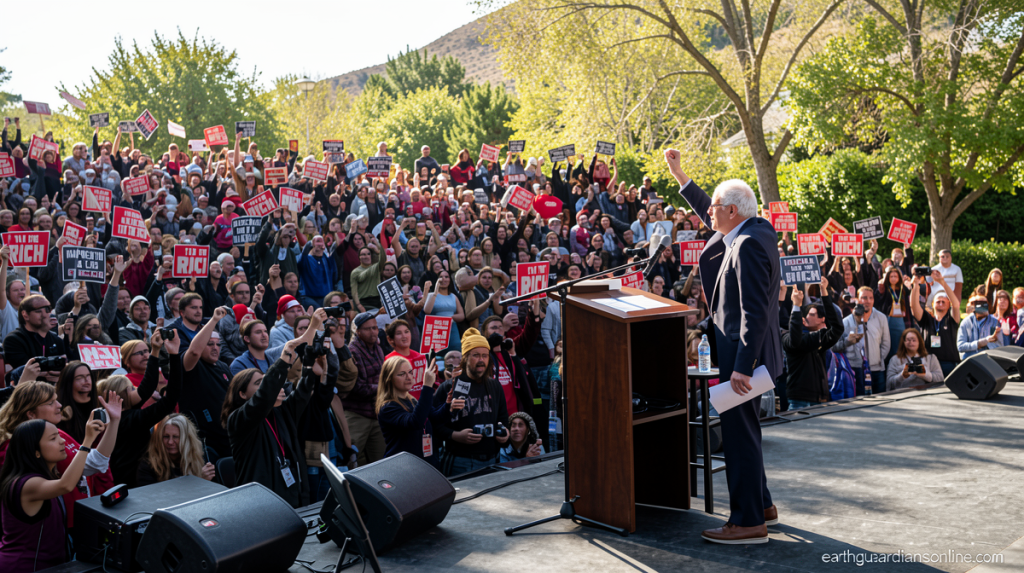
Sanders’ Primary Strategy Ignites Democratic Midterm Tensions
earthguardiansonline.com – Bernie blowback – Rep. Hakeem Jeffries determined that the moment had arrived to address Bernie Sanders directly. The confrontation came shortly after the Vermont senator publicly declared his intention to challenge a current House Democrat — specifically, a member of the Congressional Black Caucus representing North Carolina. According to three Democratic sources privy to the discussion, Jeffries cautioned Sanders against interfering in House primary contests, with particular emphasis on a race involving a Black Democratic candidate during this pivotal midterm season.
Greg Meeks, a New York representative and close ally of Jeffries who participated in the telephone conversation, offered insight into Sanders’ demeanor. “He seemed to not care,” Meeks recalled regarding the previously undisclosed call. This intervention from two influential Washington figures arrived just prior to incumbent Rep. Valerie Foushee narrowly defeating challenger Nida Allam in the March primary contest.
When recently questioned about the exchange, Jeffries provided a succinct characterization: “It was honest.” As midterm elections approach, Sanders arguably wields more influence within Democratic politics than at any previous point. Yet the independent senator now finds himself positioned at the epicenter of an emerging party division that may ultimately determine control of Congress through key midterm races.
The Establishment vs. Progressives Debate
Central to this internal conflict is a fundamental question regarding candidate selection. Should the party prioritize individuals more aligned with the establishment and perceived as appealing to swing voters? Or should Democrats embrace democratic socialists and further-left progressives capable of energizing a restless base, even if such choices risk alienating independent voters?
During this election cycle alone, Sanders has thrown his support behind more than ninety candidates. His endorsements have contributed to the defeat of House incumbents in both New York City and Colorado. His political team reports that of sixty candidates whose elections have concluded, forty-two secured victory, including ten of sixteen federal candidates.
However, senior Democrats in Washington contend that Sanders compels them to redirect valuable resources toward primary contests rather than deploying those funds against Republican opponents in November. The senator and his political apparatus now face heightened examination following his support for Graham Platner, the former Maine Senate candidate whose reputation has suffered considerably.
“There are no saints in the United States Senate,” Sanders declared, maintaining his support for Platner even after The New York Times published allegations concerning the candidate’s troubling behavior toward women.
Sanders only withdrew his endorsement after CNN and Politico reported that Platner faced a rape accusation — a claim the former candidate denies. Democratic Representative Hillary Scholten of Michigan commented on the situation: “Bernie has endorsed some flawed candidates recently. I think it’s really important to look at the judgment that has been exercised. The Graham Platner situation should be a huge warning sign to a lot of voters about what that stamp of approval might mean.”
Michigan Becomes Battleground
The confrontation between Sanders and party leadership is reaching its zenith in Michigan, a crucial swing state where the senator is campaigning this weekend. He is appearing alongside Senate candidate Abdul El-Sayed and House candidate William Lawrence. Members of the Congressional Black Caucus are actively working to defeat Lawrence following his 2024 comments in which he criticized Black political leaders.
When asked whether his endorsement strategy complicates Democratic prospects in November, the eighty-four-year-old senator offered a definitive response. “No,” Sanders stated. “I think, in fact, the candidates we are supporting are candidates who are representing working people. And I think it’s time, longtime overdue, for the Democratic Party to stop worrying about their wealthy campaign funders and start worrying about the needs of working people.”
Michigan sits at the center of what many describe as a Democratic identity crisis. In the Senate race, Sanders has championed El-Sayed, whose advocacy for Medicare for All and criticism of both Israel and the American Israel Public Affairs Committee has endeared him to the progressive wing. Meanwhile, party establishment figures have coalesced around Rep. Haley Stevens, a moderate Democrat from the Detroit metropolitan area positioning herself as the most electable option against likely Republican nominee and former Representative Mike Rogers.
With polling indicating a tight contest ahead of the August 4 primary, Democrats both in Washington and Michigan express particular concern regarding El-Sayed’s prospects. Retiring Senator Gary Peters, who currently holds the seat, was anticipated to remain neutral but ultimately chose to endorse Stevens, according to one source familiar with internal deliberations shared with CNN.
Senate Minority Leader Chuck Schumer, who has openly expressed his preference for Stevens to win the primary, offered a measured response when CNN inquired whether he harbored any reservations about Sanders campaigning for El-Sayed. “Democrats have always come up with cand
The ongoing tension reflects broader questions about party direction. Sanders continues to champion candidates who may not always align with establishment preferences but who resonate with his vision of representing working-class interests. Whether this approach will strengthen or weaken Democratic prospects in November remains one of the defining questions of this midterm election cycle.
As the primary season progresses, the stakes grow higher for both factions. The outcome in Michigan could provide early indicators of how Sanders’ endorsement strategy will fare across the country, potentially shaping the party’s trajectory for years to come.
