
Supreme Court to hear from Alaskan bush pilot whose plane was confiscated over a six-pack of beer
Supreme Court to Hear Alaskan Pilot’s Asset Forfeiture Case
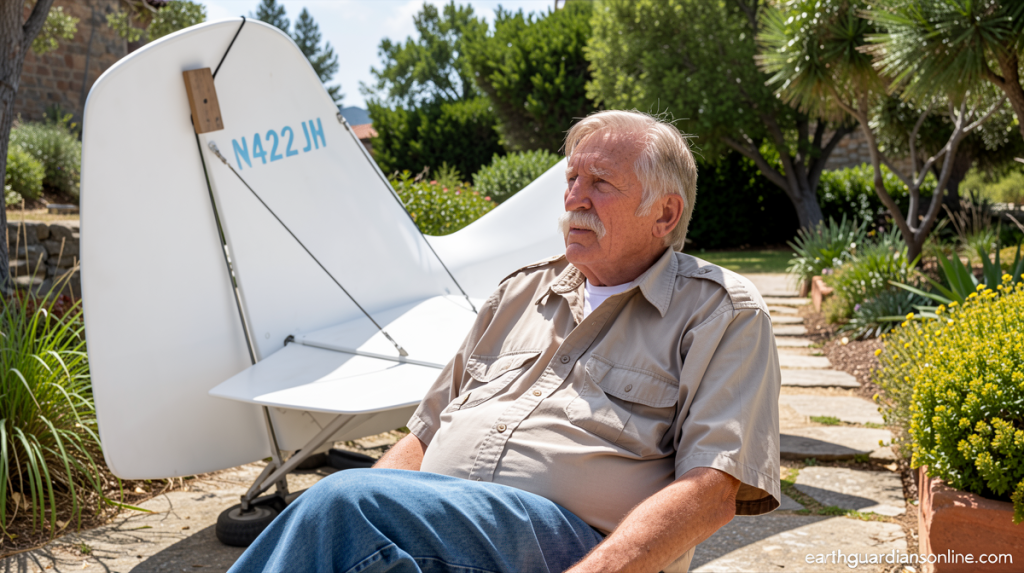
Earthguardiansonline.com – The Supreme Court to hear arguments from an 82-year-old Alaskan bush pilot whose aircraft was confiscated by authorities after officials discovered it was carrying beer destined for a remote, dry village. Kenneth Jouppi’s appeal before the 6-3 conservative court could establish significant precedent regarding state and local governments’ use of asset forfeiture powers. Jouppi contends that seizing his $95,000 Cessna airplane for what amounted to merely a six-pack of beer violated the Eighth Amendment’s prohibition against excessive fines.
Constitutional Questions at Stake
Oral arguments in the case are expected later this year or early next year, with a final decision anticipated by next summer. Sam Gedge, a senior attorney representing Jouppi through the Institute for Justice, emphasized the broader significance of the case. “The Excessive Fines Clause of the Constitution was built for cases like this,” Gedge explained. “As government agencies increasingly exploit fines and forfeitures to pad their budgets, it’s vital that the Supreme Court make clear that the Excessive Fines Clause is a meaningful check on government overreach.”
Jouppi maintains that the Budweiser and Bud Light discovered on his plane belonged to a passenger and were packaged alongside other groceries. While most of the alcohol was stored out of sight, state police reported that one six-pack remained visible inside a grocery bag. One trooper testified that Jouppi would “have to be blind” not to notice at least some of the alcohol and suggested that “pilots with that bad of eyesight just don’t fly.”
Alaska told the Supreme Court that officials face “unique difficulties in combating alcohol abuse and its consequences” in remote parts of the state.
The village at the center of this dispute, Beaver, has fewer than 100 residents and sits “off the road system.” The community implemented a ban on the sale and possession of alcohol more than two decades ago. Alaska argued to the Supreme Court that “given that many communities are accessible primarily by air, the legislature provided that any airplane used to illegally import alcohol into a dry community was subject to forfeiture.” Jouppi was subsequently convicted of alcohol importation, classified as a misdemeanor offense.
State police executed a search warrant on Jouppi’s aircraft in Fairbanks before it was scheduled to depart for Beaver. The pilot now argues that under the Eighth Amendment’s prohibition on excessive fines, courts must evaluate “the gravity of the specific defendant’s wrongdoing.” In his situation, Jouppi claims this consideration was absent, resulting in his “airplane [being] forfeited for a six-pack.”
The Supreme Court has addressed numerous questions about excessive fines in recent years, though many appeals were resolved on narrower legal grounds. In late June, a unanimous court permitted a Michigan family to continue contesting a county’s decision to sell their home for $76,008 at public auction, despite the property being assessed at more than $194,000. However, that ruling avoided addressing the broader constitutional questions the case presented regarding excessive fines.
Critics, including the libertarian Cato Institute, are hopeful the court will utilize this case to constrain what it has characterized as abuses of forfeiture laws. “Billions of dollars have been generated for the government through civil and criminal forfeitures,” the organization stated in a brief submitted to the Supreme Court last year. “And because it is expensive and time-consuming for defendants to challenge forfeitures in court, successfully asserting Eighth Amendment rights is difficult.”
