
When US troops die, Trump often reaches quickly for politics
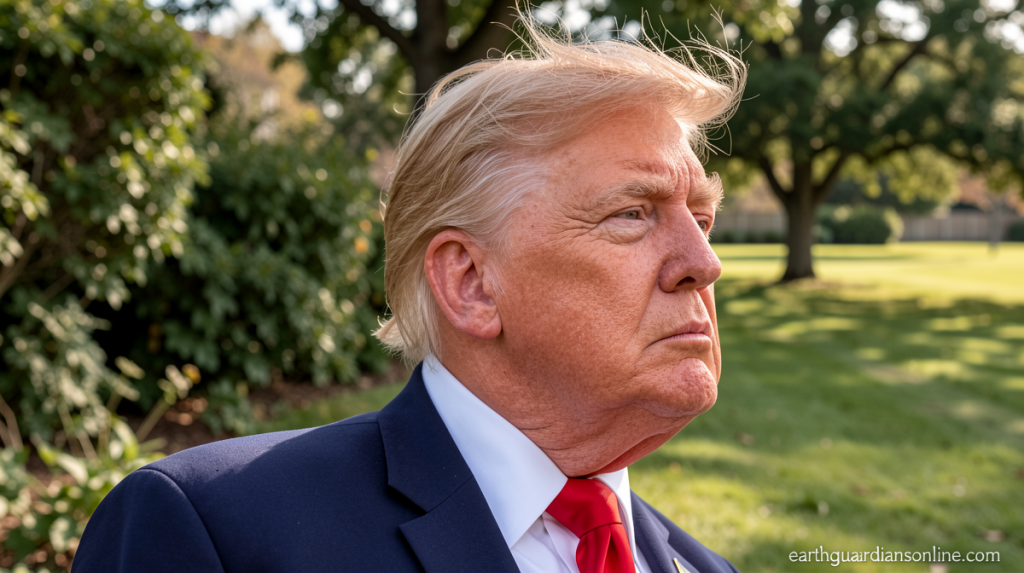
Trump’s Political Response to Military Casualties in Iran Conflict
Earthguardiansonline.com – The ongoing conflict with Iran has witnessed its initial American military fatalities since March, as officials confirmed that three service members perished over the past several days. These losses have once again highlighted President Donald Trump’s difficulty in offering genuine empathy regarding military deaths. As he prepares to participate in another dignified transfer ceremony on Wednesday, recent events have underscored his tendency to weave these tragedies into political narratives while his increasingly unpopular military engagement approaches its fifth month.
This pattern has recurred throughout the conflict, yet Trump’s most recent media interactions over the weekend brought this behavior into sharp focus. During an interview with NewsNation, the president delivered remarks that might be considered standard presidential responses. He characterized the fatalities as “a very sad thing” and noted they occurred “in service to our country.” Additionally, he reiterated his objective that “we’re never allowing Iran to have a nuclear weapon.”
He called the deaths “a very sad thing” while adding that they were “in service to our country.”
However, when addressing the New York Post, Trump’s comments took a different direction. Following his description of the deaths as “a shame,” he continued with remarks that suggested the fallen soldiers actively supported his war policy. “They did it because they don’t want to see Iran have a nuclear weapon,” Trump explained regarding the troops. He then added, “… And it just shows you how bad (the Iranians) are.”
“They did it because they don’t want to see Iran have a nuclear weapon,” he said of the troops.
While the president reaffirmed his war objectives in the first interview, his second conversation implied that the deceased service members themselves endorsed his military approach. Notably, Trump has provided no concrete evidence to support this assertion. Military personnel are expected to fulfill their duties regardless of personal beliefs about the mission’s purpose.
On Tuesday morning, Trump once again asserted that the fallen service members and their relatives shared his perspective. “These are people that want — and they feel like I do — that Iran cannot have a nuclear weapon,” Trump informed journalists within the Oval Office. “Very simple.”
“These are people that want — and they feel like I do — that Iran cannot have a nuclear weapon,” Trump told reporters in the Oval Office.
The president and his administration have previously navigated controversial territory on this matter. Following a dignified transfer ceremony in mid-March, Defense Secretary Pete Hegseth stated that “family after family” at Dover Air Base in Delaware encouraged him to continue the military campaign. “They said finish this. Honor their sacrifice. Do not waver. Do not stop until the job is done,” Hegseth declared.
“They said finish this. Honor their sacrifice. Do not waver. Do not stop until the job is done,” Hegseth claimed.
Yet at least one father of a deceased soldier challenged this narrative. Charles Simmons, parent of 28-year-old Tech. Sgt. Tyler H. Simmons, informed NBC News that “that was not something we talked about.” Although Simmons offered positive remarks about both Trump and Hegseth and clarified that he spoke only for himself, he confirmed he had not encouraged continued military action. “No, I didn’t say anything along those lines,” he stated.
Charles Simmons, the father of 28-year-old Tech. Sgt. Tyler H. Simmons, told NBC News “that was not something we talked about.”
Despite Simmons’ clarification, Trump repeated Hegseth’s assertion during an April 1 primetime Oval Office address. Trump declared that “every single one of the people, their loved ones, said, ‘Please, sir, please, finish the job.’ Every one of them.”
Trump said that “every single one of the people, their loved ones, said, ‘Please, sir, please, finish the job.’ Every one of them.”
Trump’s behavior during dignified transfers has also attracted considerable attention. During an earlier March ceremony, he wore a baseball cap available for purchase on his business website. Shortly thereafter, his political action committee utilized a photograph from that dignified transfer in a fundraising email. The image displayed Trump saluting with a flag-draped transfer case containing a soldier’s remains prominently positioned in the foreground.
Looking back to the earliest casualties in the Iran war, both Trump and Hegseth generated notable reactions with their statements. The common thread connecting all these responses is political calculation. Following these deaths, Trump and Hegseth appeared to recognize potential vulnerabilities that could be exploited against the war effort and Trump personally, prompting immediate efforts to mitigate such criticism.
Trump reinforced this perspective on Tuesday afternoon while Hegseth testified before Congress regarding additional war funding. The president shared on social media a comparison showing lower American death tolls from both the Iran war and his operation removing Venezuelan President Nicolás Maduro relative to higher casualties in earlier, more prolonged conflicts.
Both Trump and Hegseth have attempted to transform these deaths into advantages by citing supposed support from fallen soldiers and their families to justify the war. Additionally, CNN reported on Monday that the administration has been reluctant to promptly reveal troop injuries, citing security requirements as the explanation.
CNN also reported Monday that the administration has been slow to disclose injuries to troops, which the administration says is because of security needs.
Following the NBC report concerning the father whose testimony contradicted Hegseth’s claims, a Pentagon spokesperson asserted that “the details of each individual conver
