
Moroccan man’s death in Italian police custody sparks some violent protests and calls for justice
Moroccan Man’s Death in Italian Custody Sparks Protests and Justice Calls
Earthguardiansonline.com – The Moroccan man s death in Italian police custody has ignited widespread outrage and demonstrations across Bologna and beyond. Viral video footage showing officers pinning the man to the ground has become a symbol of growing tensions between law enforcement and immigrant communities in Italy. This tragic incident has not only captured national attention but has also renewed calls for police reform and greater accountability in how authorities handle vulnerable individuals.
Details of the Fatal Encounter
Abderrahim Fakir, a 42-year-old Moroccan national with legal residency in Italy, died following a tense confrontation with police officers in Bologna on Sunday morning. According to official reports, officers responded to emergency calls about a man screaming and kicking at garage doors in the city center. When officers arrived at the scene, they engaged with Fakir, who appeared distressed and was calling for help. Video evidence captured the moment when at least two officers restrained him firmly on the ground while medical personnel waited nearby for police clearance to approach.
The Bologna mayor’s office confirmed that Fakir was pronounced dead at the scene shortly before 10 a.m. The exact circumstances leading to his death remain under investigation, but the visual record clearly shows the struggle and the eventual stillness of the victim. Witnesses described hearing Fakir repeatedly calling for assistance as officers held him down, with medical staff appearing hesitant to intervene until given permission by the police.
Political and Community Response
The Moroccan man s death in Italian custody has prompted strong reactions from both political leaders and community organizations. Italian prosecutors have launched a formal inquiry into the circumstances surrounding Fakir’s passing, with two uniformed officers and four first responders now under investigation. The incident has reignited debates about police procedures and the treatment of immigrants in Italy, particularly in light of similar cases in recent years.
“This is not just about one man’s death. This is about a system that needs to change,” said a local community leader during a press conference following the incident. “We have seen too many similar cases where people in custody do not receive the care they need.”
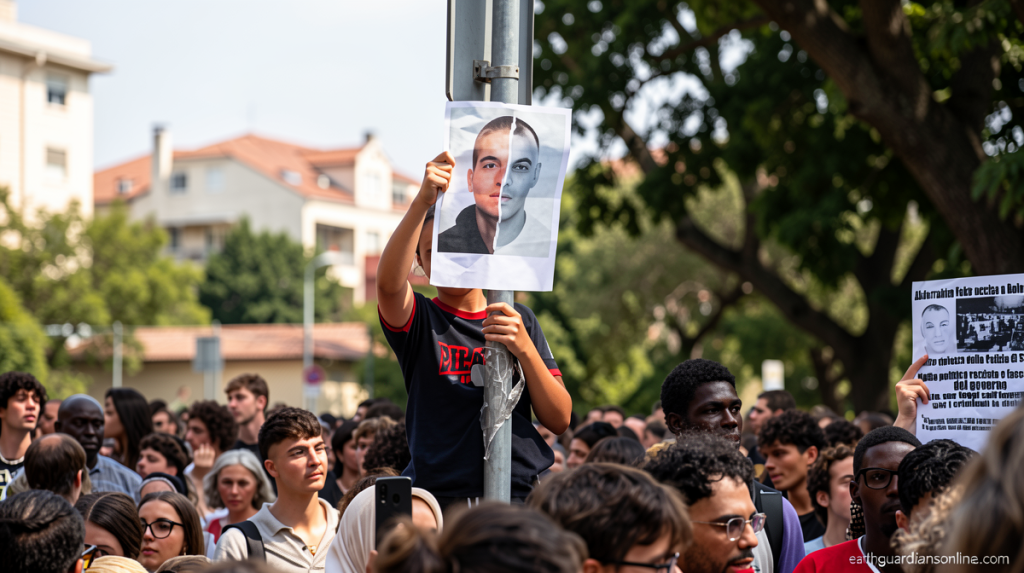
Demonstrations erupted in Bologna on Sunday evening, with protesters taking to the streets to demand justice for Fakir. Some protests turned violent, with demonstrators clashing with police and damaging property in certain areas of the city. The unrest has spread to other Italian cities, with solidarity marches organized in Milan, Rome, and Turin. Community organizations have called for peaceful demonstrations while emphasizing the need for systemic change in how police interact with vulnerable populations.
Historical Context and Future Implications
The Moroccan man s death in Italian custody comes at a time when Italy is grappling with broader questions about immigration policy and police reform. Similar incidents involving deaths in custody have occurred in recent years, often highlighting issues of racial profiling and inadequate medical care for detainees. Fakir’s case has drawn particular attention because of the clear video evidence showing medical personnel waiting for police approval before approaching the restrained man.
Legal experts suggest that the ongoing investigation could lead to significant changes in police procedures regarding the use of force and the coordination between law enforcement and medical responders. The case has also sparked discussions about whether Italy needs to establish independent oversight bodies to investigate deaths in custody, similar to systems already in place in other European countries. As the inquiry continues, the Moroccan man s death in Italian custody remains a focal point for debates about justice, accountability, and the treatment of immigrants in Italian society.
