
Trump adviser loses appeal of January 6-related contempt of Congress conviction
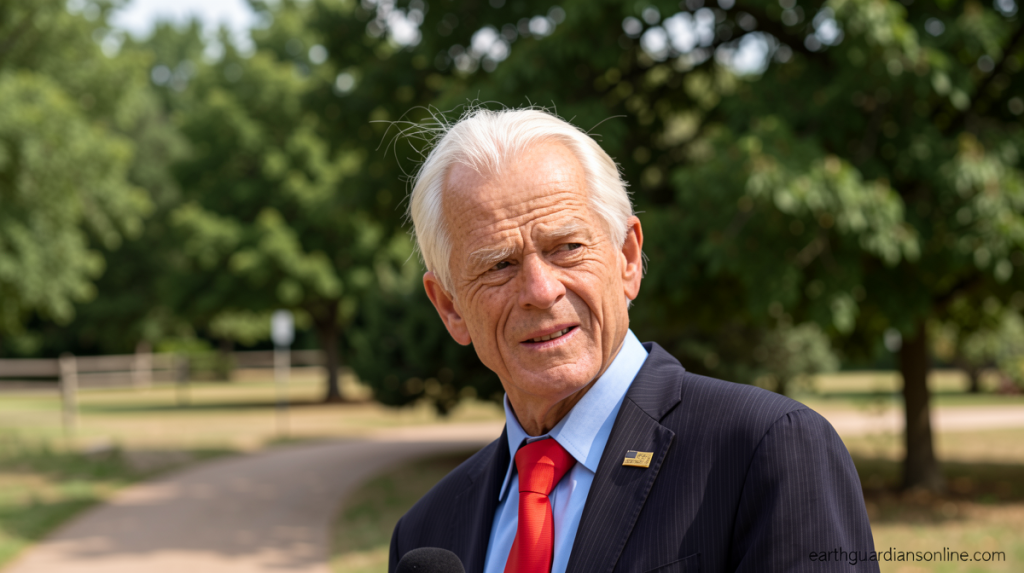
Trump Adviser Loses Appeal of January 6 Contempt Ruling
Earthguardiansonline.com – A federal appeals court has ruled against Peter Navarro, confirming that the Trump adviser loses appeal of January 6-related charges. The DC Circuit Court of Appeals issued a unanimous decision Tuesday, upholding Navarro’s felony conviction for contempt of Congress. This ruling marks yet another legal setback for the former White House trade adviser as he continues to challenge his conviction stemming from the January 6, 2021, Capitol attack.
The three-judge panel focused heavily on Navarro’s failure to prove that President Trump explicitly directed him to skip congressional testimony. Originally convicted in 2023, Navarro was found guilty of ignoring subpoenas tied to his claims that he worked to stop Congress from certifying Donald Trump’s 2020 election loss. The House Select Committee investigating the Capitol riot had demanded both his records and personal appearance, but Navarro refused to comply.
Executive Privilege Defense Rejected
Even though Navarro has finished serving his prison sentence, he has maintained for years that Trump told him he did not need to answer the House’s questions. He pointed to what he called a formal executive privilege declaration as his reason for noncompliance. However, the DC Circuit panel—comprising Judges Patricia Millett, Nina Pillard, and Michelle Childs—determined that Navarro’s argument fell short.
Dr. Navarro first asserted executive privilege unilaterally without consulting with or receiving direction from President Trump,
Millett wrote in the court’s opinion. The appeals court pointed out that Navarro had no written proof showing Trump instructed him during a brief three-minute phone call to ignore the committee’s subpoena. Furthermore, a Trump attorney and an adviser who testified before a grand jury against Navarro both confirmed the president never made a formal decision to shield him from congressional demands.
Dr. Navarro immediately and categorically asserted executive privilege without consulting anyone … He did so before even seeing the subpoena and its cover letter that made clear the subpoena sought some information that Dr. Navarro concedes is not privileged because he had discussed it publicly
in his book and in interviews, the court explained. The judges added that this conduct weakened Navarro’s claim of acting in good faith.
Accountability Across Political Lines
The court also noted that both the executive branch under Biden and Congress pursued accountability when Navarro faced charges. Meanwhile, the Trump administration let the appeal move forward without stepping in. Millett emphasized this cooperation in her opinion, noting that Congress held Navarro in contempt while the executive branch rejected his privilege claim and prosecuted him.
All three panel judges were appointed by Democratic presidents. Navarro, who currently serves as a White House trade adviser, and Steve Bannon, another longtime Trump confidant, have each tried to overturn their convictions through the courts. Both men served prison time in 2024 for refusing to comply with House subpoenas related to January 6 events.
When Congress issued subpoenas and the Justice Department began prosecutions, both Bannon and Navarro were private citizens, with Trump between his two presidential terms. Despite Trump’s return to the presidency last year, neither man has received a presidential pardon, even though Trump has granted clemency to many January 6 defendants and other allies.
While their appeals continue, the Justice Department has asked that charges against Bannon be dismissed. Navarro’s legal team has indicated they do not share this preference. Abhishek Kambli, Navarro’s attorney, commented on the ruling: “The decision today from the D.C. Circuit panel was not surprising and Peter Navarro knew that it would be one step in a battle to correct decades of incorrect DC Circuit precedent.” He added that Navarro plans to pursue his appeal vigorously because his case impacts every senior presidential adviser who genuinely believes executive privilege allows them to decline congressional subpoenas.
