
Nicaragua’s Ortega said he will end elections. Why isn’t the US treating this like Cuba and Venezuela?
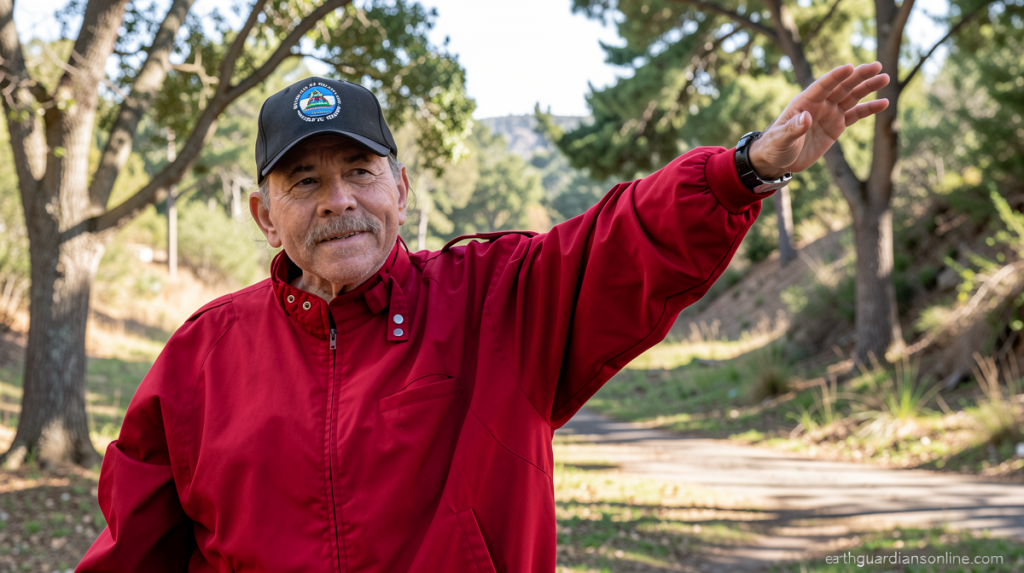
Ortega’s Election End: Why US Treats Nicaragua Differently
Earthguardiansonline.com – Nicaragua s Ortega said he will end elections, a move that has sparked debate about why Washington is not responding as forcefully as it did to Cuba and Venezuela. While the United States detained Venezuela’s president and escalated measures against Cuba, Nicaragua’s leadership has maintained a relatively calm approach. The Central American nation, ruled by Daniel Ortega and his wife Rosario Murillo, has now ruled out future votes. Despite this shift, American officials have shown limited preparation for immediate action against Managua.
Following the Venezuelan operation, Nicaragua implemented several conciliatory measures. The government released numerous prisoners after American demands and reestablished visa requirements for Cuban citizens, effectively curbing their movement toward North America. In April, the United States introduced fresh sanctions targeting two of Ortega and Murillo’s sons. Secretary of State Marco Rubio has increased diplomatic pressure on Managua and publicly criticized the election elimination, yet he has refrained from advocating for regime change—a position he has clearly articulated regarding Cuba.
Expert Analysis on Regional Strategy
Professor Kai Thaler from the University of California, Santa Barbara’s Department of Global Studies explained that Cuba holds greater strategic importance for Rubio than Nicaragua does. He also highlighted that Nicaragua lacks the substantial natural resources that characterize Venezuela. Furthermore, Thaler noted that Nicaragua operates under a family-based system without a designated successor comparable to Venezuela’s Delcy Rodriguez, who assumed leadership following President Nicolas Maduro’s capture.
“Every alternative for leadership has been eliminated by Ortega and Murillo,” Thaler asserted.
Manuel Orozco, a Nicaraguan political scientist and director of the Migration, Remittances, and Development Program at the Inter-American Dialogue, explained that Washington employs a distinct strategy toward Nicaragua compared to its approaches in Caracas and Havana. The White House aims to prevent both mass migration and harsh repression while favoring incremental transformations rather than direct military or political intervention.
“One interpretation is that the political inertia in the Murillo and Ortega dictatorship will generate internal conflict, an economic slowdown, a possible social protest where (the US) can leverage its pressure. But not the other way around. If it intervenes at this moment, it is not known what the effect on a political transition would be,” Orozco stated.
Orozco emphasized that the Sandinista administration, which has governed since 2007, currently faces neither severe economic instability nor widespread street demonstrations. Consequently, any American intervention would essentially force a political transition. With the United States constrained in its options, the Ortega-Murillo leadership can capitalize on these circumstances by maintaining a low profile.
Strategic Calculations Behind Ortega’s Rhetoric
In April, Ortega made uncommon public remarks, characterizing American sanctions against his children as “mentally deranged.” Three months later, he declared the conclusion of elections and labeled Maduro’s capture as a “monstrosity.” During a Monday gathering with supporters, the strongman—who has ruled for nearly two decades—explained that eliminating elections would prevent opposition forces from gaining control.
Thaler said such statements indicate the government “does not believe the United States is going to focus on Nicaragua, that Ortega feels safe criticizing and insulting Trump like that.”
Orozco suggested that Ortega’s April comments served primarily as an internal message. He described the approach as symbolic, allowing the leadership to project anti-imperialist credentials without substantive policy shifts. “Put pejoratively, it’s as if they let the dog out to bark, but not to bite,” Orozco explained. “It’s symbolic for the internal base, to say that we are still anti-imperialists. The reality is different; there is no expression of solidarity with Venezuela or Cuba in rhetoric or foreign policy.”
CNN reached out to the Nicaraguan government, which typically avoids media engagement. Orozco maintained that Washington has steadily built pressure through sanctions, a pattern Nicaragua rarely addresses publicly. He warned that misinterpreting this approach creates the false impression that the United States is ignoring Nicaragua’s democratic backsliding.
