
The Iran and Ukraine wars are colliding on the world’s biggest lake. Here’s what to know
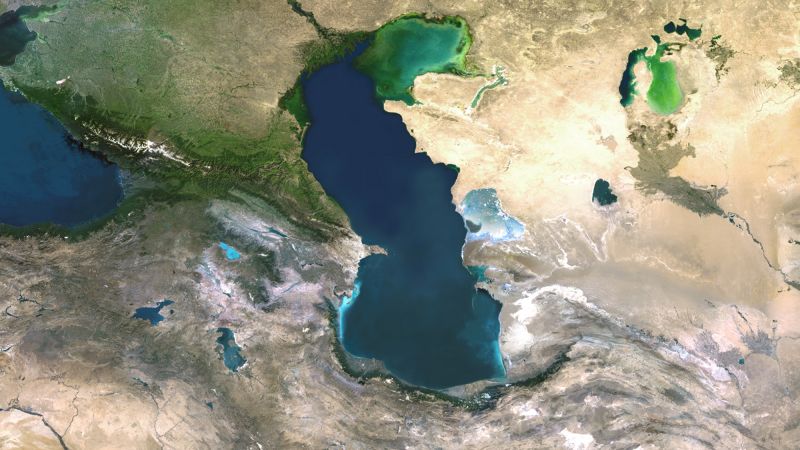
Iran-Ukraine Wars Collide on Caspian Sea
Earthguardiansonline.com – The Iran and Ukraine wars are converging in an unexpected location: the Caspian Sea. This vast inland body of water has become a new arena where Tehran and Kyiv’s interests intersect, challenging Russian supply networks. Ukrainian drones recently struck Russian vessels carrying military cargo from Iran, escalating tensions in the region.
Drone Strikes Spark Diplomatic Crisis
Ukrainian forces confirmed over the weekend that their unmanned aircraft targeted two Russian ships in the Caspian. Both vessels had departed from Iranian territory heading toward a Russian port with military supplies aboard. President Volodymyr Zelensky announced the operation on social media platform X, describing the targets as “ships that were involved in transporting military cargo from Iran, as well as a warship.” Ukraine’s security service later identified the warship as a Russian missile boat.
Tehran offered a different account of events. Iranian officials reported that one of their commercial vessels carrying iron cargo was damaged during the incident. The collision claimed one seafarer’s life and injured three others. While Iran did not name the specific ship, it confirmed the vessel traveled from Astrakhan, a Russian port, toward Anzali in Iran. Regional governor Hadi Hagh-Shenas described this maritime route as “a safe and reliable corridor for commercial exchanges between the two ports.”
Diplomatic tensions mounted on Monday when Esmail Baghaei, Iran’s foreign ministry spokesperson, warned that “Ukraine’s dangerous adventurism will certainly not go unanswered by us.” Ukraine’s Chargé d’Affaires in Tehran was summoned to the foreign ministry to discuss the escalating situation.
Why the Caspian Matters
The growing hostilities highlight the Caspian’s expanding strategic role. This body of water, bordered by five nations including Iran and Russia, has gained importance following the blockade of Iranian ports in the Persian Gulf and Gulf of Oman. Bijan Khajehpour, managing partner of Vienna-based Eurasian Nexus Partners, explained that the Caspian enables Iran to pursue “a diversified trade strategy, especially if Iran promotes trade with Russia, the Caucasus, Central Asia, China via rail, and, indirectly, Eastern Europe.”
Khajehpour emphasized to CNN that this route serves as “a strategic complement rather than a substitute for Iran’s existing maritime access through the southern waters.” The Caspian facilitates the movement of Russian grain and steel, while Iran has invested in developing key ports such as Anzali. Additionally, oil and gas resources from Kazakhstan flow from the Caspian to a hub situated on the Black Sea.
For Moscow, the Caspian represents more than just a commercial corridor. It functions as a vital conduit connecting Russia to Central Asia and Iran, supporting an expanding strategic partnership that encompasses military cooperation alongside Russia’s involvement in Iran’s civilian nuclear program and oil exploration initiatives. Khajehpour noted that “the recent blockade by the US (of Iranian ports) has underlined the strategic value of the Caspian Sea route.”
Military Supplies and Historical Context
The Caspian’s landlocked geography and control by Iran, Russia, and neighboring states make it less susceptible to international sanctions compared to maritime routes within Western naval reach. The waterway has evolved into a critical passageway for deepening military ties between Moscow and Tehran.
While Iran and Russia operate under a comprehensive strategic agreement addressing economic and military collaboration, this arrangement does not constitute a mutual defense pact. Russia received its initial shipments of Iranian Shahed attack drones through the Caspian during the early stages of its conflict with Ukraine, subsequently manufacturing updated versions at facilities within Russian territory.
Ukrainian forces have previously targeted the Caspian route connecting Iran’s northern ports to Astrakhan. Last August, a cargo vessel named Port Olya 4 was reportedly destroyed while carrying Shahed-136 drone components and Iranian munitions. CNN documented in 2024 that a Russian cargo ship suspected of transporting Iranian ballistic missiles for Moscow’s campaign against Ukraine was observed at a Caspian port.
The US Treasury department determined that the Russian Ministry of Defense “used the vessel Port Olya-3 to transport CRBMs (close-range ballistic missiles) from Iran to Russia.” Former US Secretary of State Antony Blinken stated that Washington believed the Russian military had received Iranian missiles through this maritime corridor.
“The Caspian enables Iran to pursue a diversified trade strategy, especially if Iran promotes trade with Russia, the Caucasus, Central Asia, China via rail, and, indirectly, Eastern Europe.” — Bijan Khajehpour, Eurasian Nexus Partners
Frequently Asked Questions
What happened in the Caspian Sea recently?
Ukrainian drones struck two Russian ships in the Caspian Sea that were carrying military supplies from Iran. One commercial Iranian vessel was also damaged, resulting in one death and three injuries.
Why is the Caspian Sea important for Iran?
The Caspian provides Iran with an alternative trade route after the blockade of its Persian Gulf and Gulf of Oman ports. It enables commerce with Russia, Central Asia, and indirectly Eastern Europe.
Has Ukraine targeted the Caspian before?
Yes. In August 2025, Ukrainian forces reportedly destroyed the cargo vessel Port Olya 4, which was carrying Shahed-136 drone components and Iranian munitions.
What is the relationship between Iran and Russia in this context?
Iran and Russia have a comprehensive strategic agreement covering economic and military collaboration, though it is not a mutual defense pact. Russia has received Iranian drones and missiles through the Caspian.
