
A top Mexican university used AI to prevent exam cheating. Now thousands of admissions are in doubt
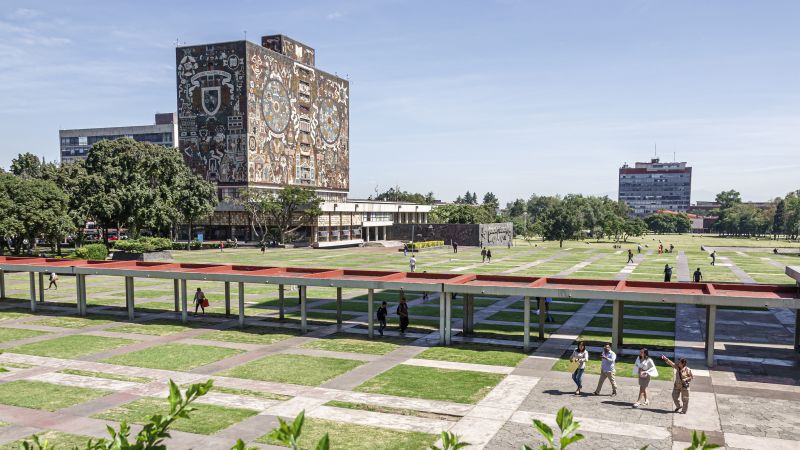
UNAM’s AI Proctoring System Sparks Admissions Crisis as Thousands Face Uncertainty
Earthguardiansonline.com – Thousands of prospective students at Mexico’s premier university now find themselves in limbo following a controversial decision to invalidate exam results. The National Autonomous University of Mexico, known universally as UNAM, has suspended enrollment procedures while investigating allegations of widespread academic dishonesty. What began as an innovative attempt to modernize testing has evolved into a political controversy reaching the highest levels of government.
A Personal Journey Through Admissions
Daniel Fernando García Velázquez represents thousands of applicants caught in this turmoil. The young man from Veracruz endured three separate journeys spanning 400 kilometers to reach Mexico City for UNAM’s traditional in-person examination. Each time, he made the arduous trek, hoping this would be the attempt that secured his future. When the university announced its first-ever online administration of the test this past June, Velázquez traveled anyway, uncertain whether the digital format would truly change anything.
His perseverance appeared rewarded when he achieved a remarkable score of 94 points out of a possible 120. This performance should have guaranteed him placement in the Communication and Journalism program at UNAM’s Aragón School of Higher Studies. However, with the new academic semester scheduled to begin on August 10, Velázquez cannot confirm whether he will be permitted to enroll. The university’s investigation has left all applicants—regardless of whether they are suspected of wrongdoing—in a state of uncertainty.
The AI Surveillance Controversy
UNAM initially invalidated approximately 3,000 examinations out of roughly 150,000 total tests. The university cited “behaviors contrary to what is established in the Call for Applications and in University Legislation” as the basis for these cancellations. While the initial announcement provided minimal explanation, subsequent revelations painted a clearer picture of what may have transpired.
Results revealed an unprecedented concentration of perfect scores—numbers that have reportedly tripled compared to previous years. This statistical anomaly suggested that certain candidates might have utilized artificial intelligence applications or secured examination questions before the testing period. More than 150,000 individuals nationwide participated in the weekend examinations conducted throughout May and June, competing for merely 21,962 available positions.
“It’s really shocking because of the number of students who got a perfect score on the exam, something we hadn’t seen before; the number has tripled compared to previous years,” said Alma Maldonado, a member of the technical commission appointed to investigate the situation, in an interview with CNN’s Perspectivas program.
Many applicants who believe they have been treated unfairly are now directing their frustration toward the artificial intelligence monitoring system. This technology was designed to capture and record every movement and action performed by each candidate during the examination, supplementing the work of human proctors. Instead of providing peace of mind, the system has become a lightning rod for complaints.
Political and Historical Significance
The controversy has escalated beyond academic circles to involve national leadership. Mexican President Claudia Sheinbaum, herself a graduate of UNAM’s physics department, publicly recommended on Tuesday that the university seek assistance from the attorney general’s office to thoroughly resolve the situation.
UNAM’s storied history adds weight to this current crisis. The institution traces its origins to the 16th century when colonial authorities established what was originally named the Royal and Pontifical University of Mexico. Following the granting of institutional autonomy in 1929, UNAM evolved into a powerful symbol of Mexican identity, serving as both a catalyst for political and social movements and a vehicle for social advancement in a nation where private university education remains financially out of reach for countless families.
The fierce competition for admission reflects this historical importance. Each year, over 100,000 candidates submit applications, with rejection rates typically falling between 80 and 90 percent. The examination consists of 120 questions, and the passing threshold fluctuates according to program popularity. Medical studies consistently demand the highest scores due to overwhelming demand.
Stringent admission standards frequently trigger student demonstrations calling for expanded classroom capacity. UNAM administrators had hoped that transitioning to an online format would create greater accessibility and fairness, eliminating the need for candidates to travel from distant regions to testing centers concentrated in Mexico City and its metropolitan surroundings. Whether this ambitious reform will ultimately strengthen or undermine the institution’s reputation remains to be seen as the investigation continues.
Related Reading
Frequently Asked Questions
What is A top Mexican university used AI?
A top Mexican university used AI is the main topic of this guide. The article explains the context, practical details, and next steps readers should understand.
Why does A top Mexican university used AI matter?
A top Mexican university used AI matters because readers are looking for a useful answer, not just a short summary. Good content should match search intent and help them decide what to do next.
