
Japan’s conservative leader bets big on Takaichi mania with snap election. Will her gamble pay off?
Japan’s New Political Star
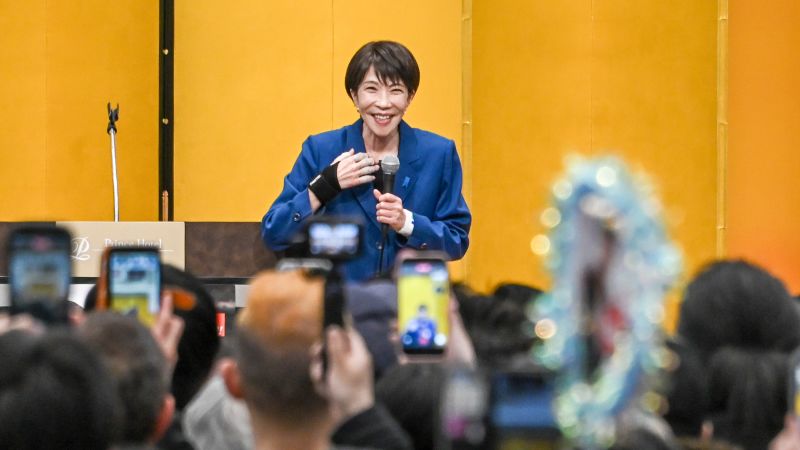
In scenes typically reserved for J-pop celebrities, thousands of fans gather in the cold outside a small train station on Tokyo’s outskirts, their phones raised in anticipation of a glimpse at Japan’s newest fascination. Prime Minister Sanae Takaichi steps onto a concrete walkway, triggering a wave of excitement that she hopes will translate into support for her Liberal Democratic Party (LDP) at an unexpected lower-house election on Sunday. Takaichi announced the vote just three months into her tenure, pledging to resign if the LDP fails to achieve a majority—a bold and uncommon strategy in Japan’s traditionally risk-averse political landscape.
A Political Reimagining
Takaichi is not your average Japanese leader. Since assuming office in October, the motorbike-riding heavy metal drummer with a sharp social media presence has challenged the conventional, male-dominated image of Japanese politics. Her ability to connect with younger audiences through concise social media posts and viral video appearances, including her jam session with South Korean President Lee Jae Myung on K-Pop hits, has redefined political engagement in the country. Even minor aspects of her life, such as the bag she carries or the pen she uses, are scrutinized and celebrated, symbolizing her effort to bridge the gap between leadership and the public.
“Young people fully utilize social media, and they find that appealing,” says Takaichi’s secretary, Noboru Kinoshita. “That’s where we’re directing our efforts.”
In her hometown of Nara, souvenir shops offer towels, keychains, stationery, and cookies featuring her slogans and likeness alongside that of her political inspiration, former British Prime Minister Margaret Thatcher. Two 20-year-old students tell CNN that Takaichi’s warm smile initially captivated them. They refer to her not as “Prime Minister” or “Ms. Takaichi,” but as “Sana-chan,” a term of endearment usually reserved for close friends. One student proudly notes that she uses the same pen as the prime minister. “It makes me feel more connected to her,” she says. “Compared to the previous prime minister, you see a lot of social media posts highlighting her hard work,” adds Yuho Oishi. “I’ve noticed young people starting to take an interest in politics because of that.”
Takaichi’s approval ratings are notably high, ranging from over 50% to more than 80% among voters in their 20s in some polls—a stark contrast to previous leaders and a testament to her unconventional approach. By leveraging digital platforms and relatable imagery, she has carved a unique path in a society where older generations dominate the population and political discourse.
