How the humble barcode could help prevent the next cyclospora outbreak

Daftar Isi
A Two-Dimensional Barcode Upgrade Aims to Close the Gap Between Shelf and Safety
Earthguardiansonline.com – Two people died this summer in a cyclosporiasis outbreak linked to packaged produce, and the tragedy has sharpened an already urgent question in American food safety: how do we stop contaminated items from reaching consumers in the first place? The answer, according to industry leaders and former regulators, may be hiding in plain sight on every product label in every grocery aisle — except in a form that actually carries enough data to matter.
Starting next year, the retail and packaged-goods sectors plan to begin rolling out two-dimensional barcodes that replace the one-dimensional Universal Product Code labels that have governed checkout counters since the mid-1970s. The shift is not cosmetic. Where today’s flat, ten-digit strips encode only a product identifier, the new QR-style symbols can hold up to 3,000 digits and characters. That extra capacity opens doors to traceability, allergen disclosure, expiration tracking, and — most critically — batch-level recall enforcement that could fundamentally reshape how the United States manages foodborne-illness risk.
From Troy, Ohio, to the Checkout Counter
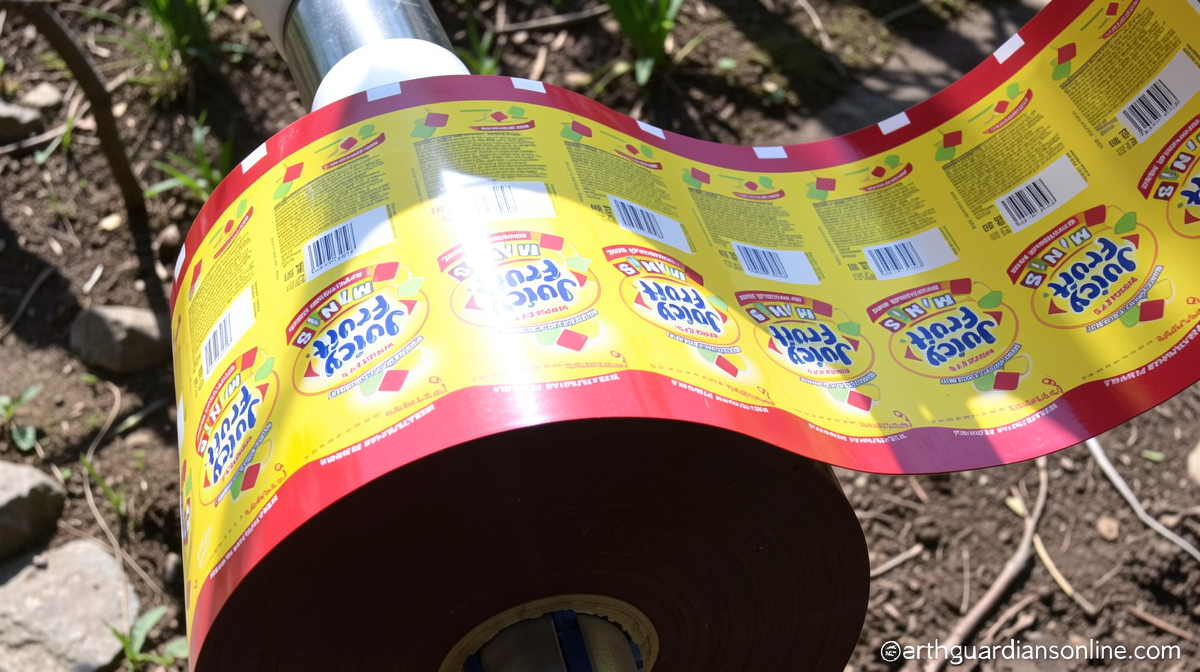
The barcode’s origin story is now half a century old. On June 26, 1974, a cashier at a Marsh supermarket in Troy, Ohio, scanned a pack of Wrigley’s Juicy Fruit gum and completed what remains the first recorded barcode transaction in retail history. That single beep ushered stores into the computing era. Five decades later, the checkout ritual has barely changed: shoppers still present one-dimensional strips, and registers still decode them into a product number and a price. Nothing more.
Once a product leaves the shelf and enters a customer’s cart, the barcode’s informational life ends. It cannot tell you which farm grew the lettuce, which factory line filled the jar, or whether the package you are holding belongs to a batch under investigation. It simply says, “This is item number such-and-such.”
What the New Codes Actually Carry
The two-dimensional alternatives under development by GS1 — the global standards body that licenses and governs barcode symbologies — embed far richer payloads. A shopper scanning a package with a smartphone could be routed to a manufacturer’s website displaying allergen panels, recycling instructions, coupon offers, or the origin farm behind a produce item. A store associate at the register would still scan the symbol the same way a one-dimensional code is scanned today, but the decoded data would additionally flag expiration status and spoilage conditions, allowing managers to pull near-date items before they sell and to block spoiled products from ringing up entirely.
The most consequential application, however, sits in the realm of public health. Bin numbers and lot numbers — the alphanumeric strings that let investigators, manufacturers, and retailers trace a defect back to a specific production batch — are currently printed on packaging as a separate element from the barcode. They typically appear as a jumble of characters that look, in the words of one industry observer, like they were stamped out by a 1990s dot-matrix printer. When a recall is issued, a human being — an inspector, a stock clerk, or a worried shopper — must locate that string, decode it, and compare it against the recall notice. In a big-box store stocking roughly 50,000 distinct SKUs with dozens of units of each on the shelf, that manual cross-referencing is slow, error-prone, and incomplete.
Eliminating the Human Guesswork
Frank Yiannas, who spent ten years heading food safety at Walmart before serving as FDA deputy commissioner for food policy and response, has been vocal about the limitations of the current system.
“Human systems aren’t infallible,” Yiannas said. “It’ll no longer be a guesstimate. Precise recalls would add a lot of value to companies and to the customer.”
Under the proposed architecture, manufacturers would write bin and lot identifiers directly into the two-dimensional symbol at the point of packaging. A recalled batch would then be identifiable by a simple scan rather than by eye. Stores could configure registers to reject scans from affected lots. Consumers at home could point a phone camera at a package and receive an immediate safety verdict. In the ideal scenario, potentially hazardous items never reach a shelf at all.
The economic stakes are substantial. Yiannas estimates that the current recall-and-waste regime costs major retailers hundreds of millions of dollars annually — and in extraordinary cases, billions — because safe food is pulled from shelves alongside contaminated units simply because the batch-level distinction cannot be made quickly enough. That over-removal is, as he notes, the best-case outcome. The worst case is what happened this summer: people eat a product they had no way to verify, and some of them do not survive.
“I don’t think they’re overselling the benefits of this,” Yiannas said of the industry’s push toward two-dimensional symbologies.
Implementation Hurdles
The technology is not yet deployed at scale, and the path to full adoption is not without friction. Embedding a unique bin-and-lot identifier into every individual package means either printing a distinct label on-site at the packaging line or pre-printing packages with those identifiers and shipping them to distribution centers before final allocation. Both approaches demand capital investment, supply-chain coordination, and updated scanning hardware at retail registers. GS1 acknowledges the effort required of stores and packaged-goods companies, but argues the public-health and economic returns justify the transition.
For consumers, the near-term experience will look almost identical to today’s checkout: a beep, a price, a receipt. The difference will be invisible — a richer data payload traveling behind that same beep, carrying enough information to tell a shopper whether the item in their hand is safe, where it came from, and what to do if it ever needs to come back.
The barcode that began in a small Ohio supermarket in 1974 was designed to speed up a transaction. Its successor, arriving within the next year, is being designed to protect a life. That is a considerably different job, and the stakes have never been higher.
Related Reading
Frequently Asked Questions
What is How the humble barcode could help?
How the humble barcode could help is the main topic of this guide. The article explains the context, practical details, and next steps readers should understand.
Why does How the humble barcode could help matter?
How the humble barcode could help matters because readers are looking for a useful answer, not just a short summary. Good content should match search intent and help them decide what to do next.