
Iran’s strikes on Gulf energy sites rattle markets and raise recession fears
Iran’s Strikes on Gulf Energy Sites Rattle Markets and Raise Recession Fears
Global Energy Turmoil Intensifies
One week into the regional conflict, Iran’s relentless series of attacks have destabilized international energy markets. The nation, which had warned of retaliation ahead of the US-Israeli military buildup, has now targeted key energy infrastructure across the Gulf. These strikes, including an assault on Azerbaijan, have disrupted supply chains and fueled concerns about a potential economic slowdown. Despite initial fears of widespread chaos, the intensity of Iran’s operations has eased slightly, though the focus remains on critical energy assets.
Strategic Targets and Supply Chain Disruptions
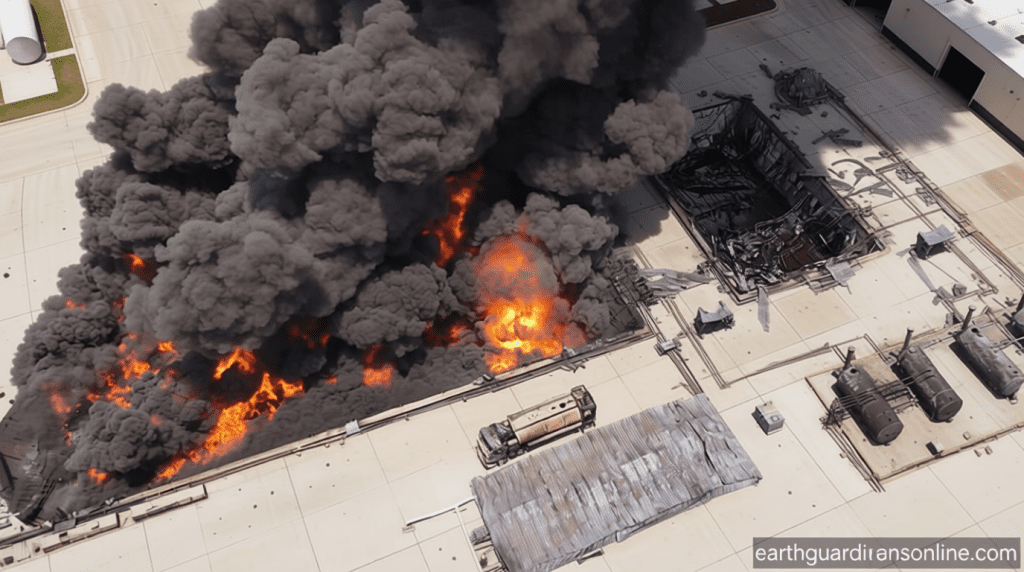
Since the conflict began last Saturday, Tehran has expanded its aerial campaigns, striking vital energy installations that power global economies. The Strait of Hormuz, a crucial chokepoint for 20% of world oil, saw Iranian forces block shipping lanes, stranding over 200 vessels. This move, reported by Lloyd’s List, highlighted the strategic intent behind the attacks. In addition, Iran’s strikes forced Saudi Arabia’s largest oil refinery to halt operations, while also affecting Iraqi oil output and Israeli gas fields. Dubai’s ports, some of the world’s most significant, were also reported as damaged.
Expert Warnings and Economic Implications
On Friday, the UK Foreign Office noted that while Iran’s attacks have slowed, the focus on economic and energy targets has intensified. Qatar’s Energy Minister, Saad al-Kaabi, warned in a Financial Times interview that the war could “bring down the economies of the world.” He speculated that prolonged conflict could reduce global GDP growth, push energy prices higher, and create shortages, triggering a ripple effect across industries.
“If this war continues for a few weeks, GDP growth around the world will be impacted. Everybody’s energy price is going to go higher. There will be shortages of some products and there will be a chain reaction of factories that cannot supply,” al-Kaabi said.
Dr. Yousef Alshammari, president of the London College of Energy Economics, emphasized that a full blockade of the Strait of Hormuz could trigger a global recession. “As we continue to go towards the summer, I believe the risks of global recession can be amplified,” he explained. “And then I think we can have political pressure coming particularly from China, which is the major consumer of Iranian oil.” Alshammari also noted that China’s potential involvement could influence the outcome, with the best-case scenario being a return of normal oil flows.
“I don’t think China will stay silent here, and certainly the best-case scenario is that we have the Strait of Hormuz coming back on,” Alshammari said.
Alshammari highlighted that while gas prices have surged over 50%, oil prices remain lower than anticipated. “That is due mainly to the fact that we are in a period of low demand, and secondly, due to the fact that the global oil markets continue to be well supplied,” he added.
Questions Over Iran’s Strategic Motives
Former US ambassador to Azerbaijan Matthew Bryza raised doubts about Iran’s military strategy, questioning the rationale behind attacks on Azerbaijan, Turkey, and Cyprus. “It is difficult to understand why Iran would have launched drone attacks against Azerbaijan’s Nakhchivan region,” Bryza said. “Iran obviously does not want to see Azerbaijan dragged into the military conflict.”
“And even as Azerbaijan’s president said, there was a call from Iran seeking Azerbaijan’s help to evacuate Iranians from Beirut,” Bryza explained. “President Aliyev sent a plane and said, no, we’re not going to take any money for it. And then hours later, Iran attacked Azerbaijan. So, it makes no sense.”
Bryza suggested that Iran’s actions may aim to disrupt societies and economies, indirectly pressuring US President Donald Trump. Continued supply chain issues and rising energy costs could, he argued, harm the Republican administration’s economic standing.
