
China has another solution to its shrinking population: robots
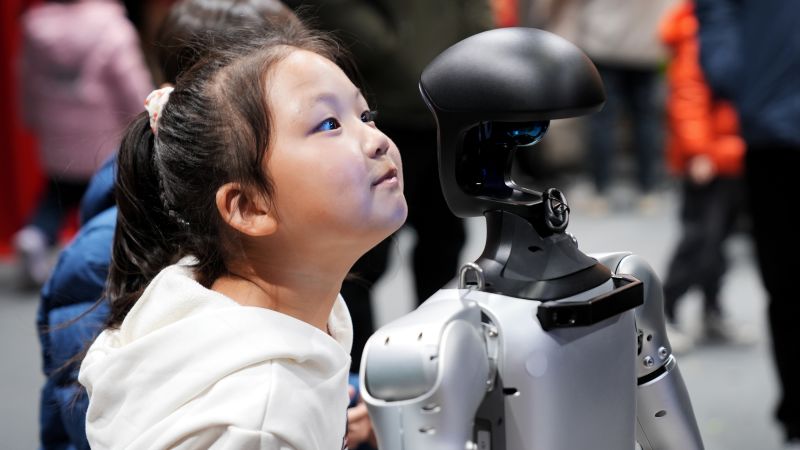
China’s Shrinking Population: A Robot-Driven Solution
China’s population decline has sparked urgent concerns about its long-term economic stability, with leaders exploring robotic innovation as a key strategy to counteract the trend. The nation’s birth rate has reached an unprecedented low, exacerbating fears of a significant economic downturn as the labor force shrinks and the elderly population expands. Despite recent government efforts to encourage childbirth—ranging from financial incentives to streamlined marriage regulations—data reveals these measures have not reversed the decline.
The Shift to Automation
Now, China is turning to automation and robotics to address the challenge. For years, President Xi Jinping has driven the modernization of manufacturing, positioning the country as a leader in high-tech industries. This initiative aligns with Beijing’s broader goal of transforming China into a self-reliant economic powerhouse. By integrating automation, the government aims to sustain industrial output even as the workforce dwindles, potentially stabilizing economic growth for decades.
“If China continues its current trajectory, a demographic crisis looms due to the mismatch between its population and economic systems. But why would it persist in this path?”
Stuart Gietel-Basten, a demography expert at Hong Kong University of Science and Technology, highlights the stakes. The transition to automation, coupled with other reforms, could prevent economic growth from collapsing. However, managing this shift poses challenges, as it may displace jobs initially and alter the nature of work over time. For a nation of 1.4 billion people, this transformation is particularly complex.
Robotic Advancements in Industry
Automation is already reshaping China’s manufacturing landscape. Robotic arms operate in highly efficient production lines, even in “dark” factories that require no lighting for human workers. These systems enable mass production of electric vehicles and solar panels at low costs, fueling China’s growing trade surplus. The International Federation of Robotics reports that China leads the global robot market, hosting over half of all installed units in 2024.
Beijing’s focus extends beyond industrial robots to humanoid models, with over 140 companies investing in their development. While current humanoids are more visible in promotional events—like dancing in televised showcases or competing in boxing matches—some are already being tested in assembly lines, logistics centers, and research labs. Developers claim these machines are nearing parity with human productivity in tasks such as handling, sorting, and quality checks.
Policy and Future Goals
China’s push for automation is part of the “Made in China 2025” plan, launched in 2015. The initiative coincided with the abolition of the controversial “one-child” policy, reflecting a broader strategy to adapt to demographic changes. Experts argue that sustained gains in labor productivity through robotics and AI could offset the economic strain of a shrinking workforce. However, this requires coordinated policies across education, social security, and infrastructure.
“Automation can significantly reduce the impact of a smaller workforce, but it won’t fully eliminate the challenge,” notes Guojun He, an economics professor at the University of Hong Kong.
The success of this approach will shape the global economy for years to come. For the Communist Party, maintaining economic stability is vital to its political credibility, as it seeks to elevate China to a mid-level developed nation within a decade. As automation advances, its role in balancing population trends and economic output will become increasingly critical.
