
Irish singer CMAT calls out body shamers following BBC Radio 1 Big Weekend set
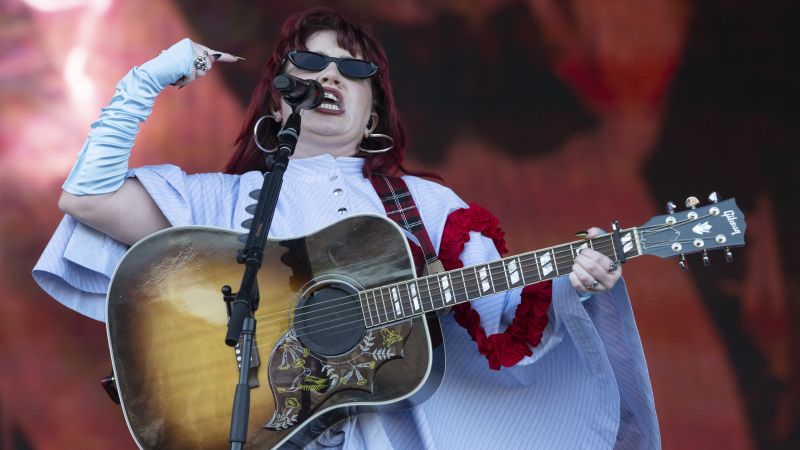
Irish Sänger CMAT Confronts Body Shamers After BBC Radio 1 Big Weekend Performance
Irish singer CMAT calls out body – Irish artist Ciara Mary-Alice Thompson, known professionally as CMAT, has expressed her frustration with ongoing body shaming following a recent live set at BBC Radio 1’s Big Weekend in Sunderland, northern England. The singer-songwriter, who has openly discussed the pressures of public scrutiny, shared her feelings of “deep sadness” on Instagram, detailing how her appearance has become a target for online criticism. In a post she shared on Thursday, she revealed she had temporarily removed social media platforms like Instagram, TikTok, and X from her phone to protect her mental health. Despite this, she now feels “compelled to speak up” and address the relentless negativity directed at her body shape, which she claims has dominated her public narrative. “It’s truly exhausting for me, a stunning talent, to continuously defend myself against the harsh treatment I receive due to my body shape,” she wrote, emphasizing her struggle to be seen as more than just a subject of appearance-based judgment.
Artists and Online Attacks: A Familiar Pattern
CMAT’s post highlights a broader issue of how female artists are often judged by their physicality rather than their artistry. The singer referenced her 2025 release, “Take a Sexy Picture of Me,” a track that directly critiques societal expectations of women’s appearances. She described the song as a response to the relentless criticism she and others face, with its lyrics capturing the emotional toll of being reduced to a stereotype. In her Instagram post, she included screenshots of a fan’s commentary titled “Front Row Feels,” which she claimed encapsulated the cruelest aspects of her online experience. The fan’s words, which she shared, painted a vivid picture of the injustice she faces: “She wrote the song about the cruelty. She explained the cruelty. She stood on stage singing directly about the cruelty. And the machine just kept going anyway.” This metaphor suggests that despite her artistic expression of the issue, the cycle of body shaming continues unchallenged.
CMAT’s frustration is compounded by the stark contrast in how other female performers are treated online. The fan’s post compared her experience to those of Olivia Dean and Zara Larsson, both of whom had also performed at the same event in Sunderland. “Their comment sections were not warzones,” the anonymous blogger noted, “They were granted a level of grace and basic humanity that was completely denied to CMAT.” This observation underscores the disparity in how different artists are perceived, with CMAT’s body often becoming the focal point of her public image, while others are celebrated for their work without the same level of scrutiny.
Bravery and the Weight of Expectation
CMAT clarified that her appearance at the event was not an act of defiance, as some might assume, but simply a part of her identity. “I simply have a body, one that I would of course like to change in order to fit in and avoid all of this abuse, but I have had extreme difficulty in doing so,” she explained. “I don’t get a say in whether or not I want to be brave; I just have to sit here and take it.” Her words reveal a deep sense of resignation, as if her confidence is constantly challenged by the very people she hopes to inspire. Despite this, she remains “very very happy and grateful” for her career, though she acknowledges that her success is increasingly overshadowed by the notion that she would enjoy it more if she were thinner.
The singer’s Instagram post has resonated widely, accumulating over 60,000 likes in just a few days. It has sparked conversations about the role of social media in shaping public perception and the toll it takes on artists. Among those who responded was BBC Radio 1 presenter Lauren Laverne, who praised CMAT’s courage. “Sometimes it feels like so little has changed in the past 20 years,” Laverne remarked. “It’s infuriating. You are brave—not because of anything to do with how you look, but for how you use your voice.” Her comment aligns with CMAT’s argument that her resilience is tied to her ability to speak truthfully, not to her physical attributes.
Sophie Ellis Bextor, another prominent artist, echoed Laverne’s sentiment. “You are blazing a brilliant trail and young girls (and old women like me) look to you as someone being brilliant and completely true to yourselves,” she added. This support from fellow musicians highlights the growing recognition of body shaming as a systemic issue within the entertainment industry. CMAT’s experience reflects a common struggle: the pressure to conform to beauty standards while being celebrated for one’s talent, yet still facing relentless criticism for how one looks. Her openness about this tension has amplified her message, making it a rallying point for others who feel similarly marginalized.
CMAT’s journey is emblematic of a larger cultural shift in how women are perceived in the public eye. Her decision to step away from social media temporarily was a strategic move to reclaim her mental space, but her return to the spotlight to address the issue demonstrates her commitment to advocacy. The singer’s candidness has not only highlighted the emotional burden of body shaming but also sparked a dialogue about the need for more inclusive standards in the music industry. Her song “Take a Sexy Picture of Me” has become a symbol of resistance, with its title itself challenging the way women are objectified for their appearances.
As the conversation around her post continues to grow, it’s clear that CMAT’s voice is gaining traction. Her ability to articulate the personal and professional consequences of body shaming has positioned her as a thought leader in the fight for self-acceptance and equality. While the digital world can be harsh, her determination to speak out offers hope that change is possible. The support from figures like Laverne and Ellis Bextor reinforces the idea that CMAT’s struggle is not unique but part of a collective experience shared by many women in the spotlight. By shedding light on this issue, she not only defends herself but also empowers others to challenge the same cycles of judgment that have defined her career.
In the wake of her post, CMAT’s message has become a powerful reminder of the intersection between artistry and self-worth. She has taken on the role of a voice for those who feel silenced by the relentless focus on their appearances. Her words, though personal, resonate with a universal truth: that being judged for how one looks can detract from the value of one’s talent and creativity. As she continues to navigate this challenge, her resilience serves as a testament to the importance of standing up for oneself in a world that often prioritizes aesthetics over authenticity.
