
Green Living Checklist for Families: Simple Steps at Home
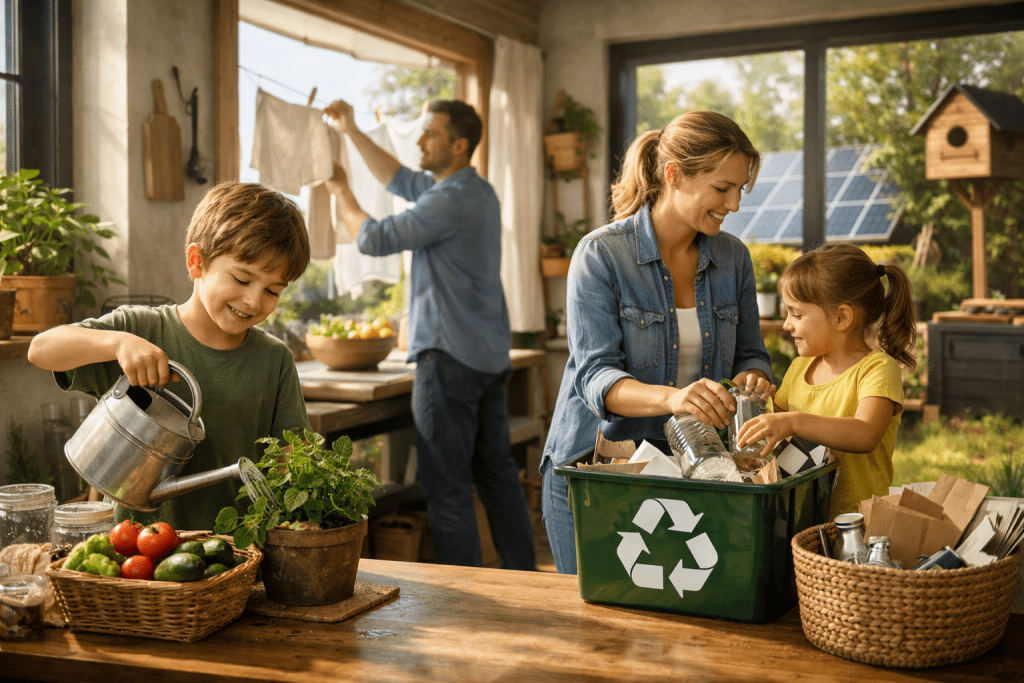
Adopting sustainable habits at home does not require extreme lifestyle changes. What families need is a clear, practical framework that fits daily routines. A well-structured green living checklist for families helps translate environmental awareness into measurable action. Instead of vague intentions, it provides concrete steps that reduce waste, save energy, and lower household expenses.
Families influence long-term environmental impact through everyday decisions: what they buy, how they use energy, and how they manage waste. Children also learn habits directly from household practices. By implementing a realistic green living checklist for families, sustainability becomes part of normal life rather than a special effort.
Energy Efficiency at Home
Energy consumption is one of the largest contributors to a household’s carbon footprint. The first step in any green living checklist for families is reducing unnecessary electricity use. Start with switching to LED lighting, which uses significantly less energy and lasts longer than traditional bulbs.
Unplug devices when not in use, especially chargers, televisions, and small appliances. Standby power still consumes electricity. Using power strips makes it easier to turn off multiple devices at once.
Adjust thermostat settings to reduce heating and cooling demands. Even a 1–2 degree change can make a measurable difference over time. Seal windows and doors to prevent air leakage and improve insulation efficiency.
Encourage natural lighting during the day. Open curtains instead of turning on lights. Teach children to turn off lights and fans when leaving a room.
Waste Reduction and Smart Recycling
Waste management is central to sustainable living. A structured green living checklist for families should prioritize reducing waste before recycling. The most effective strategy is minimizing what enters the home in the first place.
Avoid single-use plastics whenever possible. Replace disposable bottles with reusable water bottles and cloth shopping bags. Choose products with minimal or recyclable packaging.
Create a clear home recycling system. Label bins for paper, plastic, metal, and organic waste. Make it easy for every family member to follow the system without confusion.
Composting is another powerful step. Food scraps such as vegetable peels and coffee grounds can be composted instead of sent to landfills. Compost reduces methane emissions and creates nutrient-rich soil for gardens.
Encourage mindful consumption. Before purchasing, ask whether the item is necessary, reusable, or durable. Teaching children this evaluation process builds long-term environmental awareness.
Sustainable Food Choices
Food consumption significantly impacts environmental sustainability. A comprehensive green living checklist for families includes dietary adjustments that lower carbon emissions. Reducing food waste is the first priority.
Plan meals weekly to avoid overbuying. Store food properly to extend freshness. Leftovers should be reused creatively rather than discarded.
Incorporate more plant-based meals into the family menu. Even reducing meat consumption a few days per week can lower environmental impact. This approach does not require full dietary change but promotes balance.
Buy local and seasonal produce when available. Local sourcing reduces transportation emissions and supports community farmers. Seasonal foods are often fresher and require fewer preservation resources.
Encourage home gardening, even on a small scale. Herbs, tomatoes, or leafy greens can be grown in limited space. Gardening also teaches children responsibility and environmental connection.
Water Conservation Practices
Water usage is often overlooked in household sustainability efforts. An effective green living checklist for families includes clear strategies for conserving water daily. Small changes can reduce both environmental impact and utility costs.
Install low-flow showerheads and faucets to limit water consumption without reducing comfort. Repair leaks immediately, as dripping faucets waste significant amounts over time.
Turn off the tap while brushing teeth or washing dishes manually. Run dishwashers and washing machines only with full loads. These simple habits significantly reduce water use.
Collect rainwater where possible for watering plants. Outdoor water usage can be optimized by watering early in the morning or late in the evening to prevent evaporation.
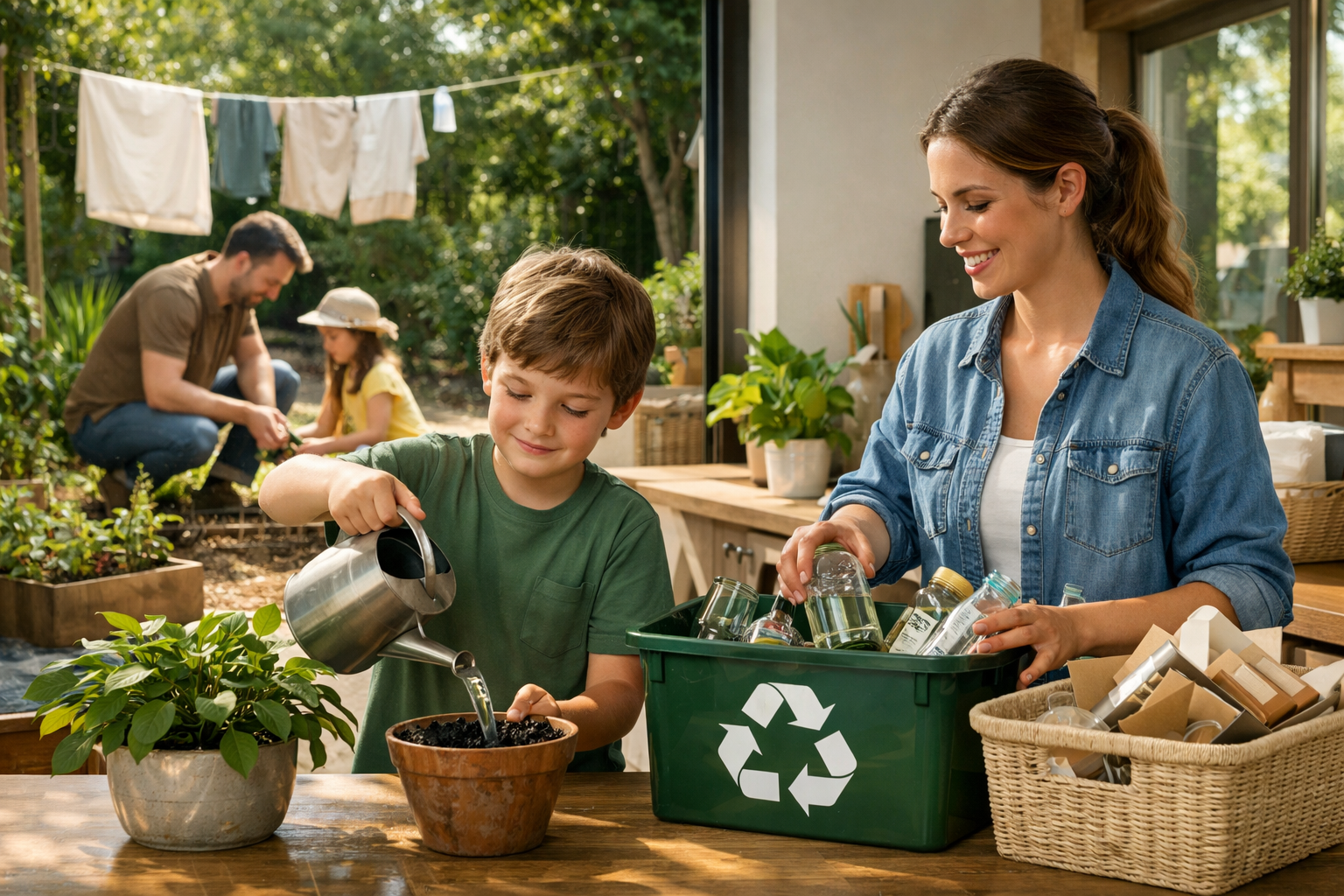
Teach children that water is a limited resource. Building awareness early ensures conservation habits remain consistent into adulthood.
Eco-Friendly Household Products
The products used inside the home directly affect environmental health. A practical green living checklist for families includes switching to safer, sustainable alternatives. Cleaning products are a key starting point.
Choose biodegradable and non-toxic cleaners to reduce chemical pollution. Many effective solutions can be made from simple ingredients like vinegar and baking soda.
Avoid disposable cleaning materials such as paper towels. Replace them with washable cloths or microfiber towels. This reduces landfill waste and long-term costs.
Select durable goods over fast-replacement items. Furniture, clothing, and appliances should be evaluated for longevity. Investing in quality reduces frequent disposal and resource consumption.
Encourage second-hand purchases when appropriate. Thrift stores and resale platforms extend product life cycles and reduce demand for new manufacturing.
Building Green Habits as a Family Culture
Sustainability is most effective when it becomes part of household culture. A green living checklist for families should not function as a one-time task list but as a continuous system of habits. Regular review helps identify areas for improvement.
Assign simple sustainability responsibilities to children. One child may monitor recycling, another ensures lights are turned off. Shared responsibility increases engagement.
Track progress visibly, such as reduced energy bills or lower waste output. Tangible results reinforce consistent behavior. Families are more likely to maintain habits when outcomes are measurable.
Discuss environmental topics openly at home. Encourage critical thinking about advertising, consumer choices, and resource use. Education strengthens long-term commitment to sustainable living.
Sustainable living does not require perfection. It requires consistency and incremental improvement. Even small daily actions, when multiplied across families, create meaningful environmental impact.
A structured green living checklist for families provides clarity and direction. By focusing on energy efficiency, waste reduction, sustainable food choices, water conservation, and eco-friendly products, families can reduce their footprint without overwhelming disruption. Long-term change begins with practical steps taken consistently at home.
Conclusion
A clear and actionable green living checklist for families transforms sustainability from an abstract idea into daily practice. When energy use, waste management, food choices, water conservation, and product selection are addressed systematically, environmental responsibility becomes routine. Consistent small actions, reinforced over time, create lasting impact at both household and community levels.
FAQ
Q: What is a green living checklist for families? A: It is a structured list of practical actions households can follow to reduce environmental impact through energy savings, waste reduction, and sustainable daily habits.
Q: How can families start living more sustainably without major expenses? A: Begin with low-cost habits such as turning off unused lights, reducing food waste, using reusable bags, and conserving water.
Q: Does green living require eliminating all plastic use? A: No, the goal is to reduce single-use plastics and choose reusable or recyclable alternatives whenever possible.
Q: How can children be involved in sustainable living at home? A: Assign simple responsibilities such as sorting recycling, turning off lights, or helping with composting to build consistent habits.
Q: Is plant-based eating necessary for green living? A: It is not mandatory, but reducing meat consumption and minimizing food waste significantly lowers environmental impact.
