
How to Start Composting at Home: Easy Steps for Beginners

Learn how to start composting at home with simple tips to reduce waste, enrich your garden, and contribute to a healthier planet for everyone.
Many of us want to live more sustainably. One easy way is to start composting at home. A good guide can help beginners turn food waste into nutrient-rich soil.
Would you try turning food scraps into something valuable? We think composting is key to a greener life. We’re excited to share our knowledge with you.
By following simple steps and using the right materials, you can make your garden thrive.
We aim to give you the tools and info to start composting. We’re sure our guidance will help you reduce waste and live sustainably. Learning to compost is a great first step, and we’re here to support you.
Understanding the Basics of Home Composting
Composting is a natural way to turn waste into a valuable resource. It involves breaking down organic materials into a nutrient-rich soil amendment. This process is complex, involving microorganisms, temperature, and moisture.
The science behind decomposition is fascinating. Microorganisms like bacteria and fungi break down organic matter. They release carbon dioxide, water, and heat in the process. This happens in three stages: mesophilic, thermophilic, and maturation.
What Is Composting?
Composting is a green way to manage waste. It reduces landfill waste and cuts down on greenhouse gas emissions. By composting at home, we can make a natural fertilizer that helps plants grow and saves water.
The Science Behind Decomposition
The decomposition process depends on temperature, moisture, and oxygen levels. A good compost pile has both “green” and “brown” materials. This mix helps microorganisms break down waste efficiently.
Benefits of Home Composting
Home composting has many benefits. It reduces waste, makes a natural fertilizer, and supports sustainable gardening. Some key advantages include:
- Reduced greenhouse gas emissions
- Conservation of water
- Creation of a natural fertilizer
- Improved soil structure and fertility
By learning about home composting, we can use decomposition to benefit our gardens and communities.
| Composting Method | Benefits | Challenges |
|---|---|---|
| Outdoor Bin Composting | Easy to set up, low cost | Space requirements, pest control |
| Indoor Composting Systems | Convenient, odor-controlled | Higher cost, limited capacity |
| Vermicomposting | High nutrient content, low maintenance | Specialized equipment, worm care |
Essential Materials for How to Start Composting at Home
To start composting, we need the right stuff. This includes a compost bin, which you can buy or make from pallets or wire mesh. Pick a bin that fits your yard and waste needs. A 3x3x3 feet bin is a good size for composting.
We also need tools like a pitchfork, shovel, and aerator. These help mix and aerate the compost. An aerator adds oxygen and cuts down on smells.

Other key tools are a compost turner and thermometer. The turner mixes materials and prevents clumps. The thermometer checks the pile’s temperature, keeping it right for decomposition. With these tools, we can make great compost for our gardens.
- Compost bin: a container to hold the composting materials
- Composting tools: pitchfork, shovel, aerator, and compost turner
- Compost thermometer: to monitor the temperature of the pile
With these materials, we can set up a composting station that’s easy to manage. This way, we make quality compost and help the environment. Choose durable materials for a successful composting journey.
Choosing Your Composting Method
There are many composting methods to choose from. Each has its own benefits and drawbacks. We’ll look at outdoor, indoor, and vermicomposting to help you pick the best one for you.
Composting methods differ in space needs, upkeep, and what you can compost. Outdoor composting is best for those with big yards. Indoor composting is great for city dwellers. Vermicomposting is perfect for quick composting of food waste.
Outdoor Composting Options
Outdoor composting uses bins or piles for organic materials. It’s good for those with lots of outdoor space. It’s great for composting yard waste and food scraps.
Indoor Composting Systems
Indoor composting systems are for small spaces. They can handle food waste and other organic materials. These systems are compact and don’t smell, making them ideal for indoors.
Vermicomposting Basics
Vermicomposting, or worm composting, uses worms to break down materials. It’s perfect for food waste and makes high-quality compost fast.
Think about space, upkeep, and output when choosing a composting method. The right method can make composting easy and sustainable.
What Can and Cannot Be Composted
Many people wonder what can be composted at home. The key is to use materials high in carbon and nitrogen. This includes food scraps, yard trimmings, and other organic waste. But, some items should not be composted because they attract pests or smell bad.
Meat, dairy, and oils are not good for composting. They can draw pests and smell bad. Also, pet waste and sick plants should be avoided. They might have harmful germs. And, don’t compost synthetic stuff like plastics and fabrics. They don’t break down well.
Here’s a list of safe composting materials:
- Fruit and vegetable scraps
- Yard trimmings, such as leaves and grass clippings
- Coffee grounds and tea bags
- Eggshells and bread
And here’s what not to compost:
- Meat, dairy, and oils
- Pet waste and diseased plants
- Synthetic materials, such as plastics and fabrics
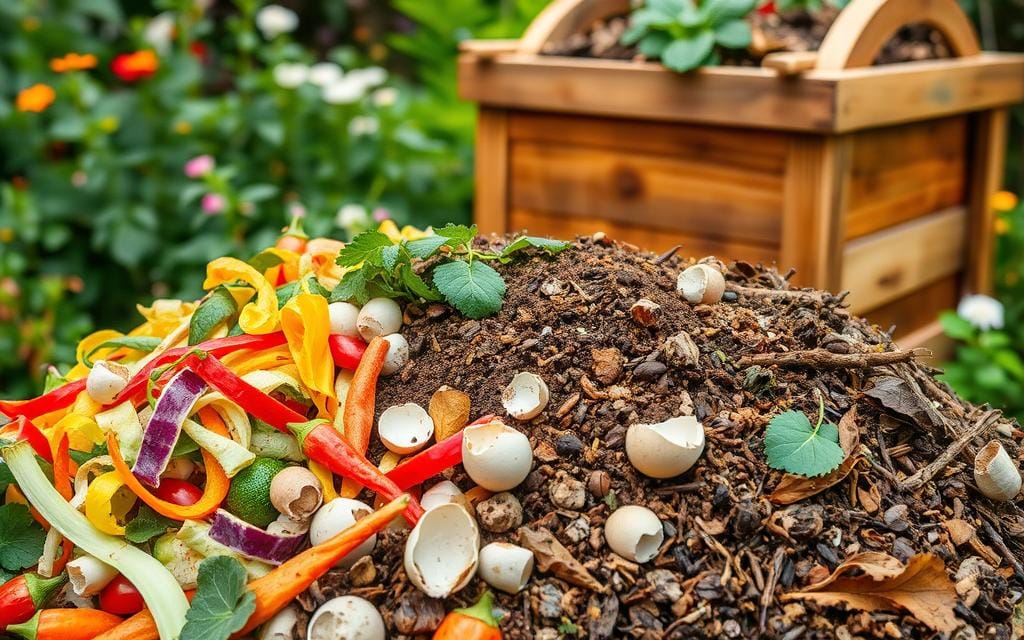
Knowing what to compost and what not helps make a healthy compost pile. This pile will make your garden grow strong. Always check what you add to your pile to make sure it’s safe and right for composting.
Creating the Perfect Compost Mix
To make a great compost pile, you need to mix green and brown materials. Green stuff like food scraps and grass clippings have lots of nitrogen. Brown stuff, like dried leaves and twigs, has a lot of carbon. It’s important to get the mix right for a healthy pile.
Start with 2/3 brown materials and 1/3 green materials. This mix helps everything break down well and keeps odors and pests away. Green materials include fruit and veggie scraps, tea bags, and coffee grounds. Brown materials are shredded newspaper, cardboard, and small twigs.
- Add a mix of green and brown materials to your compost pile
- Include a variety of materials, such as food scraps, leaves, and twigs
- Avoid adding too much of any one material, as this can disrupt the balance of your compost mix
By following these tips and keeping your compost mix balanced, you can make a great compost pile. It will help reduce waste and make your garden soil richer.
Maintaining Your Compost Pile
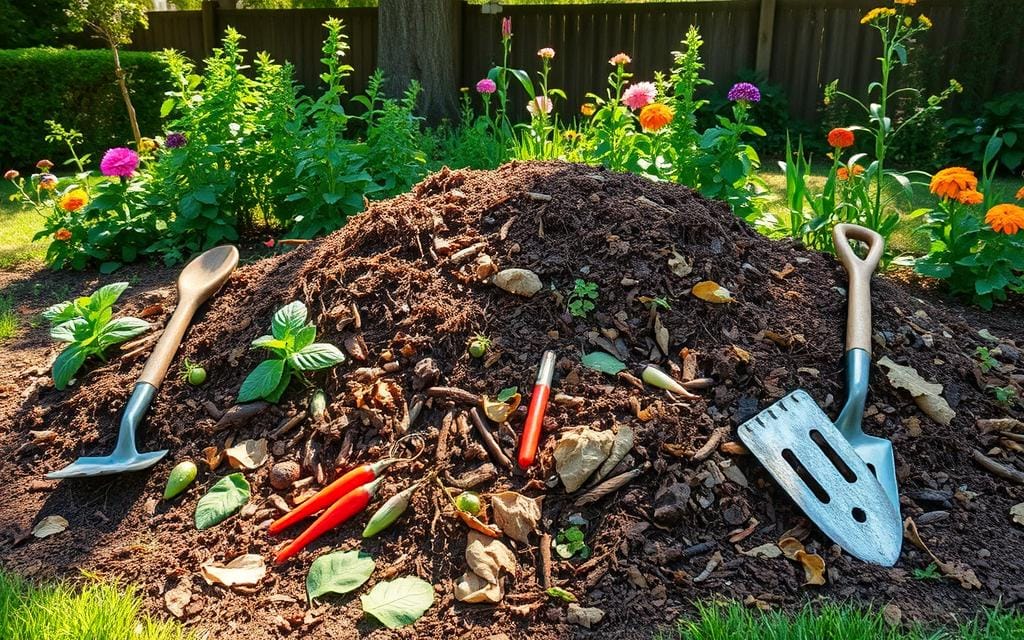
We know that keeping your compost pile in good shape is key. It’s important to watch over things like air, moisture, and heat. Turning the pile often helps bring in oxygen, speeding up how fast things break down.
Here are some tips for keeping your compost pile working well:
- Keep it moist, like a damp sponge
- Turn the pile often to let in air
- Keep the temperature right for breaking down
By following these tips, your compost pile will stay productive. Remember, taking care of your compost is a job that needs regular effort.
Troubleshooting Common Composting Problems
Composting can face common issues. These problems can be annoying, but knowing how to fix them is key. We’ll look at issues like bad smells, too much or too little moisture, and pests. We’ll give you tips to keep your composting on track.
Most compost problems come from not balancing the pile right. It’s important to check your compost often and adjust it when needed. This might mean adding more dry stuff to soak up wetness or green stuff to speed things up. By staying on top of it, you can avoid problems and have a great compost pile.
Dealing with Odors
Controlling smells is a big part of composting. Bad smells can mean the compost is too wet or not getting enough air. To fix this, make sure your compost has enough air and isn’t too wet. Adding straw or shredded newspaper can help soak up extra moisture and cut down on bad smells.
Managing Moisture Levels
Moisture is key in composting. Too much can cause bad smells and slow things down, while too little can slow things down too. Check your compost often and add stuff as needed to keep it just right. Using a compost turner can also help mix things up and speed things along.
Controlling Pests
Pests like rodents and flies can be a problem in composting. They’re drawn to food waste and other organic stuff. To keep pests away, keep your compost pile tidy and consider using barriers or natural repellents like citrus peels or hot peppers. These steps can help keep pests out and your compost healthy.
Using Your Finished Compost
Now that you’ve made your finished compost, it’s time to use it in gardening and landscaping. This compost is full of nutrients that can make your soil better. This leads to healthier plants and more food.
There are many ways to use your compost. You can mix it into potting soil for plants, use it as a natural fertilizer, or improve soil in landscaping. Here are some tips to get the most from your compost:
- Mix 2-4 inches of finished compost into the top 6-8 inches of soil to improve soil structure and fertility
- Use finished compost as a mulch to retain moisture and suppress weeds
- Incorporate finished compost into your gardening routine to reduce the need for synthetic fertilizers and pesticides
By using these tips, you can make the most of your compost. This will help you enjoy the fruits of your labor.
Always handle your compost safely and follow good gardening practices. With a bit of creativity, you can unlock your compost’s full potential. This will take your gardening to the next level.
| Compost Use | Benefits |
|---|---|
| Gardening | Improves soil fertility and structure, increases crop yields |
| Landscaping | Enhances soil quality, reduces erosion and runoff |
| Houseplants | Provides nutrients, improves plant health and appearance |
Your Journey to Sustainable Living Through Composting
As we wrap up our guide to composting, we see how important it is. It helps us live more sustainably by reducing waste and saving resources. This journey not only helps the planet but also connects us closer to nature.
Composting lets us positively impact our world. It’s a simple way to live greener and cut down on pollution. We invite everyone to keep going on this path of sustainability with us.
By sticking with composting, we help build a greener future. We lessen landfill waste and save precious resources. Our combined efforts can make a big difference for the planet, and we can all be proud of our role in it.
We’re dedicated to keeping our planet green through composting. We hope our guide has motivated you to join us. Together, we can make a better world for all.
Ready to turn waste into treasure? Visit earthguardiansonline.com for a complete guide on how to start composting at home and make a positive impact today!
FAQ
What is composting and how does it work?
Composting turns organic stuff like food waste and yard trimmings into a soil booster. It mixes these materials with tiny life forms like bacteria and fungi. These tiny helpers break down the organic stuff into a valuable soil amendment.
What are the benefits of composting at home?
Home composting cuts down on landfill waste and makes a natural plant food. It also saves water and helps fight climate change. Plus, it supports living in a more sustainable way.
What materials can be composted at home?
You can compost many things at home, like fruit and veggie scraps, tea bags, and coffee grounds. Eggshells and yard trimmings are good too. But, avoid meat, dairy, and oils to avoid pests and bad smells.
How do I choose the right compost bin for my needs?
Pick a compost bin based on size, material, and how it breathes. It should be big enough for your stuff, easy to clean, and well-ventilated. This helps with aeration and keeps smells down.
What is the ideal mix of green and brown materials for composting?
Aim for 2/3 brown stuff (like leaves or newspaper) and 1/3 green stuff (like food scraps). This mix gives the right balance for microorganisms to break it down well.
How often should I turn my compost pile?
Turn your compost pile every 7-10 days for better aeration and faster breakdown. But, this can change based on your climate, materials, and bin type.
What are some common composting problems and how can I troubleshoot them?
Issues like bad smells, pests, and slow breakdown are common. Fix these by ensuring good airflow, right moisture, and the right mix of materials. Adding finished compost or worm castings can also help.
How do I know when my compost is finished and ready to use?
Ready compost is dark, crumbly, and smells earthy. It should look uniform and not have any big pieces left. A squeeze test can also tell you if it’s ready.
What are some creative ways to use finished compost in my garden or landscaping?
Use finished compost as a natural fertilizer, soil enhancer, or mulch. It’s great for making potting mixes, seed starters, or compost tea. It improves soil, boosts plant growth, and increases yields.
