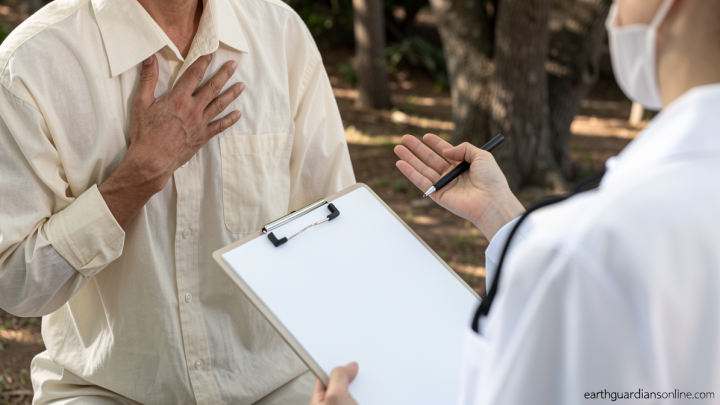
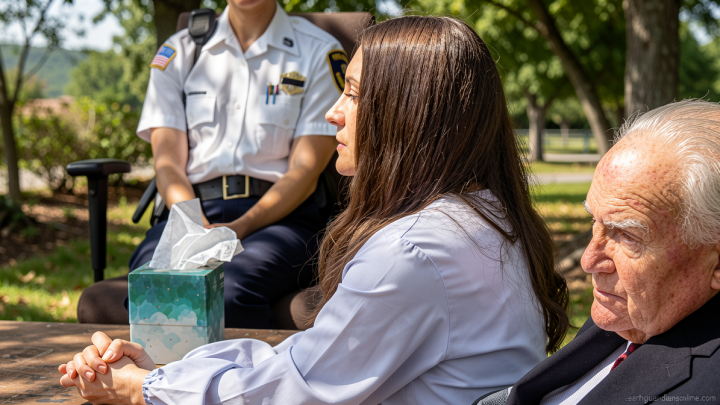
People are exercising away their grief. What does the science say?

Daftar Isi
Grief in the Weight Room: How a New Wave of Emotion-Driven Fitness Is Rewiring How People Process Loss
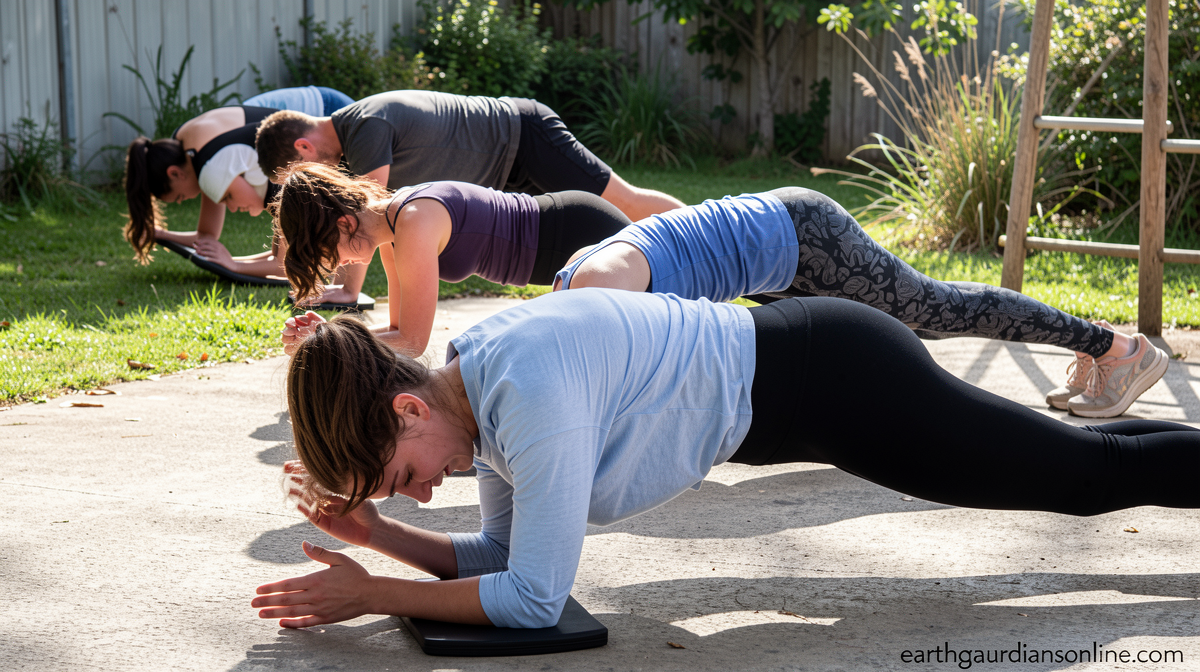
Earthguardiansonline.com – Thirty people stood in a dimly lit New York gym, most of them openly weeping, before a single rep had been lifted. The instructor, Sylvia Borowska, asked each participant to select the heaviest dumbbell or barbell they could manage. Then she gave the instruction that turned the session into something far removed from a typical strength class: hold the weight as though it sat on your shoulders, pressed into your back, or buried in your chest, and perform as many deadlifts as possible during a time window equal to how long the person you’ve lost has been gone. Months. Years. Whatever the number, the clock ran while the bar moved.
Borowska, who has taught Liftonic weight-training classes for five years, had never before opened a session by disclosing her own loss. That night she told the room she had lost her mother to lung disease. The exercise was not metaphorical padding; it was the structural core of the workout.
“Let’s keep going,” Borowska urged on the night of the class. “Grief is heavy, but we’re stronger than that, so let’s prove to ourselves and each other how strong we are.”
A Monthly Pop-Up Built Around Mourning
The class Borowska led was one offering under the banner of Grief, Sweat & Tears, abbreviated GST, an initiative launched in December 2025 that hosts pop-up workout sessions across New York City each month. The $30 admission fee buys entry to what the organization’s own Instagram announcement described as the place “where grief meets fitness.” Roughly 400 people have taken part in a GST class over the past six months, according to the founder.
Betsy Kaplan, 29, created the initiative after losing her father to suicide eight years earlier. She described searching for what she called a “grief space” in New York and finding none that felt accessible. Her design principle was a “no-pressure zone”: participants were never obligated to narrate their stories aloud. The workout itself carried the emotional load.
“We’re here to work out,” Kaplan said. “We’re here to meet people who get it and just make new connections.”
What the Research Actually Says
The emotional intensity of these sessions raises an obvious question: do they help people process grief, rage, or heartbreak in any measurable way? Dr. Ryan Martin, a psychologist, author, and dean of the College of Arts, Humanities and Social Sciences at the University of Wisconsin – Green Bay, offered a candid assessment. Peer-reviewed literature on emotion-targeted fitness classes remains thin.
“It’s not unusual for pop culture to be a little bit further ahead than psychologists are when it comes to advocating some of these things,” Martin said.
That gap does not mean the classes are inert. Exercise physiology has long documented that moderate-to-vigorous activity lowers circulating cortisol, elevates endorphins, and interrupts rumination loops. What is newer is the deliberate pairing of that physiology with a shared emotional frame — a room full of people who have all lost someone, lifting together under a common instruction. Martin emphasized that the communal dimension, not the biomechanics, is where the most distinctive therapeutic value may reside.
Community Without the Confessional
For adults navigating loss, traditional grief support groups can feel confrontational: seated in a circle, expected to speak, expected to be heard. A weight room offers a different grammar. You lift. You breathe. You say one name aloud, and then the bar takes over the conversation.
“This might provide a community where you know you’re connecting with other people’s similar experiences, but you’re not just doing it over that experience, which could be too much,” Martin said.
That distinction matters. The workout supplies a parallel task that absorbs attention while the body processes what the mind resists articulating. Participants bond over shared exertion rather than shared testimony alone.
One Participant’s Story
At an early GST event, Kaplan met Jake Montiel, who had lost his mother three years earlier, when he was 30. GST tradition requires each participant to speak the name of the person they’ve lost at the start of every session. Montiel described being “petrified” the first time he voiced that name in a room of strangers. Yet the young woman beside him had also lost her mother, and the two formed an immediate friendship. The workout that followed gave them a shared physical experience to anchor the bond.
“It’s really an honest, open safe space to basically open up and get that weight off your chest just from saying those powerful words of who you’re grieving,” Montiel said.
Emotion-Centered Fitness Beyond Grief
GST is one node in a broader ecosystem. Rage cycling sessions, anxiety yoga, and dozens of analogous programs have gained traction over recent years, inviting participants to select classes calibrated to a specific emotional state rather than a fitness goal. The social networking platform Meetup reports more than three million registered members spread across roughly 2,200 fitness groups worldwide, underscoring how quickly exercise has become a venue for adult social connection.
In Westminster, Colorado, the model takes a different shape. E-motion Fitness brands itself as part rage room, part gym, part sanctuary. Participants smash paint-filled glass bottles against walls they have first decorated with a word naming their current feeling — rage, fear, grief. Trainers then lead a 45-minute full-body workout before the group migrates to a recovery room furnished with art and quiet music. Elisa Thurston booked an engagement party there, wanting her family to experience a session and, in her words, work out last-minute wedding jitters before the ceremony.
Why the Timing Feels Right
The proliferation of these classes coincides with a cultural shift in how adults approach emotional maintenance. Pickleball tournaments, run clubs, and group fitness have normalized showing up to a gym for reasons that extend beyond aesthetics or performance. Layering a specific emotional narrative onto that infrastructure — naming the loss, setting the timer, lifting through the grief — gives participants a structured container for feelings that otherwise lack a socially sanctioned outlet. Whether or not the clinical literature catches up, the demand is already visible: hundreds of New Yorkers have walked into a weight room, cried before the first rep, and chosen to prove, bar by bar, that they are stronger than the months behind them.
Related Reading
Frequently Asked Questions
What is People are exercising away their grief?
People are exercising away their grief is the main topic of this guide. The article explains the context, practical details, and next steps readers should understand.
Why does People are exercising away their grief matter?
People are exercising away their grief matters because readers are looking for a useful answer, not just a short summary. Good content should match search intent and help them decide what to do next.