
Taylor Farms lettuce remains the focus of cyclosporiasis investigation, despite false positive test
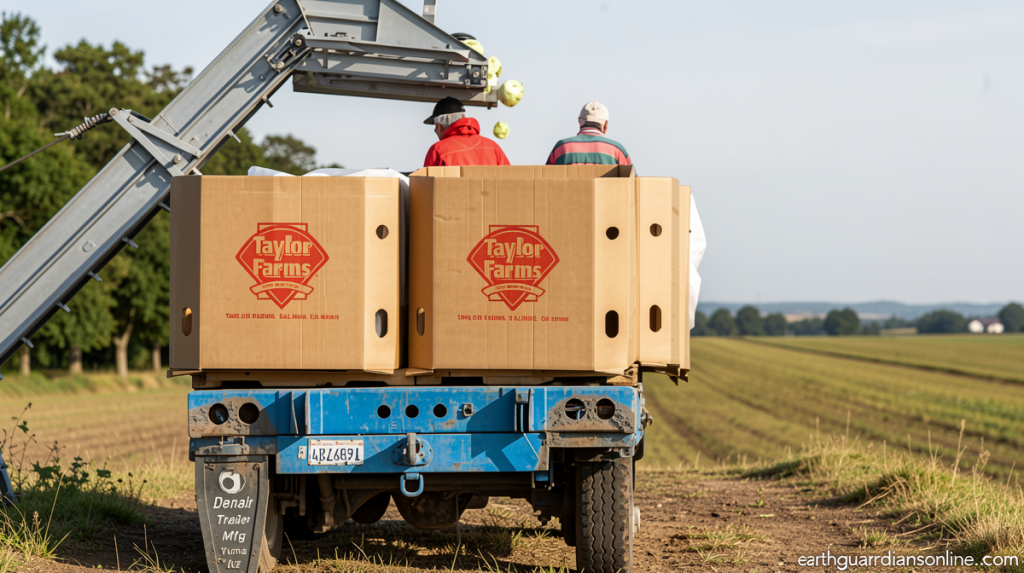
Taylor Farms Lettuce Still Main Suspect in Cyclospora Outbreak
Earthguardiansonline.com – Health officials are keeping their focus on Taylor Farms lettuce despite a laboratory error that initially suggested otherwise. The FDA maintains that shredded iceberg lettuce from the company’s Central Mexico facilities is the likely source of a massive cyclospora outbreak, even after a key test was reclassified as a false positive. Both traceback findings and outbreak statistics continue pointing to the same origin.
“FDA’s traceback investigation and outbreak data continue to converge on shredded iceberg lettuce from Taylor Farms locations in Central Mexico,” the agency stated on Monday. “Protecting the American public remains our highest priority. We encourage the public to continue to avoid all products listed in Taylor Farms voluntary recall.”
Recall Spans Multiple States
The produce giant issued a voluntary recall on Sunday covering iceberg lettuce distributed to twenty-seven states. The company sells lettuce and pre-packaged salad kits under various retail brand names, though the announcement didn’t name specific stores or restaurants. Meanwhile, Taco Bell removed the affected shredded iceberg lettuce from locations across five states as investigators work to contain the situation.
Understanding the Lab Error
On Saturday, the FDA announced that a sample from the company had tested positive for cyclospora. A Sunday update clarified that result “should be considered a false positive.” The company noted on Monday that “FDA apologized to us” about the testing mistake.
“To be clear, at this moment, FDA has not identified a single positive product test result for Cyclospora,” the company’s statement emphasized.
The FDA issued its own clarification on Monday to address public confusion. “To clarify, this false-positive lab sample DOES NOT change the basis for FDA’s ongoing outbreak investigation or the overwhelming epidemiological data supporting the current voluntary recall,” the agency explained. Health officials confirmed they did not extend an official apology to the company, noting that epidemiological evidence can justify public health actions even without direct laboratory confirmation.
Expert View on the Investigation
Frank Yiannas, former deputy commissioner of food policy and response at the FDA, called the false positive result “unfortunate – and consequential.” He acknowledged consumers might reasonably conclude the recall was unnecessary if the laboratory finding proved incorrect.
“That not what this means,” Yiannas explained. “Because it’s so difficult to find cyclospora on produce, he said, ‘epidemiological evidence alone can, in some circumstances, provide sufficient justification for public health action.'”
Yiannas praised the FDA for its transparency in quickly communicating the laboratory mistake, but noted that transparency alone requires follow-through. “It is equally important that the agency determine the root cause of the laboratory or quality control failure, implement appropriate corrective actions, and share the lessons learned with both the public and the regulated industry,” he added.
Challenges in Detection
During a media briefing on Monday, FDA representatives highlighted the inherent difficulties in detecting and tracing cyclospora within fresh produce. The parasite’s lifecycle presents unique challenges for investigators. Because symptom development can require a week or more, the contaminated food item may no longer be available for testing by the time cases are identified.
“Given that time, as well as the need to do epidemiology, all of the potentially contaminated product could have already been discarded or consumed,” an FDA official noted. “And so it is a little bit of a chasing game when it comes to testing. But the data from an epidemiology and trace back standpoint, we believe, is very strong.”
Outbreak Scope
The evidence supporting the recall stems primarily from interviews with individuals who tested positive for cyclospora and were confirmed to belong to the same illness cluster. As of Monday, more than 8,000 cyclosporiasis cases have been documented across the outbreak, which spans Michigan, Ohio, Indiana, Kentucky, and West Virginia.
If all cases prove interconnected, this would represent the largest foodborne illness outbreak in recent U.S. history.
