
Why engaging your core isn’t always the answer
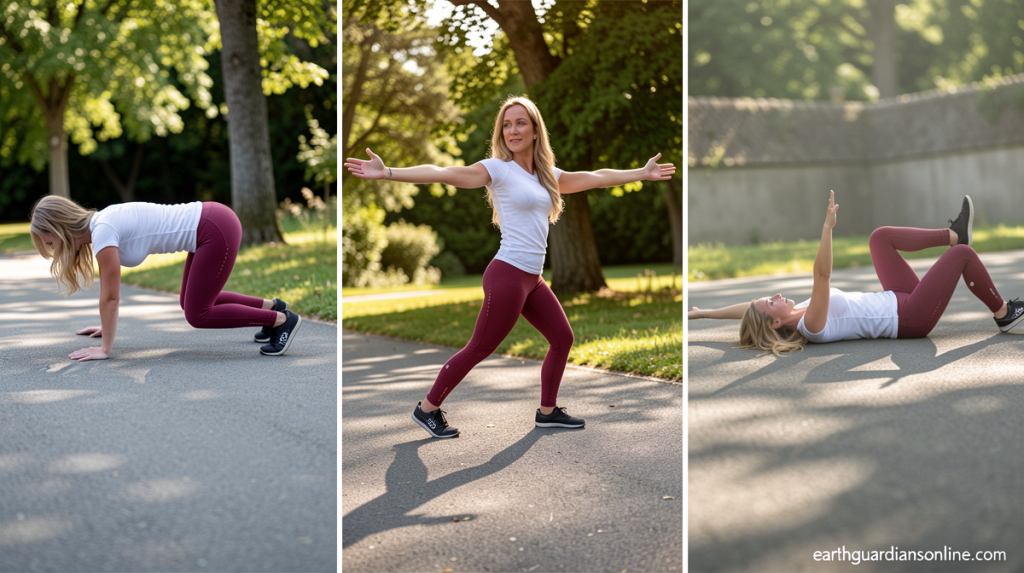
Core Engagement: Finding Balance Between Strength and Flexibility
Earthguardiansonline.com – Modern wellness culture has turned “bracing your core” into a catchphrase heard in nearly every fitness class and physical therapy session. Yet this well-intentioned advice may be doing more harm than good for many people. The constant tightening of abdominal muscles—often adopted to improve posture or achieve aesthetic goals—can actually undermine the very stability it aims to create.
Dana Santas, recognized as the “Mobility Maker,” brings over twenty years of experience working with professional athletes to this conversation. As a certified strength and conditioning specialist and mind-body coach, she has observed a pattern that extends far beyond elite sports. Her book, “Practical Solutions for Back Pain Relief,” addresses many of these issues, but her insights go deeper into how we misunderstand core function.
The Core as a Dynamic System
Most people think of their core as simply their abdominal muscles. This limited view misses something crucial. The core operates as a complete 360-degree system that encompasses the abdominal wall, mid and lower back muscles, the diaphragm, and the pelvic floor. These components work in concert to transfer force through the body while simultaneously supporting the spine, pelvis, and rib cage.
True core stability is dynamic, increasing support as demand rises and easing as demand abates.
This adaptability is exactly what separates resilient athletes from those who constantly struggle with stiffness and discomfort. The strongest performers aren’t necessarily the ones holding the most tension. They are the ones whose core systems can adjust fluidly to whatever challenge presents itself.
When Bracing Becomes a Problem
Bracing itself serves an important purpose. During heavy lifts or tasks requiring spinal stiffness, engaging the core maximally makes complete sense. The issue emerges when this high-tension strategy becomes our default mode throughout the day.
Continual over-bracing replaces responsive control with rigidity. When someone grips their abs at maximum effort regardless of the actual task, their torso essentially becomes an immobile block. Every movement—walking, reaching, rotating—then requires working against this unnecessary stiffness. Over time, this pattern creates chronic tension and pain that stretching alone cannot resolve.
The Breathing-Stability Connection
One of the most overlooked aspects of core function involves breathing. The diaphragm plays a dual role: it drives respiration while simultaneously acting as a stabilizing postural muscle alongside other core components.
When the diaphragm contracts during inhalation, the pelvic floor relaxes, and vice versa. Together, the diaphragm and abdominal wall manage internal abdominal pressure, which contributes directly to spinal support and efficient force transfer. However, emerging research reveals an important trade-off.
A 2023 study involving 31 healthy adults demonstrated that abdominal bracing during lifting tasks reduced overall lung volume despite increased diaphragm movement. This doesn’t mean bracing is wrong—it simply means that a strategy designed for heavy loads becomes unnecessarily restrictive when applied constantly.
Chronic excessive bracing leads to shallow breathing and breath-holding, which reinforces sympathetic arousal — your fight-or-flight response — and increases muscle tension.
This creates a self-perpetuating cycle. Added tension restricts breathing further, which increases tension, and so on. The body remains in a heightened state of alertness even during rest.
Matching Engagement to Demand
The solution lies in calibrating muscular effort to match the actual requirements of each activity. Carrying groceries requires strength and stability but demands far less rigid activation than a heavy deadlift would. Similarly, mopping floors, raking leaves, and shoveling snow all call for dynamic stability that supports rotational movement rather than constant maximum contraction.
Three foundational exercises can help rebuild responsive trunk control across all three planes of motion. These movements progress from lying positions to standing, making them accessible for various fitness levels. Integrating them into existing routines two to three times weekly—prioritizing controlled movement over speed—can gradually retrain the core to function as intended.
Before beginning any new exercise program, consulting with a healthcare professional remains essential, particularly for individuals with existing conditions or injuries.
Related Reading
Frequently Asked Questions
What is Why engaging your core isn t always?
Why engaging your core isn t always is the main topic of this guide. The article explains the context, practical details, and next steps readers should understand.
Why does Why engaging your core isn t always matter?
Why engaging your core isn t always matters because readers are looking for a useful answer, not just a short summary. Good content should match search intent and help them decide what to do next.
