
World History for Beginners: A Complete Guide to Understanding the Past
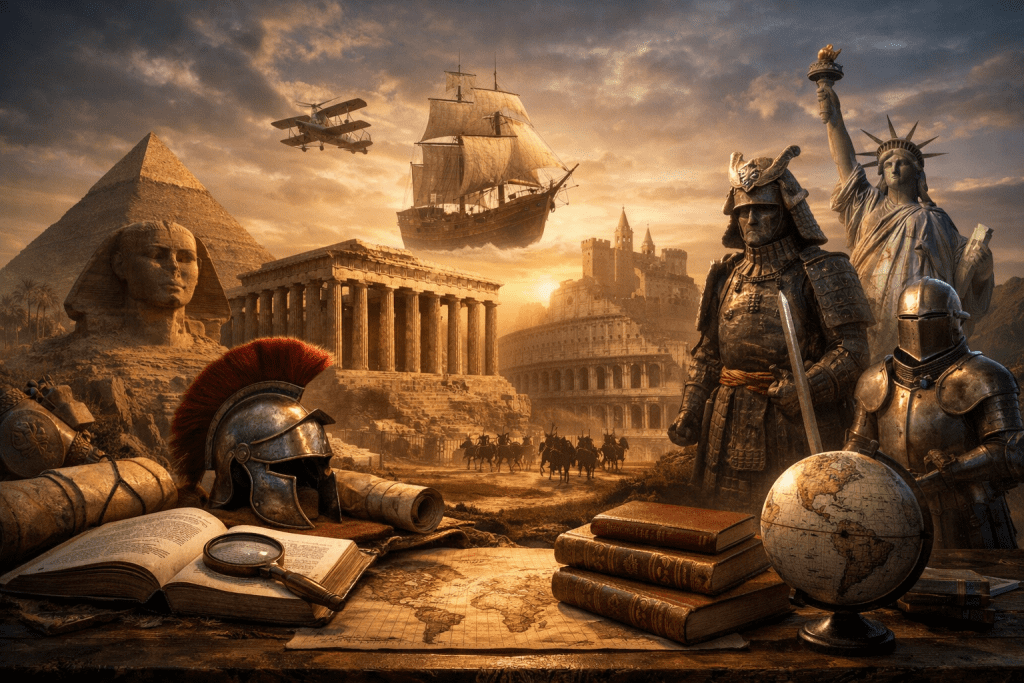
World History for Beginners: A Complete Guide to Understanding the Past
World history can seem like an overwhelming topic for beginners, with so many events, civilizations, and individuals shaping the world as we know it. However, understanding the key moments in history is crucial for developing a deeper perspective on modern issues. This world history for beginners guide will break down major historical periods and events to help you build a strong foundation of knowledge.
What is World History and Why Does it Matter?
World history refers to the study of the past, including the events, people, societies, and cultures that have influenced the modern world. For beginners, understanding history is not only about memorizing dates but also about comprehending the reasons behind historical shifts. From the rise and fall of empires to significant technological advancements, history helps us understand why the world works the way it does.
Knowing world history allows us to see patterns, connections, and lessons from the past. These insights are valuable for decision-making, fostering empathy, and preventing the mistakes of previous generations. The world history for beginners guide provides a straightforward roadmap to understanding these transformative periods.
The Ancient Civilizations
The first chapters of world history are dominated by ancient civilizations. These early societies laid the groundwork for modern governance, culture, and science.
Mesopotamia: The Cradle of Civilization
Mesopotamia, often referred to as the Cradle of Civilization, is where some of the earliest forms of writing, government, and agriculture emerged. Situated between the Tigris and Euphrates rivers, this region gave rise to the Sumerians, Akkadians, Babylonians, and Assyrians. Key innovations included the invention of the wheel and the cuneiform script, which became a cornerstone for communication.
Ancient Egypt: The Land of the Pharaohs
Located along the Nile River, Ancient Egypt is one of the most iconic civilizations in history. Known for its monumental architecture like the pyramids and the Sphinx, Egypt also developed advances in medicine, mathematics, and astronomy. The Egyptian pharaohs, often seen as divine rulers, shaped not only the culture of their people but also left a lasting legacy in art, religion, and governance.
The Indus Valley and Ancient China
The Indus Valley Civilization in present-day Pakistan and India was one of the earliest urban societies, known for its sophisticated city planning and advanced drainage systems. Meanwhile, in China, dynasties like the Shang and Zhou laid the foundation for China’s rich cultural heritage and philosophy, including Confucianism and Daoism, which continue to influence the world today.
The Rise of Empires
As civilizations expanded, empires began to emerge, often through military conquest, diplomacy, and cultural assimilation. The development of large empires in the ancient world marks a significant chapter in world history for beginners guide.
The Roman Empire: From Republic to Empire
The Roman Empire is one of the most influential empires in world history. Starting as a small republic, Rome grew through military conquest, eventually dominating vast regions of Europe, North Africa, and the Middle East. The Pax Romana, or Roman Peace, allowed for economic growth, cultural exchange, and the spread of Roman law and governance systems that continue to influence Western civilization today.
The Byzantine Empire: A Legacy of the Romans
After the fall of Rome in the 5th century, the Byzantine Empire continued Roman traditions in the East. Its capital, Constantinople, became a hub of trade, culture, and learning. The Byzantine Empire also preserved Greek and Roman knowledge, which would later spark the Renaissance in Europe.
The Islamic Caliphates
During the Middle Ages, Islamic Caliphates spread across much of the Middle East, North Africa, and Spain, bringing with them groundbreaking advances in science, mathematics, philosophy, and architecture. These empires played a crucial role in preserving knowledge and fostering intellectual exchange between East and West.
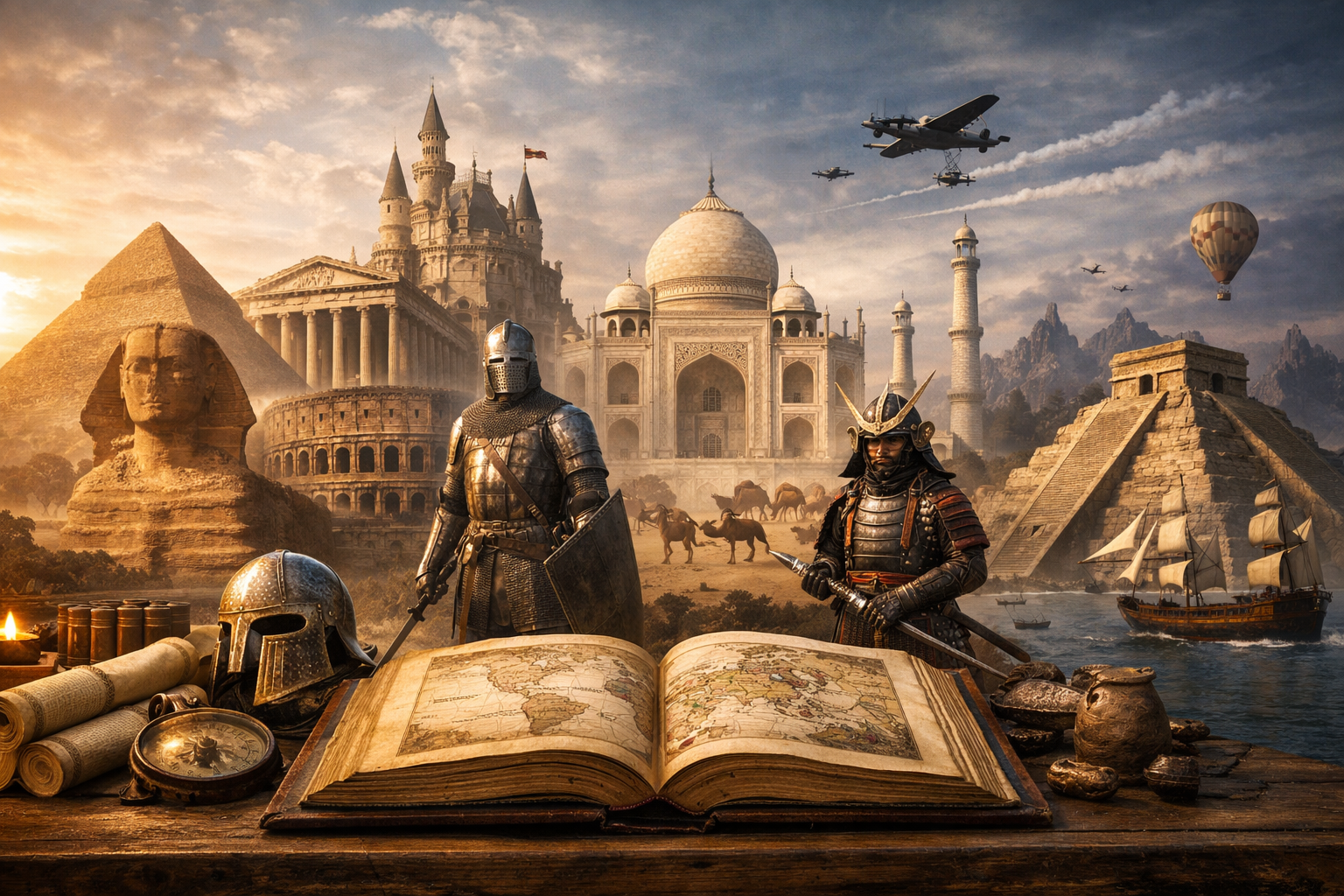
The Age of Exploration and Colonization
The Age of Exploration marked a new era in world history, where European powers began to explore and colonize lands in Africa, Asia, and the Americas. This period profoundly shaped the global trade network and had lasting consequences on indigenous populations.
The Voyages of Columbus and the Age of Discovery
In 1492, Christopher Columbus’s journey to the Americas set off a wave of European exploration. Soon after, other explorers like Vasco da Gama and Ferdinand Magellan expanded the known world, leading to the exchange of goods, culture, and ideas. However, this era also led to the exploitation and colonization of native populations, which had devastating effects on indigenous peoples.
The Atlantic Slave Trade and Its Legacy
One of the darkest chapters in world history, the Atlantic Slave Trade, involved the forced transportation of millions of Africans to the Americas. This practice lasted for several centuries, profoundly impacting African societies, as well as shaping the economies and racial dynamics in the Americas.
The Modern World: Revolutions and Industrialization
The modern era saw the rise of revolutions, the expansion of empires, and significant industrialization, all of which set the stage for the contemporary world.
The American and French Revolutions
The American Revolution (1775-1783) and the French Revolution (1789-1799) were two pivotal events that reshaped global politics. These revolutions challenged traditional notions of monarchy and aristocracy, leading to the establishment of democratic republics. The ideas of liberty, equality, and fraternity spread across the world, inspiring other independence movements.
The Industrial Revolution
The Industrial Revolution in the 18th and 19th centuries transformed economies and societies, especially in Europe and the United States. Innovations in machinery, transportation, and manufacturing dramatically increased productivity, but also introduced new social challenges such as child labor, urbanization, and environmental degradation.
World Wars and the Birth of Modern Nations
The two World Wars in the 20th century radically altered global power structures. The wars led to the collapse of empires, the creation of new countries, and the formation of international organizations like the United Nations. The aftermath of World War II also sparked the Cold War, which shaped international relations for much of the second half of the century.
Conclusion
Understanding world history provides a deeper appreciation for the present and helps us navigate the complexities of the future. From the rise of ancient civilizations to modern revolutions, the events of the past have shaped every aspect of our world today. By following the world history for beginners guide, you’ll gain insights into how our ancestors’ choices continue to influence our lives.
—
FAQ
Q: What is the best way to start learning world history for beginners? A: Begin by focusing on key civilizations and their contributions to the modern world. Start with ancient Egypt, Greece, Rome, and China, then move on to more recent events like the world wars and industrialization. Q: How can I remember historical events effectively? A: Create a timeline to help visualize the sequence of events, and focus on understanding the causes and consequences of major events rather than memorizing dates. Q: Why is it important to study world history? A: Studying world history helps us understand how past events have shaped modern societies, influences current political situations, and offers lessons on avoiding past mistakes. Q: How does world history help us understand today's issues? A: History provides context for current global challenges, such as political instability, social inequality, and environmental concerns. It allows us to recognize patterns and work towards solutions. Q: What are the most important historical periods to study for beginners? A: Start with the ancient civilizations (Mesopotamia, Egypt, Greece, China), then study the rise and fall of empires (Roman Empire, Islamic Caliphates), and finally, focus on the modern era (Revolutions, Industrial Revolution, World Wars).
