
Fact check: How can a country actually withdraw from NATO?
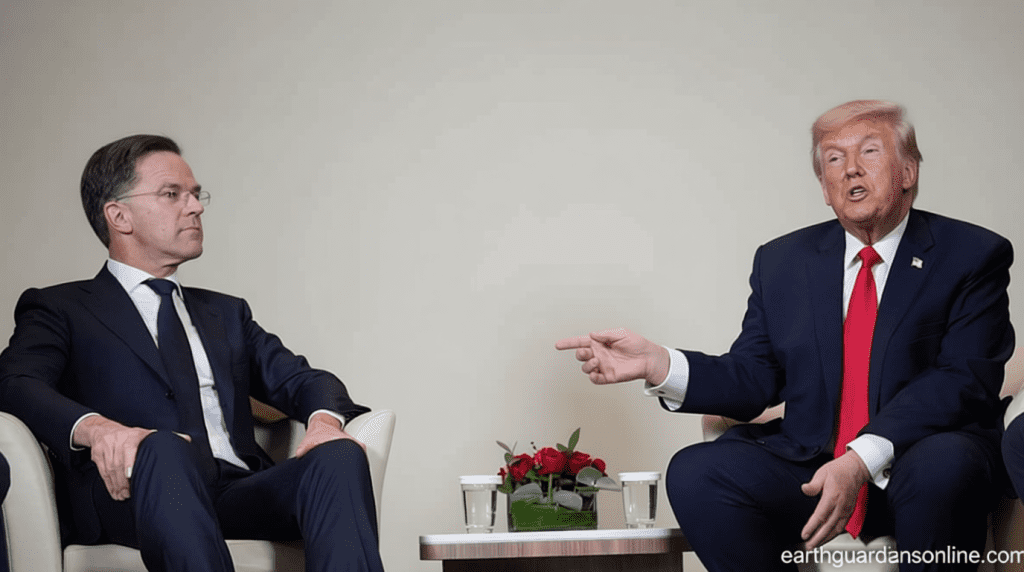
Fact Check: How Can a Country Actually Withdraw from NATO?
Trump’s Threats and the Legal Framework
Recent remarks by the former U.S. president have heightened discussions about NATO’s potential dissolution. Amid ongoing tensions in the Middle East, Trump hinted at withdrawing from the alliance, citing European allies’ reluctance to commit to specific actions. His critique of NATO as a “paper tiger” followed a lack of unified response from member states to his proposal of forming a naval task force to re-open the Strait of Hormuz, which Iran had restricted.
“I was never swayed by NATO. I always knew they were a paper tiger,” Trump stated in an interview with The Telegraph, suggesting the alliance’s effectiveness was questionable.
According to Article 13 of the 1949 North Atlantic Treaty, a country wishing to exit must formally notify the U.S. and then provide one year’s notice before officially leaving. This process applies to all members, including European nations and Canada, but the U.S. holds a unique role as both a member and the treaty’s depositary.
The U.S. as Depositary and Legal Challenges
The U.S. government manages the treaty’s texts and handles withdrawal notifications, meaning it could initiate the process internally. However, the U.S. must still inform other members, and the treaty’s provisions may require adjustments. In 2023, then-President Joe Biden signed a law that blocks a president from unilaterally leaving NATO without Senate approval or congressional action. This statute limits the executive branch’s authority to withdraw, requiring a two-thirds Senate majority or a legislative act to formalize the exit.
“The law makes it formally very difficult for the president to take the U.S. out of the treaty,” noted Rafael Loss, a policy fellow at the European Council on Foreign Relations.
Legal experts suggest that Trump’s attempts to withdraw could lead to debates over the powers of the U.S. legislative branches. The process might eventually reach the Supreme Court, with arguments centering on whether the president alone can terminate the agreement or if Congress must approve it.
Implications of a U.S. Exit
While formal withdrawal is possible, some fear a more subtle departure: the U.S. could reduce its financial and military contributions, effectively undermining NATO’s structure without official exit. This scenario poses risks, as Article 5 of the treaty guarantees mutual defense. If the U.S. abandons this commitment, the alliance’s cohesion could be severely tested, despite its continued membership.
“Trump can’t legally withdraw from NATO without Senate consent,” said Ian Bremmer, founder of Eurasia Group, emphasizing the procedural hurdles.
Loss added that even a formal withdrawal would have significant consequences, but a non-committed U.S. presence might offer clarity and transparency. “At least it would signal a clear shift in priorities to other members,” he argued, highlighting the importance of advance notice in maintaining alliance stability.
