
Environmental Problems in the World: Current Issues
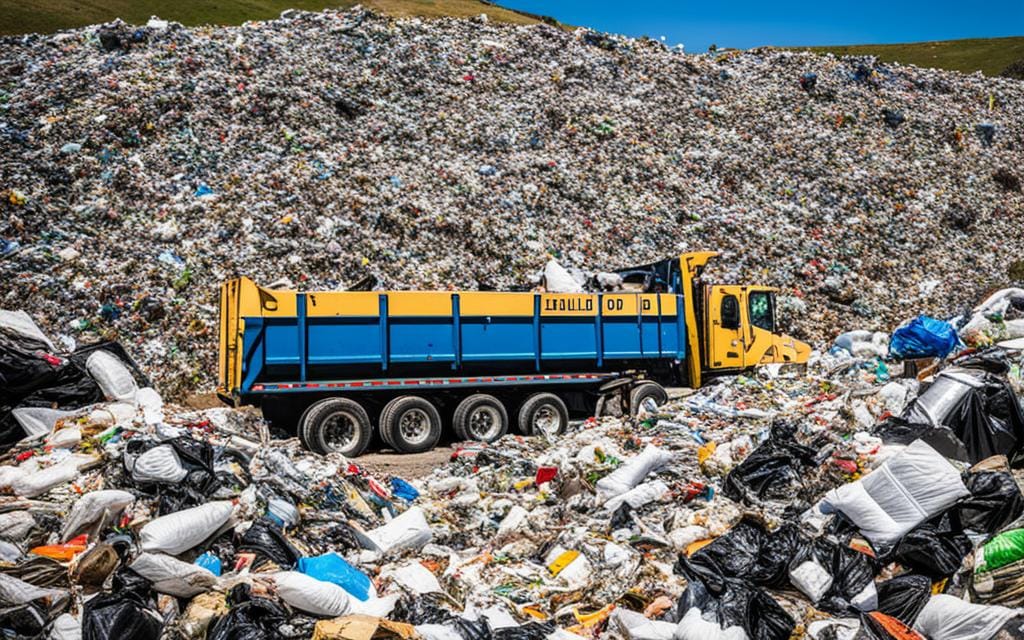
As an environmentalist, I’m deeply worried about the pressing issues our planet faces. The climate crisis is at the forefront, with 2023 being the hottest year on record. Global temperatures are 1.46°C above pre-industrial levels1. Carbon dioxide levels are over 420 parts per million, more than double the pre-Industrial Revolution levels1.
Human actions, like burning fossil fuels and deforestation, cause these high emissions1. This is from transportation, electricity, cement making, deforestation, and farming.
But the climate crisis isn’t the only issue. Deforestation, losing biodiversity, food waste, and plastic pollution are big problems too. About 1.3 billion tons of food meant for people is wasted or lost each year, enough for 3 billion people1. Food production is a big source of greenhouse gas emissions, making up 26% of them1.
A 2020 WWF report showed that many animal populations declined by 68% from 1970 to 20161. We produce about 419 million tons of plastic a year, and 14 million tons end up in the oceans1. These are just a few examples of the big environmental challenges we face. We need urgent action to tackle them.
The Climate Crisis: A Threat to Our Planet
The climate crisis is a major issue for our world today. Global temperatures are rising fast, causing serious problems2. The past four years have been the hottest on record2. We keep releasing billions of tons of CO2 each year from coal, oil, and gas2. This is making sea levels rise quickly, putting many major cities at risk2. Climate change is also affecting food security, causing up to 30% of food to be lost or wasted2.
Rising Greenhouse Gas Emissions and Global Warming
Greenhouse gas emissions are the main cause of the climate crisis3. The planet has warmed by 1.1 degrees Celsius since the 1700s3. If we keep burning fossil fuels, we could see a 4 degrees Celsius increase by 2100.
Catastrophic Effects of Climate Change
2 Climate disasters are becoming more common, costing the world $520 billion a year2. Climate change can lead to conflict over resources, forcing millions to migrate by 20503. In the U.S., wildfires have doubled in the western states since 1984, and California has seen a 500 percent increase in burned area since 19723.
3 Sea levels could rise by 6.6 feet by 2100 due to ice melting and warmer oceans3. The U.S. is expected to see a foot of sea level rise by 2050, causing damage to infrastructure and land loss3. Climate change is also making floods and droughts more unpredictable, affecting farming.
4 About 3.3 to 3.6 billion people live in areas at risk from climate change4. If we let global warming go above 1.5°C, many systems will face severe risks4. Keeping warming below 1.5°C would lower sea level rise and reduce the risk of an Arctic Ocean without sea ice in summer.
4 We need to cut global carbon dioxide emissions by 45 percent by 2030 and reach ‘net zero’ by 20504. The Paris Agreement aims to limit global warming to 2 degrees Celsius and try to keep it under 1.5 degrees.
2 Using renewable energy and nature-based solutions is key to reducing emissions and creating a cleaner world.
Market Failures and Policy Solutions
Economists and environmentalists suggest that raising the cost of activities that release greenhouse gases is key. This is because it addresses a big market failure5. Right now, 27 countries like the EU, Canada, and Japan have a national carbon tax5. But, the taxes aren’t strong enough on coal, even though they work well for electricity5.
Carbon Pricing and Renewable Energy Investments
To reduce emissions fast, governments should greatly increase funding for green tech to lower the cost of clean energy5. They also need to use many policies to fix other market failures5. People often buy goods that help the environment because they can’t buy clean air or water directly5. This shows how much they value a clean environment5.
When people face health issues from pollution without having a say in it, that’s a negative externality5. On the other hand, positive externalities happen when goods give more value than expected, like clean kitchens in shared homes5. To fix these issues, policy makers can use different tools to encourage people and companies to pick better options for emissions and the environment5.
Goods with positive externalities are often underpriced, leading to less than ideal environmental quality5. To fix this, command and control environmental rules can be used. These rules set limits on how much pollution is allowed and how it should be reduced5.
| Economist’s Recommendations | Evidence |
|---|---|
| Price increase as a policy intervention to control greenhouse gas emissions | Recommended by economists6 |
| Preferred policies to ensure uniform carbon pricing | Tax on emissions or emissions trading scheme6 |
| Policy interventions for network establishment | Smart electricity grid and electric vehicle charging points6 |
| Policy intervention to encourage innovation | Subsidies for R&D6 |
Food Waste: A Significant Contributor to Greenhouse Gas Emissions
Food waste is a big problem that affects our planet. If food waste were a country, it would be the third-biggest source of greenhouse gases7. About one-third of all food made for people is thrown away or lost at different stages7. This waste not only adds to greenhouse gases but also wastes resources like land, water, and energy used in making food.
Food waste has a big impact on the environment. It makes up over a quarter (26%) of global greenhouse gas emissions8. Food loss and waste cause about 8% of all greenhouse gases from human activities each year7. Also, agriculture uses a huge 560,000 square kilometers of land to produce food that ends up wasted in the US7.
Food waste isn’t just a problem at the production stage. It also happens at retail and with consumers. In fact, households, retailers, and the food service industry throw away 931 million tonnes of food each year7. Meat and dairy products make up 12% of this waste by volume and 99.7 million USD in wasted value7. We need to tackle this issue because the UN’s 12th Sustainable Development Goal aims to cut global food waste in half by 2030.
| Metric | Value |
|---|---|
| Food production’s contribution to global greenhouse gas emissions | 26%8 |
| Food loss and waste’s contribution to global greenhouse gas emissions | 8%7 |
| Land use for producing wasted food in the US | 560,000 sq km7 |
| Annual global food waste (households, retail, and food service) | 931 million tonnes7 |
| Meat and dairy’s contribution to global food waste by volume | 12%7 |
| Meat and dairy’s contribution to global food waste by value | 99.7 million USD7 |
In conclusion, food waste is a big problem that harms our planet. By cutting down on food waste from production to consumption, we can help our planet. We need to work on policies and projects to solve this issue for the future.
environmental problems in the world: Biodiversity Loss and Habitat Destruction
Over the last 50 years, human activities have greatly increased. This has put a lot of pressure on the Earth’s resources. A 2020 WWF report found that the populations of mammals, fish, birds, reptiles, and amphibians have dropped by 68% on average from 1970 to 20169. This decline is mainly due to changes in land use, like turning forests and grasslands into farms9.
Alarming Decline in Wildlife Populations
Invasive species have caused nearly 40% of animal extinctions since the 17th century. Over 37,000 invasive species have been brought to different parts of the world by humans, leading to 60% of all extinctions9. Animals like pangolins, sharks, and seahorses are also being hurt by the illegal wildlife trade9. Experts say that human actions are making species go extinct much faster than nature would have allowed9.
Loss of genes and individuals makes species more likely to become extinct10. Since 1900, 75% of food crops have disappeared because we rely too much on a few types. The Cavendish banana is at risk of disappearing for the same reason10. We need to focus on sustainable development and protecting habitats to stop biodiversity loss10.
By January 2019, only 7.5% of the oceans and 14.9% of land were protected areas. This shows we need to act fast to protect our planet’s biodiversity10. Many medicines come from rare plants and animals, so saving biodiversity is key for our health and the planet’s10.
Plastic Pollution: A Global Crisis
Plastic pollution is a huge problem we face today. Since 1950, plastic production has jumped from 2.3 million tons to 448 million tons by 2015. It’s expected to double by 20501112. This growth has led to a massive amount of plastic waste. An estimated 8 million tons of plastic ends up in our oceans every year from coastal countries1112.
Plastic pollution is harming the environment. Nearly 700 species, including endangered ones, are affected by plastics. Many eat or get tangled in them11. Microplastics, tiny pieces of plastic, are found in far-off places like Mount Everest and the Mariana Trench. They’re polluting our entire planet12.
Plastics are tough but also a big problem. Some additives make products last longer if they become trash. But, most plastic waste, 91% of it, isn’t recycled and will last for centuries1112. This poses a big threat to wildlife and ecosystems.
| Source of Plastic Pollution | Percentage |
|---|---|
| Land-based sources | 80% |
| Ocean-based activities | 20% |
We need to tackle plastic pollution from many angles. Mechanical systems can help clean up large plastic waste, but microplastics in the ocean are hard to remove11. We should focus on stopping plastic waste from getting into rivers and seas. This means improving waste management, recycling more, and making products that use less plastic11.
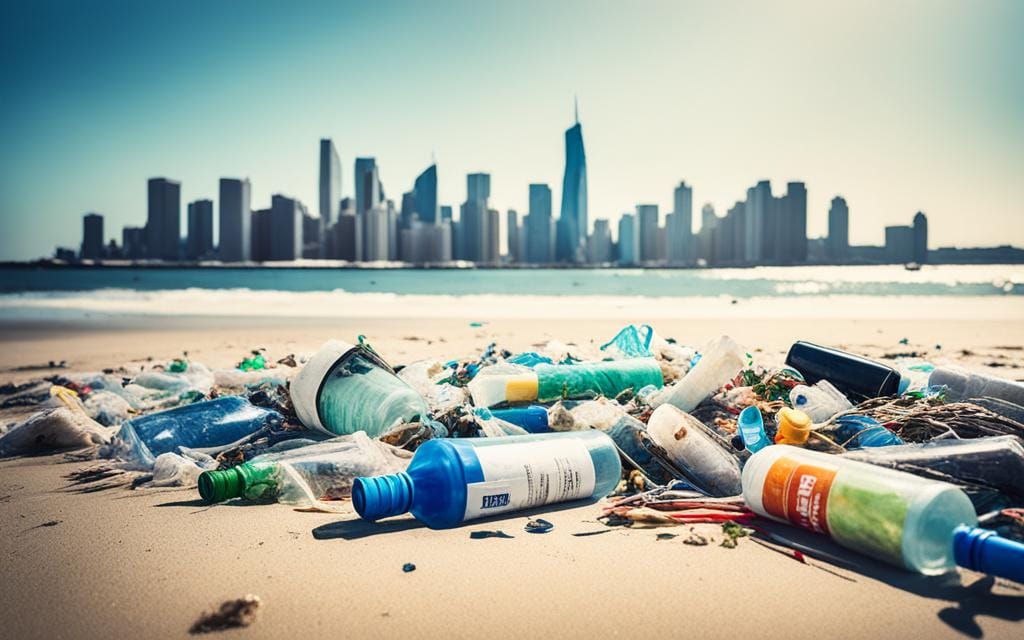
The plastic pollution crisis is a global problem that needs quick action. By fixing the root causes and using effective solutions, we can save our planet and its ecosystems for the future111312.
Deforestation: A Major Threat to Earth’s Lungs
Our planet’s forests are in crisis. They are crucial for keeping the climate stable and supporting a wide variety of life. But, deforestation is destroying these vital areas at a fast rate14. Every two seconds, an area as big as a football pitch is cut down, which means 15 billion trees are lost each year14. This is causing about 10% of global warming14 and putting at risk over half of the world’s plants and animals, and three-quarters of birds14.
Deforestation Hotspots and Impacts
Brazil, the Democratic Republic of Congo, and Indonesia are losing the most forests15. The Amazon rainforest, the biggest and most diverse forest, is under a big threat. It covers 6.9 million square kilometers and is a big part of South America16. Over the last 50 years, it has lost 17% of its forest15. Most of this loss is due to farming, logging, and mining, with Brazil losing about 1.5 million hectares a year16.
This fast deforestation is very worrying. Forests are key in taking in and storing carbon dioxide, but cutting them down releases these gases, making climate change worse14. Losing these ecosystems also threatens the millions of people who depend on them for food, water, and shelter15.
Even with efforts to protect forests, deforestation keeps going, and it’s getting worse. If we don’t act fast, we could lose most of the world’s forests in less than a hundred years14. Saving our forests is key to fighting climate change, protecting biodiversity, and helping communities worldwide.
Water Pollution and Scarcity
Our planet’s water is facing big challenges. Pollution and scarcity are major threats to our oceans, lakes, and rivers. The rise of microplastics in our waterways is a big concern17.
Microplastics in Oceans and Fresh Water
Studies show there are about 400 billion microplastic fibers in Frenchman Bay near Bar Harbor and Acadia National Park in Maine17. These tiny plastics make sea foam thicker and more stable, which could harm marine life17. Our oceans and rivers are filling up with microplastics, which can carry harmful substances. This is bad news for both sea creatures and humans, as we eat these plastics and drink contaminated water17.
Water scarcity is also a big problem. Most of the world’s freshwater goes to farming, with some to industry and a bit for homes17. If the planet gets warmer, we’ll lose a lot of fresh water17. Right now, over two billion people don’t have clean drinking water, and many more lack proper toilets17. Climate change will make things worse, reducing our water supply even more17.
| Water Usage | Percentage |
|---|---|
| Agriculture | 70% |
| Industrial | 19% |
| Domestic | 11% |
The world is facing a big water crisis. We need to tackle pollution, scarcity, and climate change’s effects on water. This is key for our planet and everyone living here18.
Air Pollution: A Silent Killer
Air pollution is a silent threat to our health and the planet. It causes more than seven million deaths each year, says the World Health Organization (WHO)19. Ninety-nine percent of people breathe air that’s not safe, as per WHO standards19.
Air pollution does more than harm lungs. It raises the risk of brain diseases and early births19. It also makes bacteria resistant to antibiotics, leading to more deaths and lost years in 201819. The World Bank says air pollution costs the world $8.1 trillion, or 6.1 percent of global GDP19.
In cities, pollution gets worse with car emissions, factories, and the urban heat island effect19. People with health issues suffer the most from this silent killer19.
We need to fight air pollution with clean energy, tighter emissions rules, and green cities20. The World Bank and others are tackling this in places like Bangladesh, Mali, Romania, Argentina, Pakistan, Indonesia, Senegal, and Zambia20.
By acting fast and spreading the word, we can beat air pollution. This will help make a healthier, greener future for everyone1920.
| Country | Key Initiatives |
|---|---|
| Bangladesh | Reducing carbon emissions, strengthening air quality monitoring, and modernizing brick making and urban transport to improve air quality and safe mobility in Dhaka. |
| Mali | Disposing of 532 tons of obsolete pesticides and toxic waste between 2014 and 2018 to address air pollution. |
| Romania | Improving livestock manure management to prevent contamination of soil and water by nitrates and other dangerous minerals. |
| Argentina | Improving water quality and reducing pollution in the Matanza-Riachuelo River basin, benefiting 7 million people. |
| Pakistan | Implementing waste management interventions to reduce air and water pollution from sectors like brick making and leather tanning. |
| Indonesia and Senegal | Enhancing solid waste management services, financing infrastructure for collection, treatment, disposal, and recycling/composting to strengthen governance and institutional capacity. |
| Zambia | Reducing environmental health risks, particularly lead exposure to local populations living in critically polluted mining areas, notably in the Kabwe Municipality. |
Soil Degradation and Desertification
Soil degradation and desertification are big problems that threaten our planet’s health and how much food we can grow21. The UK has over 700 types of soil, like clay, sand, and loam, but they’re under a lot of pressure21. Brown earth soil, which is great for farming, covers about 45% of England and Wales21. But, things like too much grazing, growing just one crop, and using too many chemicals can harm the soil and make it hard to farm.
Sustainable Agriculture and Land Management
Soil is a big help in fighting climate change by storing carbon dioxide21. Using better farming methods, like regenerative farming, can make soil healthy again and help us grow more food for a long time22. Desertification affects over two billion people and gets worse with climate change, especially in dry areas22. By farming and managing land better, we can fight soil degradation and desertification and help our planet.
Soil problems can lead to landslides, floods, and less food21. Cities can also hurt soil by stopping water from soaking in, killing tiny organisms, and causing floods21. Poor countries are often hit hard by soil problems, leading to people moving away, losing their culture, and struggling to find food and work22. By choosing sustainable farming and land care, we can save our soil and make a better future for everyone.
| Soil Degradation Factors | Impact |
|---|---|
| Overgrazing | Depletion of soil nutrients and loss of arable land |
| Monoculture Farming | Reduction in soil biodiversity and productivity |
| Excessive Chemical Fertilizers and Pesticides | Contamination of soil and water, harm to soil microorganisms |
| Urbanization | Inhibition of water absorption, leading to flooding and microorganism death |
We can tackle soil degradation and desertification by understanding their causes and effects21. Compacted soil and too much salt from irrigation can hurt soil life and how well it grows21. Desertification makes soil useless for farming and only a few tough plants can survive21. By teaching people, farming better, and fixing habitats, we can make our soils healthy and strong again.
Conclusion
Our world faces big environmental challenges, but I’m hopeful we can solve them together. With everyone working together, we can make a planet that’s healthy and strong23. We need to tackle climate change, reduce plastic waste, and save nature. This will take a big effort from businesses, governments, and us all.
Numbers show us the big problems we’re up against, like fast climate change and losing many species2324. But, by choosing environmental solutions, sustainable development, and eco-friendly practices, we can turn things around2324. We must invest in green technology, follow the circular economy, and support climate action to win23.
I see a bright future ahead, thanks to more people wanting to make a change. We all need to act fast to protect our planet. Together, we can make a world that’s fair, sustainable, and strong for the future. It’s time to act, and I’m ready to help make a difference.
FAQ
What are the biggest environmental problems facing the world today?
The world faces big environmental issues like climate change, deforestation, and losing biodiversity. Plastic pollution, food waste, and soil degradation are also major concerns.
How are greenhouse gas emissions contributing to the climate crisis?
Burning fossil fuels releases greenhouse gases, making the planet’s temperature rise fast. This leads to extreme weather, melting ice, and other climate disasters.
What policy solutions can help address environmental problems?
To fix these issues, we need policies like a national carbon tax and more funding for green tech. We also need policies to support sustainable actions.
How significant is the problem of food waste?
Food waste is huge, causing about a quarter of all greenhouse gas emissions. If it were a country, it would be the third-biggest polluter after China and the U.S.
What is the extent of biodiversity loss and habitat destruction?
Since 1970, many animals have seen their numbers drop by 68%. This is mainly due to land use changes and habitat loss for farming.
What is the scale of the plastic pollution crisis?
Plastic production soared from 2 million tons in 1950 to 419 million tons in 2015. Every year, 14 million tons of plastic ends up in oceans, and only 9% of all plastic is recycled.
How severe is the problem of deforestation?
Every hour, forests the size of 300 football fields are cut down. If we don’t stop deforestation, we might lose 90% of our forests by 2030. The Amazon is especially at risk.
How are microplastics affecting water pollution and ecosystems?
Microplastics are found in high amounts in water, harming aquatic life and possibly entering our food. They can also hold onto pollutants.
What are the impacts of air pollution?
Air pollution is deadly, causing health problems like breathing issues, heart disease, and cancer. It’s worse in cities due to traffic and industrial emissions.
How are soil degradation and desertification affecting the environment?
Poor farming can deplete soil and reduce land for farming, leading to deserts and displacing communities. We need sustainable farming and land use to stop this.
Source Links
- https://earth.org/the-biggest-environmental-problems-of-our-lifetime/
- https://www.un.org/en/un75/climate-crisis-race-we-can-win
- https://www.nrdc.org/stories/what-are-effects-climate-change
- https://www.un.org/en/global-issues/climate-change
- https://www.britannica.com/money/environmental-economics/Market-failure
- https://www.lse.ac.uk/granthaminstitute/explainers/why-do-economists-describe-climate-change-as-a-market-failure/
- https://www.carbonbrief.org/in-depth-qa-what-food-waste-means-for-climate-change/
- https://ourworldindata.org/environmental-impacts-of-food
- https://www.unep.org/news-and-stories/story/five-drivers-nature-crisis
- https://www.britannica.com/science/biodiversity-loss/Ecological-effects
- https://education.nationalgeographic.org/resource/worlds-plastic-pollution-crisis-explained/
- https://www.nationalgeographic.com/environment/article/plastic-pollution
- https://www.iucn.org/story/202207/plastic-pollution-crisis
- https://www.wwf.org.uk/learn/effects-of/deforestation
- https://www.dw.com/en/deforestation-choking-off-the-earths-lungs/a-19555119
- https://earth.org/amazon-rainforest-deforestation-facts/
- https://www.cfr.org/backgrounder/water-stress-global-problem-thats-getting-worse
- https://www.un.org/en/climatechange/science/climate-issues/water
- https://www.aljazeera.com/features/2023/9/28/how-deadly-is-the-air-you-breathe
- https://www.worldbank.org/en/topic/pollution
- https://www.nhm.ac.uk/discover/soil-degradation.html
- https://www.carbonbrief.org/explainer-desertification-and-the-role-of-climate-change/
- https://www.geeksforgeeks.org/environmental-issues-and-solutions/
- https://www.toppr.com/guides/essays/environmental-issues-essay/
