
How Does Climate Change Affect the Environment? Understanding the Changes
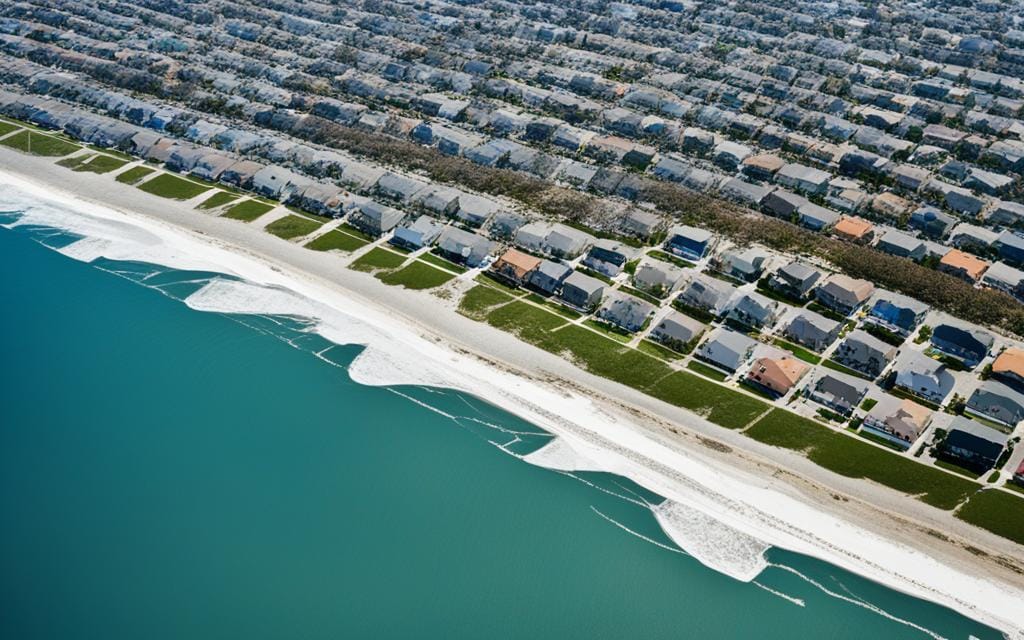
How Does Climate Change Affect the Environment? Our changing climate significantly affects the environment. Global temperatures have grown by about 1.1 degrees Celsius since the preindustrial age1.
This shift brings more than only hotter days. It results in rising sea levels, new weather patterns, and other changes. Every aspect of our world, from the air we breathe to the water we use, is altering.
Climate change’s effects spread across many different areas. They touch water, energy, transportation, wildlife, farming, and health. The future’s impact is not fully decided, yet there’s still a chance to make things better.
We can slow down the worst effects by acting fast to reduce our emissions and limit the warming1. But first, we need to truly grasp the complexity of this global issue.
Climate Change: A Complex and Multifaceted Issue
Climate change impacts everyone and is very complex. Over the years, Earth’s average temperature has gone up by about 1.98°F (1.1°C) between 1901 and 2020. This change is linked to many other changes, creating a chain reaction2. It shows how one small change can affect many areas of our lives.
Rising Global Temperatures and Their Impact
Why are temperatures going up? Mainly because of human activities. A report by the UN in 2030 showed that we’re emitting more gases into the atmosphere.
Although we aimed for lower levels in a plan called the Paris Agreement, we are still not meeting these goals2. For us to keep temperatures from rising too much, we need to cut these emissions by a lot more, up to 42 percent in some cases2.
Interconnected Impacts Across Sectors
The change in climate affects many things, not just the weather. For instance, a lack of rain can hurt farming and health. On the other hand, too much rain can cause illnesses and damage roads and buildings2. It also affects groups of people differently. Those with fewer resources often suffer more from these changes. Around 3.3 to 3.6 billion people are living in places where they are most at risk from climate change2.
How can we deal with climate change better? We need to see the bigger picture. Understanding how everything is connected helps us find better solutions3.
The Unrelenting Rise of Greenhouse Gases
Despite a slowdown in the economy due to COVID-19, levels of carbon dioxide and methane kept rising in 20204. These gases cause climate change, making it a global issue5. The rise in these emissions, even during the pandemic, shows how tough tackling climate change is.
In 2023, the world hit a new high in carbon dioxide. It reached 419.3 parts per million, up 2.8 ppm from the year before6. Each year, burning fossil fuels emits more carbon dioxide. In 2023 alone, it was 36.6 billion tons, a sharp increase from the 1960s6. This trend highlights the urgent need for moving to cleaner, renewable energy.
Since 1958, the level of carbon dioxide in the air has climbed by 25%4. It’s gone up by 40% since the Industrial Revolution4. Now, we’re at the highest level ever, like 3 million years ago during a very hot time6. This fast rise in emissions is causing serious climate changes that could be very bad for Earth and us.
| Greenhouse Gas | Global Warming Potential | Major Sources |
|---|---|---|
| Carbon Dioxide (CO2) | 1 (baseline) | Fossil fuel combustion, industrial processes, deforestation |
| Methane (CH4) | 28-36 times higher than CO2 | Agriculture, fossil fuel production, landfills |
| Nitrous Oxide (N2O) | 265-298 times higher than CO2 | Agriculture, industrial processes |
The table above shows greenhouse gases and their warming power, with carbon dioxide as the base5. Even though methane and nitrous oxide are less common, they warm the planet much more. This means we must focus on all the big greenhouse gas sources to fight climate change right5.
Dealing with the ongoing greenhouse gas issue needs action from everyone. It’s a global problem that needs global solutions. To protect our planet for the future, we must work together to understand and stop climate change.
Our Changing Climate: Visible Signs
Climate change is causing real and noticeable changes on Earth. The National Oceanic and Atmospheric Administration (NOAA) tracks our climate closely.
They report that our planet’s average temperature has gone up by roughly 1.8°F since 19017. This rise has led to many issues like faster sea levels rising, smaller glaciers, less Arctic ice, and 25% more carbon dioxide in our air since 19587.
These changes are affecting our ecosystems, weather, and the natural resources we rely on. It’s clear that our world is changing rapidly because of these issues.
NOAA and other groups have shown clear evidence of these changes. For instance, more of the U.S. population is living in cities than in the past, thanks to a 6.3% increase in urban residents in the last 40 years7. The USGS has also studied glacier reductions for the past 50 years, finding significant shrinking in three key areas7.
Initiatives like the USGS Benchmark Glacier Program have taught us a lot about how quickly our frozen areas are changing7. This information is critical for understanding the impact of climate change.
The threats from climate change are huge. For example, rising sea levels are dangerous for coastal areas7. In North America, there are signs that some dry areas used to be wetter, showing the big shifts our environment goes through7.
At the start of the 21st century, the Earth’s frozen parts were already showing a lot of change7. This includes glaciers, snow, floating ice, and permanently frozen ground. We must act quickly to stop these alarming trends.
Human activity has pushed carbon dioxide levels in the air to a point unseen in Earth’s history8. This leads to climate changes that many plants and animals can’t keep up with safely8.
In North America, species are moving their habitats northward and uphill to escape the changes8. The warming ocean and absorbed carbon dioxide are causing sea levels to rise and making the water more acidic8.
These changes hit poorer, Indigenous, and less advantaged communities especially hard8. They also threaten marine life and their habitats8. We must not ignore these effects of climate change.
The signs of climate change are getting clearer. For example, Alaskan rivers are thawing earlier and western U.S. snow is shrinking9. Even the cherry trees in Washington, D.C., are blooming sooner, showing it’s getting warmer9.
These signs tell us that climate change is a real and urgent problem. They call on us to take action now to protect our planet for the future.
Water Resources Under Stress
Climate change is hitting our water hard. We see more floods, major droughts, and less snowfall10. These issues are disrupting lives and nature all across America.
Floods, Droughts, and Snowpack Challenges
Our weather is getting more extreme. While some places drown in floods, others dry up in droughts11. The Northeast gets hit with more heavy rain, raising flood risks11. The Southwest and Southeast see longer, worse droughts, hurting water and farms11.
The loss of snowpack is big news, too. As it gets warmer, we’ll see less snow. This means less water for fields and homes in dry times12. Farmers are worried because they need that snowmelt for their crops12.
All these water issues also hurt nature. Too much rain can wash chemicals into our water, hurting fish and cleanliness12. Glaciers are melting, sea water is mixing with our fresh water, making things even tougher12.
Dealing with these water problems is tough. It’s clear climate change is changing our water supplies. We need to work together, find ways to manage water that keep our communities and environment strong.
How Does Climate Change Affect the Environment on Food Supply
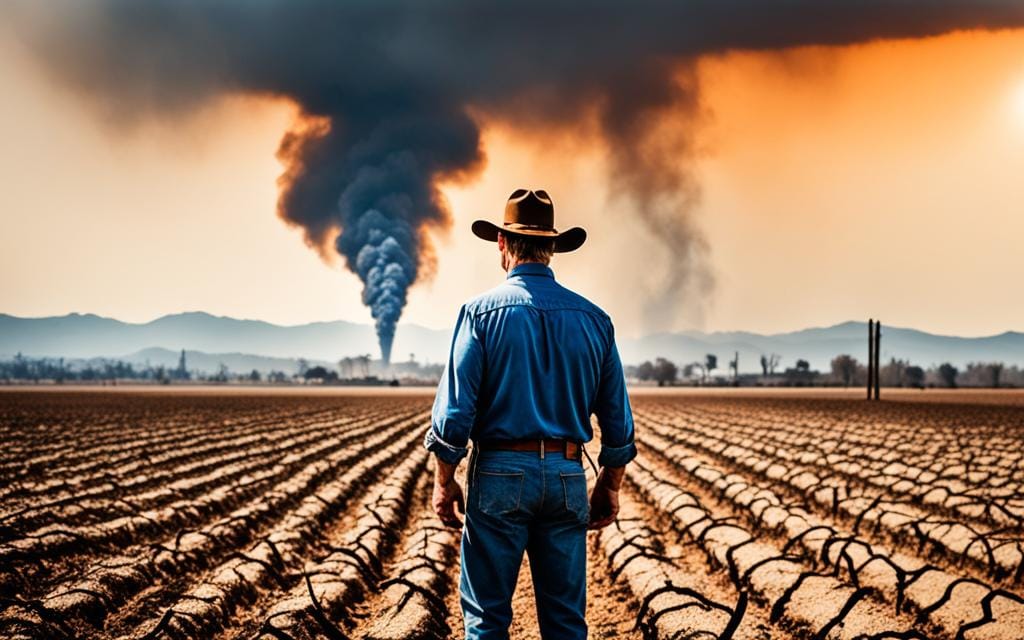
Climate change is a major threat to how we get food worldwide. It disrupts the balance in our agriculture systems. This balance is what keeps our food coming13. The changing climate brings hotter temperatures, different rain schedules, and more severe storms. These changes make it hard for farmers and ranchers. They struggle to grow crops and raise animals for the growing number of people to feed13.
Heat stress is a big issue for both plants and animals13. By 2100, we could see a 35 percent drop in vegetables and legumes if we don’t cut back on greenhouse gases13. If the planet warms by 4°C, U.S. corn might drop by half. There’s a high chance of big crop losses for the top four corn exporting countries. This risk jumps to 86 percent with a 4°C rise in temperature13.
Climate change lowers how much food we can make in basic ways13. For every degree Celsius that the world gets warmer, we could see 5 to 15 percent less food. Plus, higher CO2 levels might lower the protein we get from crops. That could mean less protein in things like barley, wheat, and rice13.
Climate change is not good news for raising animals either14. Nearly 15% of global greenhouse gas comes from raising animals. More CO2 in the air could mean less zinc and iron in our food. This could be bad for animal and human health14.
To fight the food problems from climate change, we need to do many things15. Eating more plants, throwing away less food, and using better farming methods can all help. These steps can cut down on greenhouse gases and adapt to a changing climate. Doing this will help keep our food system strong in the future15.
| Impact of Climate Change on Food Production | Projected Change |
|---|---|
| Global vegetable and legume production yields | 35% decrease by 210013 |
| U.S. corn production | 50% decrease with 4°C global temperature increase by 210013 |
| Risk of top 4 corn exporters suffering 10%+ crop failures | 7% with 2°C increase, 86% with 4°C increase13 |
| Overall crop production | 5-15% decrease per 1°C rise in global temperature13 |
| Plant protein content in crops | 6-15% decrease in barley, wheat, potatoes, and rice due to higher CO2 levels13 |
Human Health Impacts
Climate change is already hurting people’s health. It brings heat, changes rain and heat patterns, and makes disease spread16. With higher temperatures, we see more heat illnesses and new infectious diseases. Changes in weather can cause direct harm, like injuries and diseases16. It’s also making our air poorer. This is bad for people’s lungs and hearts16.
Heat-Related Illnesses and Disease Spread
Climate change is complex and concerning for health. It messes with where insects live and how diseases spread16. This change can also make our food not safe. When people eat bad food, they get sick16. More floods and warm seas can also mean more sickness from water16. It can make people feel stressed and upset too16.
The National Institute of Environmental Health Sciences (NIEHS) cares a lot about climate health threats16. They study how different diseases and health problems can get worse with climate change. People can get sick more easily16. These problems can slowly hurt us over time16.
Not everyone faces the same danger from climate health issues16. Kids, old folks, and anyone already sick or with little money are at a bigger risk16. Working together to tell people and prepare can make everyone safer. It’s about being ready and knowing what to do16.
| Health Impact | Statistics |
|---|---|
| Susceptibility to climate change | 3.6 billion people already live in areas highly susceptible to climate change17. |
| Projected additional deaths per year | Between 2030 and 2050, climate change is expected to cause approximately 250,000 additional deaths per year17. |
| Direct damage costs to health | Direct damage costs to health by 2030 is estimated to be between US$ 2–4 billion per year17. |
| Lack of safe drinking water | 2 billion people lack safe drinking water17. |
| Foodborne illnesses | 600 million suffer from foodborne illnesses annually, with children under 5 bearing 30% of the fatalities17. |
| Food insecurity | In 2020, 770 million faced hunger, predominantly in Africa and Asia, and 98 million more experienced food insecurity compared to the 1981–2010 average17. |
| Vector-borne diseases | Over 700,000 deaths occur annually from vector-borne diseases17. |
| Heat-related deaths | Heat-related deaths among those over 65 have risen by 70% in two decades, and recent research attributes 37% of heat-related deaths to human-induced climate change17. |
Climate change challenges our health right now and in the future. We need to act. By dealing with climate and health together, we can make our communities stronger against climate’s risks16.
In the United States, more people could die from heat in coming years because it’s getting hotter. This could be many thousands of extra deaths each summer18. Hotter days can cause many health issues, from heat stroke to heart problems18. Air might also get worse, making things like asthma worse18.
There could be more wildfires, making air unhealthy18. By 2014, about 57 million Americans lived where the air wasn’t good enough18. More bad air days could lead to more sickness or hospital trips for breathing problems18. For some people, bad air can really hurt the lungs, especially kids, the old, people who work outside, and those with lung problems18.
By 2030 in the U.S., climate change could cause tens of thousands more sicknesses and deaths from bad air each year18. More wildfires could cause more lung problems, like cancer or breathing issues. Older people would be at the most risk18.
Allergies and breathing problems could get worse with climate change, making some pollen seasons longer. Extreme weather can hurt our health, especially kids, the old, and those already sick or poor18. We need to prepare and protect everyone against these risks1617.
Environmental Consequences
Climate change is causing big changes in ecosystems worldwide. The Arctic and tropical rainforests are warming fast. Glaciers, sea ice, and sea levels are all changing, impacting many areas19. If the temperature rises by 1.5°C, up to 30% of species could be extinct. It’s also a key cause for extinctions this century19. In the Himalayas, where snow leopards live, it’s warming three times faster19. African elephants are seeing impacts of warmer weather and less rain in Africa19.
The Arctic is heating up about two times more than other places19. Adélie penguins in Antarctica’s peninsula have lost over 60% of their sea ice in 30 years19. Atlantic puffin numbers are dropping because they can’t find food due to climate changes19. Arctic air has warmed by about 5°C in 100 years19. The Antarctic’s ice, holding the most freshwater, is melting fast19.
Oceans are getting warmer and more acidic, which harms corals and marine life19. They’re taking in lots of carbon dioxide, making them too acidic. This is happening quickly, with critical impacts at 1.5°C or above19. Coral reefs might disappear if it gets 2°C warmer, affecting millions who rely on them for food19.
Climate change is also making pests, invasive species, and diseases more common in forests19. It changes ecosystems and makes them weaker19. These ecological shifts are unpredictable and could lead to major effects19.
| Indicator | Change Observed | Source |
|---|---|---|
| Global Temperatures | Rose about 1.98°F (1.1°C) from 1901 to 2020 | 4 |
| Sea Level Rise | Accelerated from 1.7 mm/year to 3.2 mm/year since 1993 | 4 |
| Glaciers | Decreased in average thickness by more than 60 feet since 1980 | 4 |
| Arctic Sea Ice | Decreased by about 40% since 1979 | 4 |
| Atmospheric CO2 | Risen by 25% since 1958 and about 40% since the Industrial Revolution | 4 |
| Abnormally Heavy Precipitation | Occurring more frequently across most of the United States compared to the beginning of the 20th century | 4 |
| Drought | Becoming more common, especially in the Western United States | 4 |
| Snow Melt | Occurring earlier compared to long-term averages | 4 |
| Global Temperature Increase | 1.1 degrees Celsius (1.9 degrees Fahrenheit) since the preindustrial era began 250 years ago | 1 |
| Potential Worst-Case Scenario | Global temperatures rising by 4 degrees Celsius (7.2 degrees Fahrenheit) by 2100 | 1 |
| Wildfires in Western U.S. | Doubled between 1984 and 2015 | 1 |
| Wildfires in California | Annual area burned increased by 500% between 1972 and 2018 | 1 |
| Projected Sea Level Rise | Up to 6.6 feet by the end of the century if emissions are not curbed | 1 |
| U.S. Sea Level Rise by 2050 | 1 foot, damaging critical infrastructure | 1 |
| Increase in U.S. Floodplains | Approximately 45% by 2100 | 1 |
| Increase in Marine Heat Waves | More than a third, leading to mass die-offs of plankton and marine mammals | 1 |
The table shows the serious, far-reaching impacts of climate change41. It includes Arctic warming and glacier melt, more extreme weather, and marine life threats41. This highlights the urgent need to tackle ecosystem disruption, ocean acidification, and biodiversity loss due to global warming1941.
Agricultural Challenges
Climate change is making things hard for farmers. It’s bringing weird weather, new pests, and diseases20. These changes mess up the usual growing seasons.
So, farmers are struggling to plan and adjust. What’s more, the heat and shifts in moisture are hurting the soil. This soil damage makes it tough for farms to produce food20. As a result, food could become scarce and prices might go up. This could hit the poorest people the hardest.
Unpredictable Growing Seasons and Soil Health
Climate change is messing with farming. The weather is getting warmer, rain is falling in different ways, and extremes are more common21. All these changes make it hard for farmers to know when to plant. This uncertainty threatens how much food we can grow and our food’s safety.
What’s worse, the soil is getting sick too. The heat and moisture swings are lowering soil quality. This is bad news for crops. It means less food. Also, more pests and diseases are showing up. They are harming crops too2021. Saving our soil is key. We need strong, healthy soil for farming to continue, even with climate changes.
Farmers and leaders need to join forces. They should find new ways to protect farming from climate change. This could mean growing new plants, keeping different animals, and using better farming methods22. It also involves taking care of the soil. Doing these things now is vital. It will help keep our food coming, no matter what the climate does.
But climate change doesn’t just hurt crops and soil. It also changes where pests and diseases live. This means more issues for farmers21. Invasive species, diseases, and harmful germs are becoming bigger problems. They are making it harder to farm. This adds to the struggles farms already face because of climate change.
| Key Climate Change Impacts on Agriculture | Potential Consequences |
|---|---|
| Unpredictable growing seasons | Decreased crop yields, disrupted food supply |
| Soil degradation | Reduced soil fertility, decreased productivity |
| Increased pests and diseases | Crop and livestock losses, higher management costs |
| Extreme weather events | Damage to infrastructure, disruption of operations |
| Water scarcity and drought | Reduced irrigation, decreased yields, economic losses |
To fight these challenges, everyone must work together. Leaders, scientists, and farmers need to unite. They should make and follow plans to boost farm resilience. This includes protecting the soil and fighting climate change22. Such teamwork is vital for our future food and safety.
Infrastructure Vulnerabilities
Climate change is hitting our infrastructure hard. The U.S. transportation network lacks preparation for future climate23. This is causing big problems as extreme weather, rising seas, and changes in the climate stress our systems. The result? Disruptions and damage that hurt our communities and economy23.
Flooding, erosion, and changing temperatures mess up our transport, energy, and water systems23. Roughly 40% of Americans live in places near the coast. This puts millions in danger from the sea rising and other coastal threats23. The U.S. DOT is looking at how bad the economic impact can get when these systems break down23.
In the past few years, extreme weather has reminded us how vulnerable our infrastructure is. Hurricane Sandy’s damages added up to about $70 billion24. And in the last 15 years, nine of the costliest hurricanes in the U.S. hit the mainland24. Delays in air travel cost the economy $4 billion in 200724. In 2017, extreme heat caused 50 flights in Phoenix to be canceled24.
We must prepare our infrastructure for climate change challenges. The FHWA Framework and the PROTECT program are key tools in making our transport systems stronger against climate impacts23. The Forest Service Guidebook offers help in dealing with climate changes on a local and regional level23.
The changing climate means more risks for our infrastructure. But, by checking vulnerabilities and building resilience, we can protect our communities and economies from flooding, extreme weather, and other climate effects2324.
Conclusion
Climate change is a big, complex problem with big impacts already seen. Rising temperatures and seas, along with more severe weather, hurt our planet. This also messes with our food supply and life as we know it25. But, we can act to make things better before it gets too bad.
So, what can we do? We must cut down on the gases causing this problem25. We should also support new tech and things that help the environment. And we need to make our communities stronger to face these changes2625.
It won’t be simple, but if we all pitch in, we can win this fight. By coming together – governments, businesses, NGOs, young people, and schools25. We can turn things around and leave a healthier planet for the future.
Source Links
- https://www.nrdc.org/stories/what-are-effects-climate-change
- https://www.un.org/en/global-issues/climate-change
- https://medium.com/@chrisjriedy/climate-change-the-multi-faceted-phenomenon-b8e15a4a2c46
- https://www.noaa.gov/education/resource-collections/climate/climate-change-impacts
- https://www.terrascope.com/blog/understanding-greenhouse-gases-and-climate-change
- http://www.climate.gov/news-features/understanding-climate/climate-change-atmospheric-carbon-dioxide
- https://www.usgs.gov/faqs/what-are-some-signs-climate-change
- https://www.nature.org/en-us/what-we-do/our-priorities/tackle-climate-change/climate-change-stories/climate-change-frequently-asked-questions/
- https://www.epa.gov/climate-indicators
- https://www.un.org/en/climatechange/science/climate-issues/water
- https://news.climate.columbia.edu/2019/09/23/climate-change-impacts-water/
- https://www.nationalgeographic.org/article/how-climate-change-impacts-water-access/
- https://news.climate.columbia.edu/2018/07/25/climate-change-food-agriculture/
- https://foodsystemprimer.org/production/food-and-climate-change
- https://www.un.org/en/climatechange/science/climate-issues/food
- https://www.niehs.nih.gov/research/programs/climatechange/health_impacts
- https://www.who.int/news-room/fact-sheets/detail/climate-change-and-health
- https://climatechange.chicago.gov/climate-impacts/climate-impacts-human-health
- https://www.wwf.org.uk/learn/effects-of/climate-change
- https://climatechange.chicago.gov/climate-impacts/climate-impacts-agriculture-and-food-supply
- https://www.heifer.org/blog/how-climate-change-affects-agriculture.html
- https://www.ucsusa.org/resources/climate-change-and-agriculture
- https://www.volpe.dot.gov/our-work/assessing-infrastructure-climate-change-vulnerability-and-impacts-and-promoting-resilience
- https://www.mckinsey.com/capabilities/sustainability/our-insights/will-infrastructure-bend-or-break-under-climate-stress
- https://www.un.org/en/un75/climate-crisis-race-we-can-win
- https://natural-resources.canada.ca/maps-tools-and-publications/publications/climate-change-publications/chapter-5-quebec/summary-and-conclusion/10349
