
How to Protect Endangered Wildlife With Effective Strategies
Learn how to protect endangered wildlife with effective strategies and actions to preserve biodiversity and safeguard species for future generations.
Have you ever thought about what happens if we lose a species? Our world’s biodiversity is facing a crisis. We need a strong conservation guide now more than ever.
Every one of us has a role in saving life on Earth. Our guide will help you understand why this is so important. Together, we can make a difference and ensure a future for all creatures.
Let’s start this journey together. We’ll learn how to protect our planet’s natural wonders. Join us in making a better world for all living things. Are you ready to help protect endangered wildlife?
Understanding the Plight of Endangered Species
We need to understand the tough situations endangered species face worldwide. This is key to improving wildlife conservation. The falling numbers show we must work harder to protect ecosystems.
The Current State of Global Wildlife
The IUCN Red List paints a bleak picture: many species are close to extinction. Threats like habitat loss and pollution harm them. This not only hurts the species but also the ecosystem’s balance.
Factors Leading to Wildlife Endangerment
The WWF says logging, agriculture, pollution, hunting, and illegal trade are major threats. These actions have made many species’ numbers drop. This pushes them closer to being endangered.
Importance of Biodiversity and Healthy Ecosystems
Studies show biodiversity’s value is huge. Healthy ecosystems help us by cleaning air and water, pollinating, and recycling nutrients. Saving these places is about more than just animals. It’s about keeping life good for future generations.
| Species | Status | Threats |
|---|---|---|
| Amur Leopard | Critically Endangered | Habitat Loss, Poaching |
| Javan Rhinoceros | Critically Endangered | Habitat Destruction, Poaching |
| Hawksbill Turtle | Critically Endangered | Illegal Trade, Coastal Development |
Identifying Threats to Endangered Wildlife
Understanding the threats to endangered species is key. We look at habitat loss, illegal wildlife trade, and climate change. This helps us plan better for their protection. We rely on sources like the World Wildlife Fund and TRAFFIC for our information.
Habitat Destruction and Fragmentation
Habitat loss is a big problem. Many species lose their homes to cities and farms. Important places like forests and wetlands are broken into smaller pieces.
This makes it hard for animals to live and have babies. It also separates animal groups, leading to a big drop in biodiversity.
Poaching and the Illegal Wildlife Trade
The illegal wildlife trade is a huge threat. TRAFFIC reports show many species are hunted and sold illegally. This hurts their numbers a lot.
It’s not just famous animals like elephants and rhinos. Many other animals are important too. Stopping this trade is crucial for their survival.
Climate Change Impacts on Wildlife
Climate change is harming wildlife in many ways. It changes how animals migrate, reproduce, and survive. Scientists say we must act fast to protect these animals.
Legal Frameworks and Wildlife Protection Policies
Legal frameworks and wildlife protection policies are key to saving our planet’s biodiversity. We explore the Endangered Species Act to show their importance in conservation. Understanding these policies helps us support stronger laws and better enforcement.
The U.S. Fish and Wildlife Service plays a big role in enforcing the Endangered Species Act. This act protects habitats and helps species on the edge of extinction. Around the world, different wildlife protection laws share the same goal: to keep our natural world safe for the future.
International conservation policies are also vital. They help fight global threats like climate change and illegal wildlife trade. These policies help countries work together to protect species that cross borders.
Let’s look at how these laws show our commitment to saving nature:
- The Endangered Species Act helps list species in danger. It also supports plans to help them recover and protects their homes.
- Agreements like CITES (the Convention on International Trade in Endangered Species of Wild Fauna and Flora) control international trade. They make sure it doesn’t harm listed species.
- National wildlife protection laws often stop poaching and habitat loss. They see the value in all kinds of life.
These examples show how important laws and policies are for saving species and their homes. As citizens, we must support and follow these laws. This helps protect endangered species and their habitats.
Community Engagement and Public Awareness
In the heart of wildlife conservation, community involvement is key. By promoting environmental education, supporting wildlife advocacy, and encouraging community conservation, we can make a big difference. Let’s look at how educational programs, grassroots efforts, and public views shape conservation.
Educational Programs and Advocacy
Environmental education is a strong tool for spreading awareness. It teaches people of all ages about the importance of nature and the dangers to endangered species. Organizations like the National Wildlife Federation lead these efforts.
Grassroots Movements and Citizen Science
Grassroots efforts have led to big environmental wins. They involve community members and citizen science projects. These projects help in research and build a connection to the local environment.
How Public Perception Shapes Conservation Efforts
Our conservation work is shaped by how people see the world. Research shows that when people support conservation, laws are more likely to be made. This support is crucial for protecting our environment.
| Initiative | Focus Area | Impact |
|---|---|---|
| Urban Wildlife Program | Wildlife Habitats | Increased local biodiversity |
| Wetlands Restoration | Ecosystem Recovery | Enhancement of water quality and species resurgence |
| Recycling Drives | Waste Reduction | Lowered landfill contributions and reduced habitat destruction |
How to Protect Endangered Wildlife
Protecting endangered species is crucial and needs our urgent action. We must work together to save our planet’s biodiversity and natural beauty. Here, we look at practical ways to help wildlife conservation.
Supporting Conservation Organizations
Supporting wildlife charities is a big step. Donations help fund research, habitat protection, and wildlife safety. Charity Navigator and others help us choose the best charities, making sure our money helps.
Responsible Consumer Choices and Sustainability
Living an eco-friendly life helps wildlife too. Making sustainable choices reduces harm to our environment. This means choosing products with less packaging, supporting green brands, and recycling.
Volunteering and Participating in Conservation Projects
Volunteering in conservation is a hands-on way to help. Organizations like the Sierra Club offer projects to restore habitats and protect species. Helping out not only supports conservation but also teaches us about nature.
By supporting wildlife charities, living sustainably, and volunteering, we join forces to protect our planet. These efforts lead us to a future where endangered species thrive. Together, we can make a difference for generations to come.
Innovative Conservation Strategies
Exploring wildlife conservation, we see the need for new strategies. Advanced genetic rescue, cutting-edge tech, and species reintroduction are key. These methods help endangered species survive.
Genetic Rescue and Wildlife Corridors
Genetic rescue is vital for isolated species. It boosts their ability to fight off diseases and adapt to changes. For example, Florida panthers’ genetic diversity led to a healthier population.
Wildlife corridors are essential. They connect habitats, allowing species to move, breed, and grow.
Technology in Wildlife Monitoring and Protection
The Max Planck Institute for Animal Behavior shows tech’s role in conservation. They use tracking systems, remote sensing, and AI for real-time data. This helps make quick decisions to protect wildlife.
Reintroduction Programs and Controlled Breeding
San Diego Zoo Global’s reintroduction efforts are a great example. They plan and breed carefully to reintroduce species. This not only increases numbers but also improves ecosystem health.
| Strategy | Description | Impact |
|---|---|---|
| Genetic Rescue | Increases genetic diversity through interbreeding. | Enhances species survival and adaptability. |
| Wildlife Corridors | Connects fragmented habitats to aid species migration. | Promotes genetic diversity and ecosystem stability. |
| Conservation Technology | Employs tech like AI and remote sensing for monitoring. | Improves response times and data accuracy for conservation. |
| Species Reintroduction | Introduces species into native habitats under controlled conditions. | Boosts population numbers and ecosystem health. |
Protecting Wildlife Through Habitats and Preserve
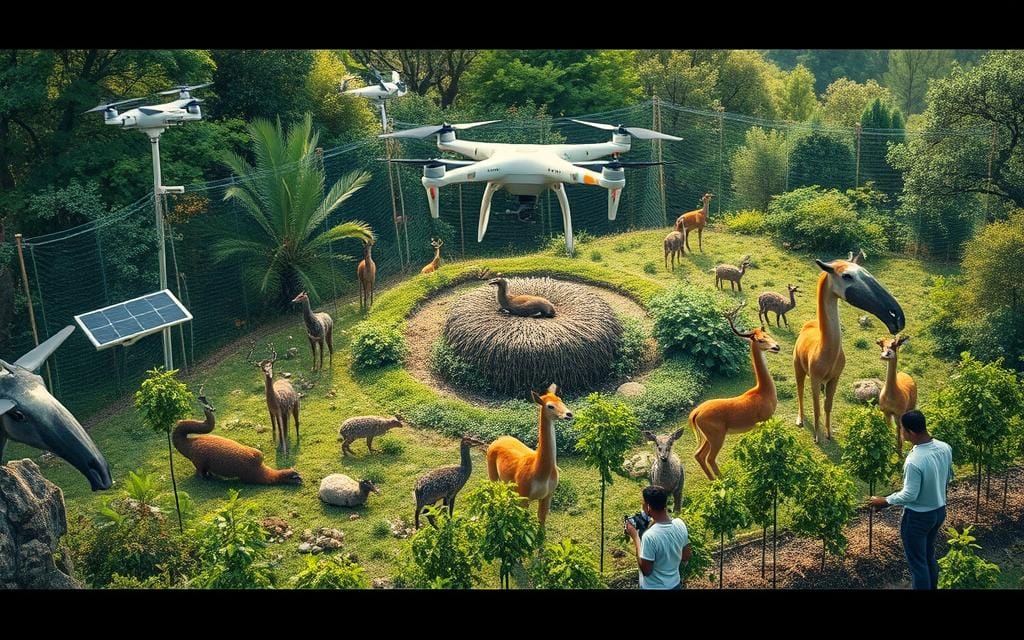
We are working hard to protect nature. We focus on wildlife sanctuaries, protected areas, and habitat restoration. These efforts help keep biodiversity alive and prevent species loss. For example, the Yellowstone to Yukon Conservation Initiative and The Nature Conservancy show how important habitat management is.
Wildlife sanctuaries are safe homes for endangered animals. They give these animals the space and resources they need to live well. Protected areas keep natural environments safe from harm, helping wildlife survive. Habitat restoration fixes damaged ecosystems, which is key for wildlife’s safety.
The table below shows the good results from wildlife sanctuaries and habitat restoration projects.
| Project | Location | Type | Impact |
|---|---|---|---|
| Yellowstone to Yukon Initiative | USA and Canada | Transboundary Preserve | Connected habitats across different states and provinces, facilitating animal migration and species survival. |
| Habitat Restoration by The Nature Conservancy | Worldwide | Restoration Projects | Enhanced habitats supporting biodiversity, improving ecological stability and resilience. |
We can keep ecosystems alive and thriving with careful planning and conservation. Each wildlife sanctuary and habitat restoration project helps local biodiversity. They also play a big part in the global fight against biodiversity loss.
Collaborating Internationally for Wildlife Protection
Protecting endangered species and habitats is key. International conservation is a major strategy. It helps us work together better, making wildlife treaties and anti-poaching efforts more effective.
Cross-Border Conservation Initiatives
International cooperation is shown in cross-border conservation areas. The Great Limpopo Transfrontier Park is a great example. It spans South Africa, Zimbabwe, and Mozambique.
These areas show the benefits of working together. They help manage natural resources and prevent illegal activities. This is done through shared surveillance and data exchange.
International Treaties and Agreements
Global wildlife treaties are crucial. The Convention on International Trade in Endangered Species of Wild Fauna and Flora (CITES) is a key example. It helps regulate and monitor wildlife trade.
These treaties ensure that wildlife threats are addressed worldwide. They help prevent poaching and habitat loss by setting common rules.
Global Networks Fighting Wildlife Crime
International coalitions like those led by Interpol are vital. They share important information and work together. This helps fight poaching and illegal trade.
Through training and sharing resources, these partnerships help local law enforcement. They also help countries follow international conservation laws.

Together, these efforts make conservation stronger and more effective. They help protect wildlife and ensure a future where animals can thrive without facing extinction.
Conclusion
As we’ve explored wildlife conservation, the challenges to protect biodiversity are clear. Yet, we must keep working hard to save endangered species. We need to find ways to live in harmony with nature.
We’ve seen the dangers facing many species, from losing their homes to climate change. We’ve also learned about the many ways to help, like protecting habitats and creating wildlife paths. Every one of us can help, by supporting conservation groups, choosing eco-friendly products, or joining conservation efforts.
The moment to act is now. By turning our knowledge into action, we can make a real difference. Let’s work together to protect our planet’s wildlife and habitats. This way, we ensure a healthy world for all, now and in the future.
Ready to make a difference? Visit earthguardiansonline.com for expert advice on how to protect endangered wildlife and help create a thriving planet today!
