
Electric bikes can be fast and dangerous. Here’s how to stay safe.
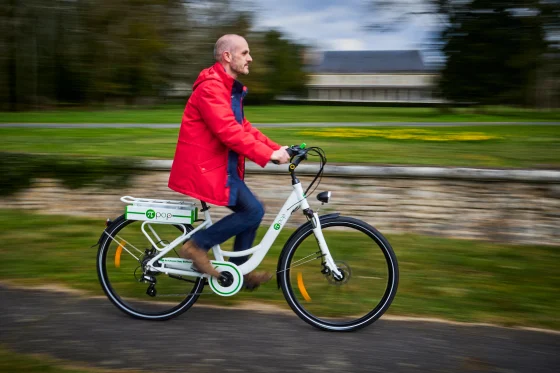
Electric bikes can be fast and dangerous. Here’s how to stay safe
In a recent incident, a 14-year-old boy was cycling at approximately 25 mph on an electric bike when he collided with Janet Stotko during her evening stroll in a Sioux Falls, S.D., neighborhood. The crash left her unconscious and bleeding on a sidewalk, with severe brain injuries, a facial fracture, and a broken eardrum. Though Stotko survived after days on a ventilator, weeks in the hospital, and brain surgery, her ordeal underscores the risks associated with electric bikes. Now, she advocates for stricter regulations to prevent similar accidents.
Electric bicycles, while offering eco-friendly and cost-effective mobility, are becoming a focal point for safety debates. A University of California, San Francisco study revealed that e-bike-related rider injuries nearly doubled between 2017 and 2022. Meanwhile, data from the University of California, San Diego shows a 300% spike in injuries among riders under 18 in the region from 2019 to 2023. These figures highlight the urgency for updated policies.
Federal and State Regulations Differ
Under federal law, most electric bikes are classified as nonmotorized vehicles, similar to conventional bicycles, meaning riders don’t need a license, insurance, or a helmet. However, state laws vary significantly, with some adopting stricter rules. For example, Connecticut recently enacted a law requiring helmets for all e-bike riders and mandating a driver’s license for bikes with motor power exceeding 750 watts. In Florida, a proposed bill aims to limit e-bike speeds to 10 mph near pedestrians, while New York City has set a universal 15 mph speed cap for all e-bikes.
Classifying E-Bikes: Key to Safety
Many states use a three-tier system to categorize e-bikes based on speed and functionality. Class 1 models activate motors while pedaling, reaching up to 20 mph. Class 2 e-bikes rely on throttles to achieve the same 20 mph maximum without pedaling. Class 3 bikes offer pedal-assist up to 28 mph. However, there are faster variants, sometimes called e-motos, that can exceed 40 mph. These bikes are often treated like motorcycles in certain states, restricting their use to roads and prohibiting sidewalk or path access. Yet, some regions lack specific guidelines for these high-speed models.
“It’s basic math that increased speeds lead to increased injuries. Force equals mass times acceleration, and kinetic energy is mass times velocity squared,” said John Maa, a general surgeon at MarinHealth Medical Center in Northern California.
Health professionals and medical organizations, including the American College of Surgeons and the American Association of Neurological Surgeons, emphasize the need for clearer policies. They stress helmet use as a critical safety measure, alongside defensive riding practices and the use of front and rear lights. Charles DiMaggio, an injury public health researcher at New York University’s medical school, advises riders to “familiarize yourself, read the manual, watch videos, and understand your specific model.” He also recommends visiting local bike shops to test ride and verify legal compliance.
Manufacturers often obscure distinctions between traditional e-bikes and faster models, complicating safety for users. To navigate this, riders should assess a bike’s top speed, motor wattage, and whether it requires pedaling. Vehicles outside the three-class framework may fall under motor vehicle regulations, limiting their use on shared paths reserved for slower e-bikes. As more people embrace electric bikes, understanding these differences is vital to reducing accidents and promoting shared road safety.
