
Five of Queen Elizabeth II’s most iconic outfits – from new royal exhibit
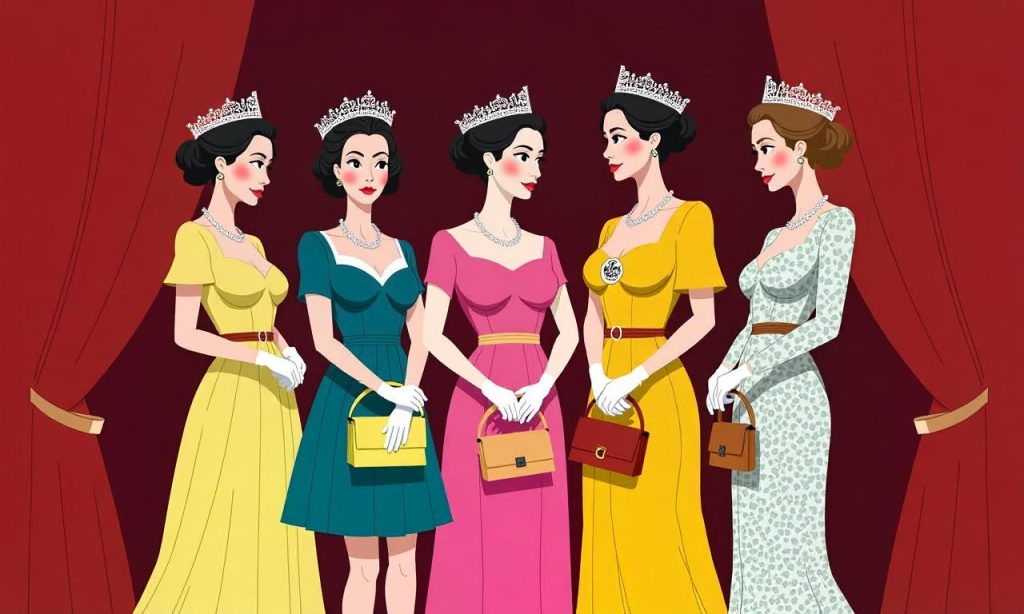
Five of Queen Elizabeth II’s most iconic outfits – from new royal exhibit
The Queen’s enduring sartorial identity
Queen Elizabeth II, a figure of global recognition, carved her legacy through a distinctive sartorial presence. Though her style was deliberate and often understated, it became instantly familiar, reflecting both her personal tastes and the era’s aesthetic. Her wardrobe was crafted with precision, blending functionality with subtle symbolism that conveyed soft power, diplomacy, and stability. A recent exhibition at The King’s Gallery in Buckingham Palace highlights this legacy, offering a glimpse into her 70-year reign and the evolution of British fashion during her time.
1950s Harris tweed jacket: A symbol of national pride
One standout piece from the exhibition is a Harris tweed jacket paired with a Balmoral Tartan skirt, designed by her longtime dressmaker Norman Hartnell in the 1950s. This ensemble, a staple of her casual attire, embodied practicality and modesty while subtly promoting British craftsmanship. Royal fashion expert Marian Kwei emphasizes its deeper meaning: “The fabrics were chosen to ‘promote British fashion, excellence and production’.” Though the design appeared low-key, its cut and tones carried undertones of stability and authority, as Kwei notes, “It’s ‘I’m in charge’, without being too loud about it.”
“It’s not obviously trendsetting. If she was chasing fashion trends, we would think she was blown away by every wind,” Kwei adds, suggesting its traditional look helped reinforce a sense of continuity.
1953 Coronation dress: A tapestry of nations
Another iconic item is her 1953 Coronation gown, created by Hartnell and made from silk produced in Kent. Adorned with gold bugle beads, diamantés, and pearls, the embroidery was a masterclass in British artistry. The dress’s symbolism, however, was its most striking feature. Kwei highlights how it represented the union of the UK and Commonwealth, incorporating floral emblems from England, Scotland, Wales, and Ireland. Additionally, the Queen requested the inclusion of the Canadian maple leaf and India’s lotus flower, reflecting her role as a unifying figure.
“The gown was pretty much a nod to Britain and the Commonwealth,” Kwei says. “Her sartorial choice was really an indication of the kind of Queen we had and how she reigned.”
1957 green gown: A divisive yet elegant choice
Her 1957 sleeveless green dress, also by Hartnell, was worn during a state banquet for US President Dwight Eisenhower at the British Embassy in Washington DC. While de Guitaut calls it a “magnificent piece of design,” the garment sparked debate over its intended message. “It’s absolutely beautiful,” she says, “but I can’t quite see an overt reference in it to be honest.” Despite its ambiguity, the color “apple crisp green” was interpreted as a nod to America, with Kwei noting its ties to cultural references like “The Big Apple” and “American Pie.”
“The dress says, ‘I’m Britain’s sovereign, this is us, but I’m also nodding to you,'” Kwei suggests.
Legacy in modern fashion
The exhibition features 200 items, including clothing, jewelry, hats, and accessories, spanning a decade of her life. Holmes, a royal fashion commentator, points out that early in her reign, she used her attire to “establish herself as a new kind of Queen—a glamorous young woman on a global stage dominated by men.” Hartnell’s designs, with their fitted waists and full skirts, accentuated her femininity, a deliberate choice that shaped her public image. The influence of her style remains evident today, as seen in Miu Miu’s 2024 Balmoral collection, which reimagined her tartan kilts for contemporary audiences.
