
Greek police using masked migrants to forcibly push other migrants back across border
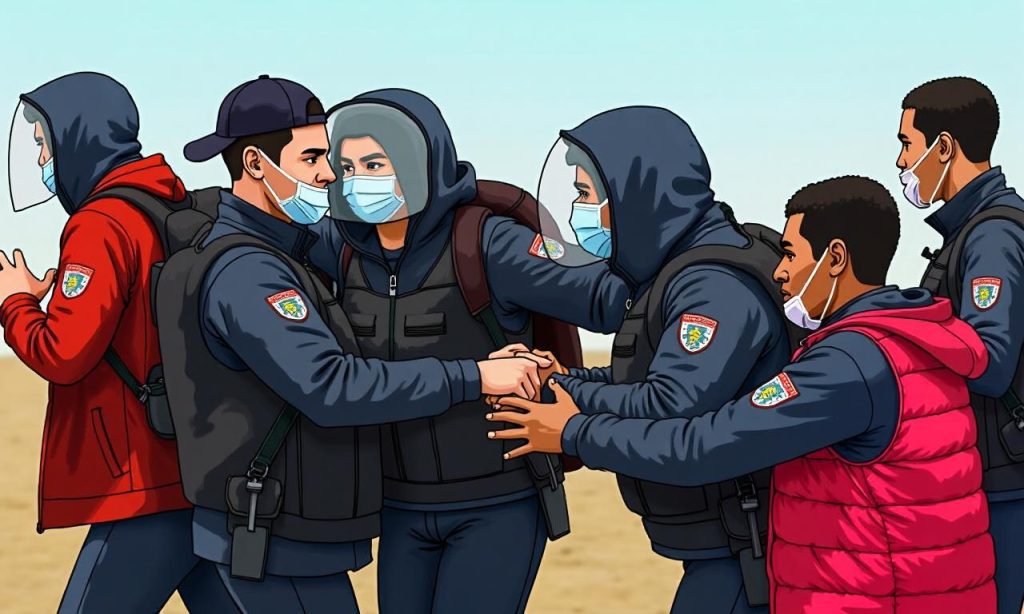
Greek police using masked migrants to forcibly push other migrants back across border
According to extensive evidence gathered by the BBC, Greek law enforcement has been enlisting migrants to assist in expelling others over the country’s land border with Turkey. Internal police records reveal that senior officials ordered and monitored the deployment of so-called mercenaries. These individuals, described in documents as guards, detail how migrants were mobilized to physically repel others seeking asylum.
Witnesses allege that those pushed back were subjected to harsh treatment, including being stripped, beaten, robbed, and even sexually assaulted. The practice, reportedly active since 2020, involves the use of masked men who operate unofficially. While the Greek prime minister claimed “total unawareness” of these allegations during a conversation with the BBC, authorities have yet to respond to detailed written inquiries.
Pushbacks and legal implications
Forced returns of migrants and asylum seekers without proper legal procedures are typically deemed unlawful under international law. Claims about masked foreign agents conducting such actions in Greece were first reported by Lighthouse Reports in 2022. The BBC’s investigation, conducted with the Consolidated Rescue Group, began in autumn 2023 after receiving video footage of alleged mistreatment.
The footage, shared by a smuggler, depicted a group of migrants attempting to enter Greece via the Evros River. They were ambushed by masked individuals, leading to physical and verbal abuse, including threats of death and rape. A Frontex report confirmed that between 10 and 20 “third-country nationals” acted under Greek officers’ orders during the incident. These migrants were then forcibly transported back to Turkey, violating EU human rights standards.
Patterns and controversies
Analysis of data from migrants, former mercenaries, and leaked transcripts suggests that Greece has experienced over a million arrivals since 2015, mostly through sea crossings but also via the Turkey border. The 200km-long Evros frontier separates Greece’s Evros region from Turkish East Thrace. Refugees crossing into this area enter a militarized zone with watchtowers and checkpoints.
One police source confirmed that mercenaries are used to return hundreds of people weekly. They noted that no officer in Evros is unaware of the pushback operations. The Greek human rights commission’s president, Maria Gavouneli, called the findings a “major breach” of rights, citing over 100 alleged forced returns recorded since 2020. While the number of incidents has declined, recent reports show that non-Greek nationals continue to play a role in these activities.
“There is no soldier, police officer or Frontex agent serving here in Evros who does not know that pushbacks are taking place,”
stated a regional police official.
Despite denials from Greek authorities regarding the presence of migrants in the area on June 22, 2023, the BBC’s investigation highlights systemic concerns. The prime minister, Kyriakos Mitsotakis, emphasized Greece’s commitment to border security, asserting European leaders would avoid past mistakes of allowing large-scale arrivals. Frontex has also dismissed allegations of involvement in the pushback operations.
