
By allowing Israel to bomb Iran, Trump is pushing Tehran to go nuclear
By allowing Israel to bomb Iran, Trump is pushing Tehran to go nuclear
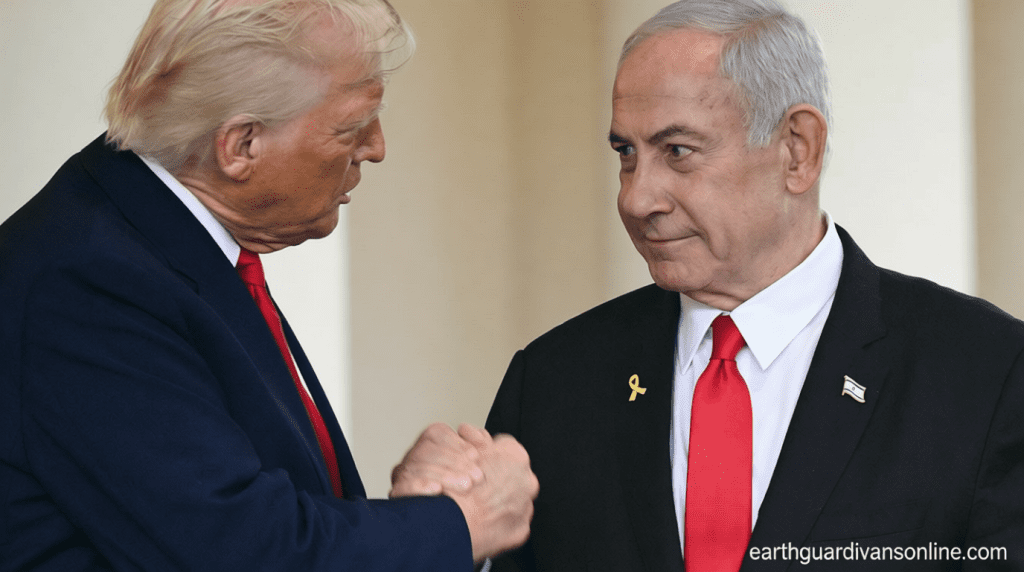
Donald Trump’s choice to permit Israel’s strike on Iran has been labeled the most significant misstep by a U.S. president since the 2003 invasion of Iraq. The decision not only risks escalating regional tensions but also undermines American credibility on the global stage.
George W. Bush’s 2003 invasion of Iraq ignited a prolonged conflict that claimed over 655,000 lives, as reported by The Lancet. It catalyzed the emergence of extremist groups like the Islamic State and left a once-mighty nation on the brink of collapse, which it has yet to fully recover from in the 14 years since.
Trump’s recent action could have even graver consequences. By enabling Israeli Prime Minister Benjamin Netanyahu to launch attacks while U.S. diplomats were engaged in talks with Iran, the president has placed America in a position akin to a drug cartel leader, eroding trust in its commitments.
“Iran must make a deal, before there is nothing left, and save what was once known as the Iranian Empire. No more death, no more destruction, JUST DO IT, BEFORE IT IS TOO LATE,” Trump wrote on Truth Social. The message, however, seems to echo a pattern of self-serving rhetoric that overlooks the historical weight of the situation.
“God Bless You All!”
With a population of nearly 92 million and a heritage spanning millennia, the Iranian people have endured centuries of foreign intervention. Trump’s bluster contrasts sharply with the bitter memories of the Iran-Iraq War, where Western allies once stood by Saddam Hussein’s side.
During that conflict, Saddam’s forces initially advanced rapidly, only to face devastating losses as they were pushed back by Iran’s resilient resistance. The U.S. and European nations backed him, providing access to chemical weapon technology through German companies. These included the means to produce mustard gas, sarin, and tabun, which were later used against Kurdish civilians in Halabja.
Western support for Saddam persisted even after the gas attacks. Richard Beeston, a late colleague from The Times, recounted how British diplomats tried to downplay the atrocities, claiming they were minimal. Three years into the war, Reagan dispatched Donald Rumsfeld to shake hands with the Iraqi leader, underscoring the alliance’s priorities.
The National Security Decision Directive (NSDD) 114, issued in November 1983, outlined the U.S. objective: safeguarding military assets and oil supplies in the Gulf. Chemical weapons, though lethal, were deemed secondary to these goals. Yet, for Iranians, the trauma of those attacks remains etched in memory, shaping their foreign policy for decades.
Iran’s victory in the war against Saddam solidified its resolve to build a network of armed groups as a shield. This strategy, known as the “axis of resistance,” has evolved over time, though its core purpose remains rooted in the lessons of the past. Trump’s decision now risks reigniting that cycle of conflict, with Israel’s drones targeting Iranian officials and military infrastructure under the guise of preemptive strikes.
