
Israel’s war to erase Syria
Israel’s Struggle to Rewrite Syria’s Fate
On Tuesday, a stark pronouncement reverberated through Tel Aviv. Israeli Finance Minister Bezalel Smotrich, addressing a crowd of allies, asserted: “The conflict won’t cease until countless Gazans relocate… and Syria’s borders are redrawn.” This statement, circulated widely on digital platforms, laid bare the intent behind Israel’s military actions. The nation’s wars, often framed as efforts to secure its borders or combat extremism, are now revealed as campaigns to reshape the geopolitical landscape, dismantling nations, dislocating populations, and redefining historical narratives.
Aerial Strikes Across Syria
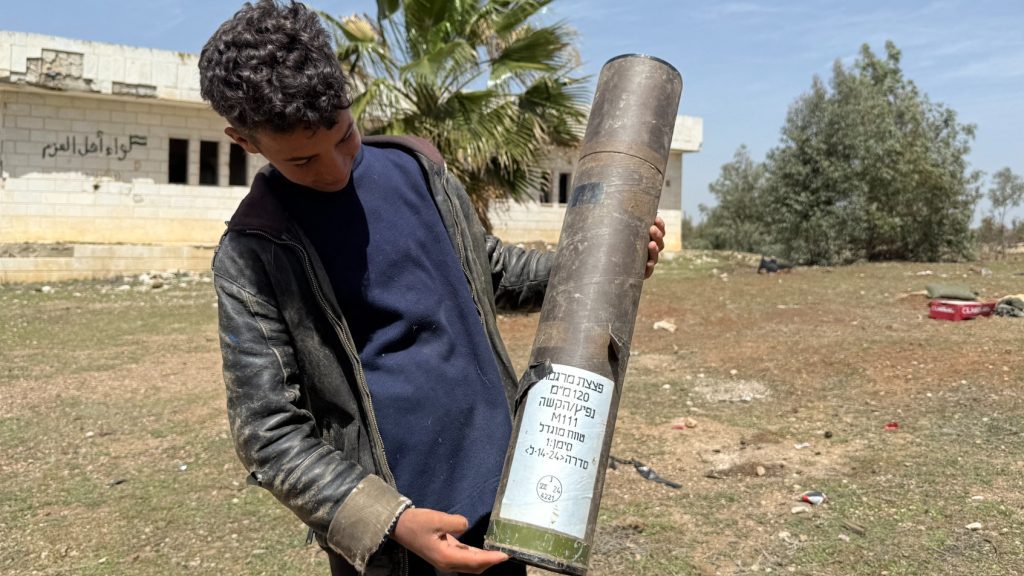
Earlier this month, Israeli jets resumed their assault on Syrian airspace, launching waves of missiles at both military installations and civilian areas. The bombardment extended from central airfields to the southern regions, where ground troops advanced near Nawa, claiming the lives of nine civilians. While the official Israeli rationale centered on defense and preemptive strikes, the deeper motive lay in challenging the region’s cultural and historical fabric.
Legacy of Intellectual Heritage
Nawa, a town in the southern reaches of Syria, holds profound significance as the birthplace of Imam al-Nawawi, a scholar whose contributions to Islamic thought transcend time and geography. His dedication to the pursuit of knowledge, forsaking the distractions of commerce, has left an indelible mark on communities from Cairo to Kuala Lumpur. Bombing this place is not just an attack on a town—it is an assault on a legacy of wisdom and tradition.
Sacred Ground and Historical Footprints
Just beyond Nawa, Tell al-Jabiyah rises as a site steeped in Islamic history. It was here that Caliph Omar ibn al-Khattab once stood, journeying from Madinah to claim Jerusalem’s keys. The hill bore witness to a pivotal moment in the transfer of power, its soil still echoing with the footsteps of those who shaped the region’s destiny. This area is more than a place of worship—it is a testament to the enduring spirit of resistance and progress.
To the south and east, other luminaries of scholarship emerged from the lands of Daraa and Bosra. Ibn al-Qayyim al-Jawziyyah, a towering figure in Islamic jurisprudence, was born in Izraa. Ibn Kathir, the renowned historian of *Al-Bidaya wal-Nihaya*, hailed from Majdal. The region of Houran, rich with intellectual roots, has long nurtured a civilization that defied boundaries, sects, and empires. Its rivers, like the Yarmouk, have seen pivotal victories, such as Khalid ibn al-Walid’s triumph over the Byzantines in 636 AD, which redefined the course of history.
Post-Assad Campaign and Expansion
Since the ousting of the Assad regime on 8 December 2024, Israel has intensified its operations in Syria, targeting infrastructure, defense systems, and storage facilities with relentless precision. The stated goal is to establish a “security buffer” spanning 400 square kilometers—a territory larger than Gaza. This maneuver, however, underscores a broader strategy. Israeli forces now occupy positions along Mount Hermon, a move openly defying international legal frameworks.
Initially, officials suggested this occupation was temporary. Yet, their resolve has solidified. Defence Minister Israel Katz, standing atop the mountain, declared: “We will remain. We will ensure the southern zone is demilitarized, and we will not allow threats to the Druze community.” This declaration marks the beginning of a calculated campaign to assert control, framing the conflict as a protective measure for a minority while overshadowing the broader implications for Syrian sovereignty.
History, however, reveals the hollow nature of these claims. The Druze of Palestine, long enlisted in the Israeli military, have served the state they believed would grant them equal status. Now, their loyalty is tested as Israel’s presence deepens, signaling a shift from temporary occupation to permanent assertion. The war, once about security, has become a quest for territorial and ideological dominance. It is not merely a battle for land—it is an effort to erase the past and reshape the future.
