All ICE agents in the field expected to have body cameras by the end of September, Mullin says

Daftar Isi
Body Cameras for Every ICE Field Agent: September Deadline Set as Transparency Push Intensifies
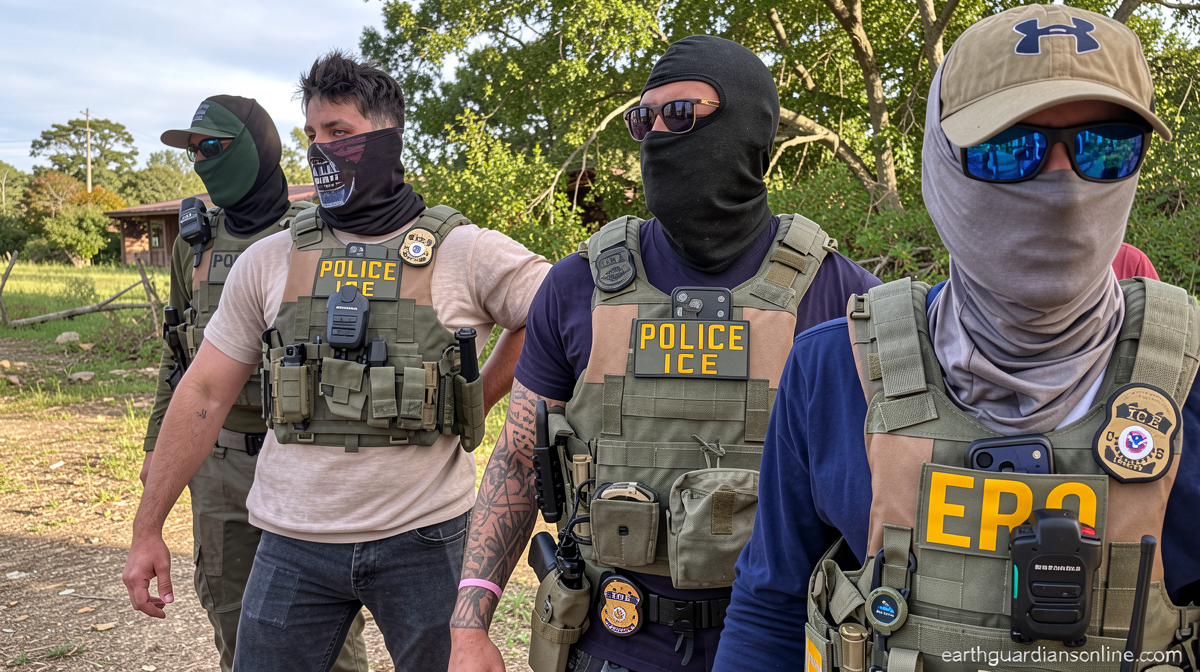
Earthguardiansonline.com – Federal immigration enforcement officers working on the street will carry body-worn cameras by the close of September, marking a significant shift in how one of the most visible arms of the executive branch documents its daily operations. Homeland Security Secretary Markwayne Mullin confirmed the timeline during a press briefing held in New York on Tuesday, signaling that the administration is moving to close a gap that critics have long flagged between ICE’s enforcement posture and the public’s right to see what happens during encounters with federal agents.
The announcement lands against a backdrop of escalating tensions. Over the past year, confrontations between immigration officers and members of the public have grown increasingly frequent and, in several high-profile cases, fatal. Those incidents fueled a broad, cross-party consensus that some form of visual documentation should accompany every field interaction. Mullin’s confirmation that cameras are coming to every agent in the field represents the latest institutional step toward that consensus.
A Slipped Timeline: From August to September
The September target is not the first date the agency has floated. ICE had earlier communicated an expectation that all field officers would be equipped by the end of August. That earlier benchmark did not materialize, and the revised schedule pushes full deployment roughly one month later. In a prior written statement, the agency acknowledged that it had already acquired the necessary hardware but that individual officer training remained incomplete. The statement read:
“Training required to equip individual officers remains ongoing and we expect to complete this training soon.”
Mullin, pressed on whether the distribution effort was still on track, offered a more informal but equally definitive answer:
“We’re getting close. By the end of September, I’m pretty sure we will be there.”
The delay, while modest in duration, underscores the logistical complexity of outfitting a large federal workforce with new recording equipment, ensuring consistent training, and integrating the devices into existing operational workflows without disrupting ongoing enforcement operations.
Bipartisan Momentum and Public Accountability
Support for body cameras in law enforcement has hardened into near-universal agreement across the political spectrum in recent years. Municipal police departments across the country adopted the technology en masse following a series of high-profile use-of-force incidents in the mid-2010s, and research from multiple academic institutions has linked camera deployment to measurable reductions in citizen complaints and force-related incidents. Federal agencies, however, have generally lagged behind their municipal counterparts in adopting comparable transparency measures.
White House border czar Tom Homan has been among the most vocal internal advocates for equipping ICE agents. Speaking on the program “State of the Union” on Sunday, Homan framed the issue in terms of public trust rather than institutional self-protection:
“I’m a big proponent of cameras. I want the American people to see what the officer sees when he makes a decision.”
That framing matters. It positions the cameras not as a shield for agents but as a window for citizens, aligning the policy with the broader accountability expectations that have reshaped policing norms since the mid-2010s. For an agency whose operations often take place in residential neighborhoods, at workplaces, and in public spaces, the presence of a recording device changes the calculus for both the officer and the person being approached.
Motorola and the Hardware Question
The physical implementation of the camera mandate is being pursued in coordination with Motorola, the long-standing supplier of communications equipment to federal agencies. Mullin disclosed that Motorola is working with the Department of Homeland Security on the microphones that agents already wear in the field. Those existing devices, he noted, carry embedded capability that could be repurposed or augmented for video recording.
“Some of the technology with some of the mics that all of these guys already wear, already have on them, have the ability for cameras too.”
Mullin added that he would meet with Motorola’s chief executive during the current week to discuss accelerating the activation timeline for that integrated functionality:
“We’re talking about how we can activate those faster too.”
He also referenced a separate track involving what he called “permanent cameras” — dedicated, purpose-built recording units distinct from the integrated microphone solution — suggesting the agency may ultimately field both types of equipment depending on operational context.
What the September Deadline Means in Practice
Full deployment by month’s end would place ICE among the last major federal law-enforcement bodies to adopt universal body-camera coverage. The practical implications extend beyond documentation. Recorded encounters create a contemporaneous record that can inform internal reviews, support or rebut disciplinary proceedings, and provide material for judicial proceedings when officers’ actions are challenged in court. They also alter the behavioral dynamics at the moment of contact: both parties know the interaction is being captured, which research in municipal policing has associated with calmer exchanges and fewer escalations.
For communities that have experienced repeated, sometimes violent, encounters with immigration enforcement over the past year, the cameras represent a concrete, verifiable change rather than a policy statement. Whether that change translates into sustained trust will depend on follow-through — consistent activation, transparent retention and release policies, and accountability when recordings reveal misconduct. The September deadline is the first structural step. The questions that follow will be about what happens after the light turns on.
Related Reading
Frequently Asked Questions
What is All ICE agents in the field?
All ICE agents in the field is the main topic of this guide. The article explains the context, practical details, and next steps readers should understand.
Why does All ICE agents in the field matter?
All ICE agents in the field matters because readers are looking for a useful answer, not just a short summary. Good content should match search intent and help them decide what to do next.