Angst at the Supreme Court before a rush of decisions

Angst at the Supreme Court before a rush of decisions
Angst at the Supreme Court before – A version of this story appeared in CNN’s What Matters newsletter. To get it in your inbox, sign up for free here.
The Supreme Court’s shifting role in the political arena
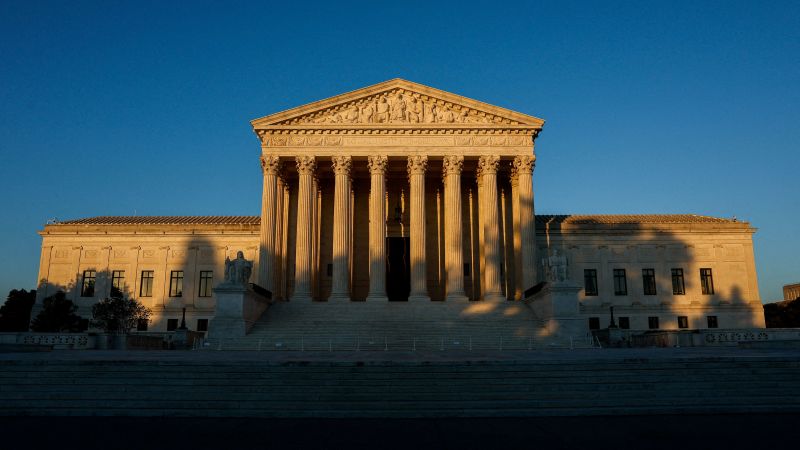
As the days stretch into late spring, the Supreme Court is poised to deliver a series of landmark rulings that could reshape the nation’s legal landscape. This term has been marked by a mix of significant victories and contentious decisions, with the justices navigating a complex web of policy debates. One of the most notable outcomes was the court’s decision to invalidate substantial portions of President Donald Trump’s tariff strategy, yet the same bench simultaneously weakened the Voting Rights Act, granting Republicans a strategic edge in the redistricting battles they initiated. These contrasting rulings have sparked widespread debate about the court’s growing influence as a political entity, rather than an impartial arbiter of justice.
Trump’s fingerprints on the docket
For Supreme Court reporters, this period has proven to be one of the most dynamic in recent memory. The docket is saturated with cases that reflect the administration’s priorities, particularly those tied to former President Trump. His policies have become a central theme, with several high-profile cases emerging from the first few months of his term. Among these are the birthright citizenship dispute and the controversies surrounding the removal of independent officials. These cases, which were initially litigated in the previous year, are now reaching the court’s merits stage, signaling a shift in the judicial process.
While the court has addressed a range of issues, including immigration and election law, the political undercurrents are unmistakable. For instance, the recent ruling on the Voting Rights Act, which had far-reaching implications, was a decision that favored Trump’s agenda even though he wasn’t named as a party. This has raised questions about the justices’ independence and the extent to which their rulings are influenced by partisan considerations. The tariffs case, in particular, became a lightning rod for criticism, with Trump’s swift reaction highlighting the tension between the judiciary and executive branches.
“It’s the best time of year to be a Supreme Court reporter,” said CNN’s Supreme Court correspondent John Fritze. “The calendar is packed with major cases, and the political stakes are at an all-time high.”
A contentious redistricting decision
One of the most significant rulings of the term was the redistricting decision that bolstered Republican advantages. This case, which had been postponed from the previous term, was pivotal in determining the future of voting rights legislation. While the ruling was technically about redistricting, its impact on the Voting Rights Act’s scope has drawn sharp criticism. The timing of the decision, coinciding with the height of the 2026 election cycle, has fueled accusations that the court is viewing issues through a political lens.
Fritze noted that the decision’s implications are far-reaching. “The redistricting case was held over from the last term, and its resolution has opened the door to debates about the court’s impartiality. Even among the justices, there’s a palpable sense of unease about how their rulings are perceived.” This sentiment is echoed by Justice Ketanji Brown Jackson, the youngest member of the court, who has publicly expressed concerns about the political undertones of the decision. Though she hasn’t explicitly called the court political, her comments suggest a growing awareness of the public’s scrutiny.
“The timing of the redistricting decision made it look like the court was aligning with Republican interests,” Fritze explained. “It’s a case that’s hard for the average person to grasp, but its consequences are clear.”
Political dynamics and the justices’ response
The political pressure on the court has been evident in the way justices have defended their decisions. In the tariffs case, for example, the court’s ruling against Trump was met with immediate criticism from the president. Fritze pointed out that Trump’s reaction was unusually harsh, calling the justices who ruled against him “an embarrassment to their families.” This level of public rebuke is rare, even for presidents who often voice frustration with court decisions.
Despite Trump’s rhetoric, the justices have maintained their stance, emphasizing their commitment to judicial neutrality. “They insist their role is to interpret the law without regard to political branches,” Fritze said. “But when a sitting president openly criticizes them, it’s hard to ignore the impact on the court’s reputation.” This dynamic has led to internal discussions among justices about how to balance their duties with the growing perception of partisanship.
“The tariffs case was an example of how the court can be seen as impartial, even when it’s taking a side,” Fritze added. “They ruled against Trump in that instance, and against him in others, depending on the legal merits.”
Strategic decisions and their electoral impact
The court’s interventions have not only shaped legal precedents but also influenced the electoral landscape. For example, their decision to decline intervention in a Virginia case that could have aided Democrats has created an uneven playing field. Conversely, their support for Alabama’s redistricting efforts has provided Republicans with a strategic advantage. These choices have been interpreted as a reflection of the justices’ alignment with certain political factions, even as they argue the cases are distinct in nature.
“The argument that the court isn’t political hinges on the fact that the cases are different,” Fritze noted. “The Virginia case was weaker, and even liberal commentators have acknowledged that. California’s victory in another case shows there’s still room for Democrats, but the overall pattern has favored Republicans.” This cumulative effect has led to questions about the court’s role in determining the outcome of future elections.
Looking ahead: Election-related cases and lingering concerns
As the court prepares to release more decisions, the focus will shift to how these rulings might impact the upcoming election. One of the most anticipated cases involves the counting of mail-in ballots, a topic that has become increasingly contentious. The way the court handles this issue could have significant implications for voter participation and electoral integrity.
“The debate over mail-in ballots is just one of many cases that could influence the election,” Fritze said. “The court’s approach will likely determine how these policies are implemented across the country.” The justices are aware of the scrutiny they face, with some expressing frustration over the perception that their decisions are politically motivated. This tension is likely to intensify as the term progresses, and the public continues to view the court as a key player in shaping the political future of the nation.
The coming weeks will be critical for the Supreme Court as it navigates the delicate balance between legal interpretation and political influence. While the justices aim to uphold their role as impartial arbiters, the decisions they’ve already made suggest a growing alignment with partisan interests. This shift, however, has not gone unnoticed, and the court’s reputation as the final word in American justice may come under further examination.