John Roberts draws a line with Trump — over history

Daftar Isi
Roberts Breaks Ranks Over White House Ballroom, Citing Century-Old Architectural Legacy
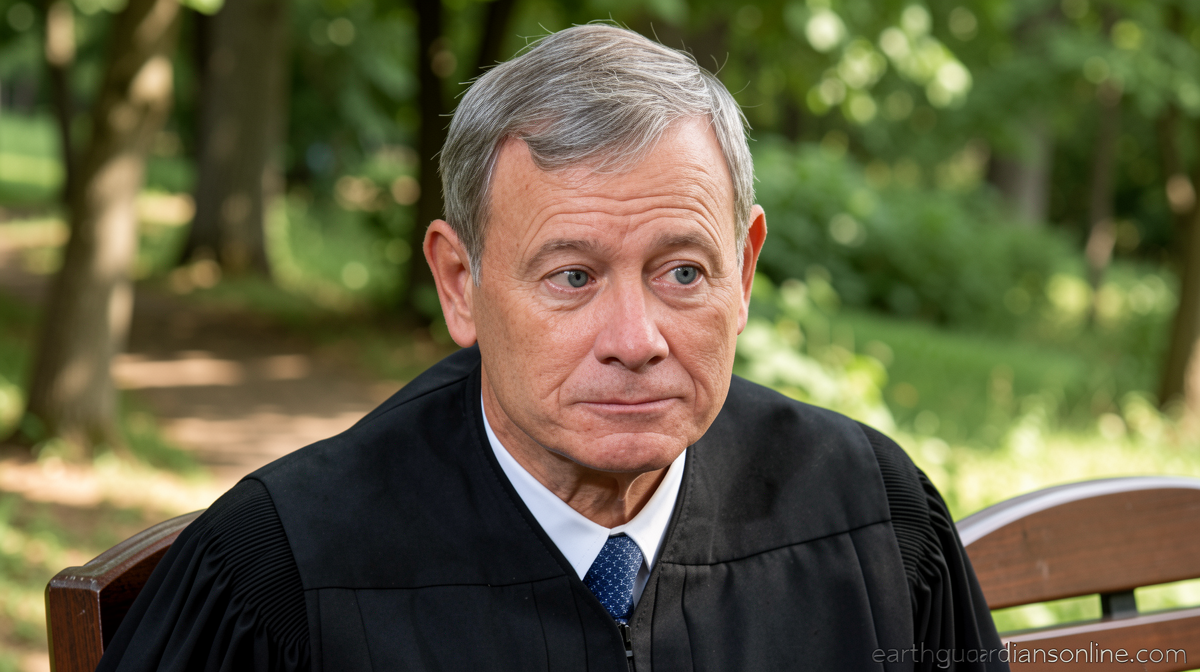
Earthguardiansonline.com – For most of Donald Trump’s second term, Chief Justice John Roberts has moved in lockstep with the president, signing off on sweeping expansions of executive power that would have been unthinkable a decade ago. On Monday, however, the nation’s top jurist stepped out of formation. In a six-page dissenting statement, Roberts objected to the administration’s push to demolish the White House East Wing and replace it with a 90,000-square-foot ballroom and accompanying security structure — a project that has been under way for nearly a year and is now approaching completion.
The split was narrow but unmistakable. Five of Roberts’s conservative colleagues formed a majority to let the president proceed, rendering the chief justice’s objection legally inert. Yet the episode carries weight beyond the courtroom, because it marks the first time Roberts has publicly separated himself from both the White House and his own bench on a matter of presidential ambition.
A Dissent Written in Stone and Memory
Roberts’s argument was not grounded in constitutional mechanics or separation-of-powers doctrine. Instead, he reached for the language of preservation, architecture, and national memory — a register that suits a man who has told audiences he once intended to earn a doctorate in history at Harvard before turning to law.
“We shape our buildings, and afterwards our buildings shape us.”
The line, lifted from Winston Churchill’s 1943 wartime address, anchored the chief justice’s appeal to continuity. Roberts appended his own gloss:
“All the more reason to ensure that those responsible follow the rules in deciding what to tear down and what to build up at the People’s House.”
He also invoked Theodore Roosevelt’s 1902 remarks to Congress, in which the former president thanked lawmakers for funding the East and West wing additions while praising “the stately simplicity” of the original structure and urging that such edifices be maintained as “historic monuments which keep alive our sense of continuing with the Nation’s past.” For Roberts, the White House occupies a symbolic tier above even the Supreme Court’s own columned edifice — a building the Court did not occupy until 1935, more than a century after the White House and the Capitol were completed.
The Legal Question: Standing and Congressional Approval
The suit was filed by the National Trust for Historic Preservation, which argued that tearing down the East Wing and erecting the new ballroom required an act of Congress under the federal law governing alterations to the executive mansion. Lower federal courts had preliminarily agreed, finding that the Trust possessed standing to sue because it had demonstrated a concrete, particularized injury.
The Trust pointed to Alison Hoagland, an architectural historian and longtime Trust leader and member, who testified that her personal enjoyment of the White House’s historic appearance had been impaired by the demolition. The Supreme Court majority, however, found that showing inadequate. Writing per curiam — the Latin shorthand for “by the court,” typically reserved for emergency-docket appeals — the justices held that
“mere offense, disagreement, or distaste does not qualify as a concrete and particularized injury”
sufficient to confer standing. The ruling effectively closed the door on judicial review of the ballroom’s design and scale, at least on the procedural grounds the Trust had raised.
Roberts’s Broader Record Against Trump’s Agenda
The ballroom dissent is not an isolated anomaly. Last term, Roberts voted against two of the most aggressive measures in Trump’s second-term program: the imposition of sweeping tariffs on imported goods without congressional authorization, and an executive attempt to curtail birthright citizenship — the centuries-old principle that any child born on U.S. soil automatically receives American citizenship. Those two votes, combined with Monday’s statement, sketch a chief justice who will back the president on most fronts but draws a line when the administration’s reach collides with institutional history or long-settled constitutional norms.
At the same time, Roberts has authored some of the most consequential opinions of the current era in Trump’s favor, including the 2024 ruling granting the president immunity from criminal prosecution and last June’s decision affirming his authority to remove the heads of independent agencies. The ballroom dissent, then, reads less as a wholesale repudiation and more as a calibrated exception — a signal that even the most deferential justice on the bench retains a personal threshold.
The Smithsonian Connection and Washington’s Changing Skyline
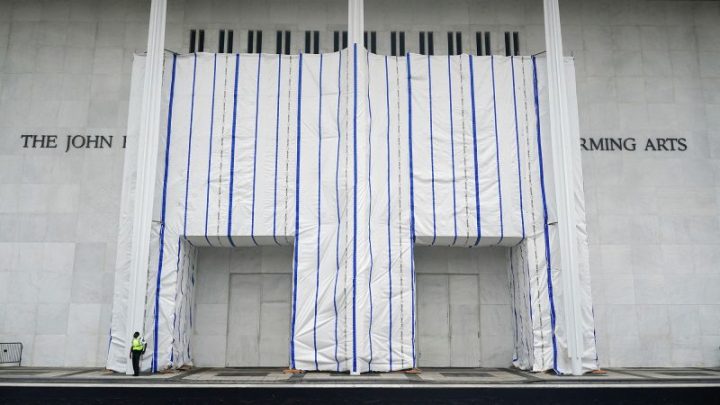
Roberts’s role as chancellor of the Smithsonian Institution — a largely ceremonial post attached to the chief justiceship — adds another layer. He has presided over Smithsonian board meetings while watching the administration reshape the nation’s flagship museums. Trump’s broader vision for Washington’s physical landscape has included plans to inscribe his name on the John F. Kennedy Center for the Performing Arts and to erect a 250-foot triumphal arch at the traffic circle between the Arlington National Cemetery entrance and the Lincoln Memorial.
Those projects, like the ballroom, raise questions about whether a sitting president may unilaterally alter landmarks that predate his tenure and belong, in a civic sense, to the public. Roberts’s Monday statement, while legally costless to the administration, injects a judicial voice into that debate — one that privileges architectural continuity, congressional oversight, and the memory embedded in stone over the preferences of a single occupant of the West Wing.
The construction crews, meanwhile, will continue. The ballroom is close to finished. But the dissent remains on the record, and in a court where opinions outlive administrations, that permanence may be the point.
Related Reading
Frequently Asked Questions
What is John Roberts draws a line?
John Roberts draws a line is the main topic of this guide. The article explains the context, practical details, and next steps readers should understand.
Why does John Roberts draws a line matter?
John Roberts draws a line matters because readers are looking for a useful answer, not just a short summary. Good content should match search intent and help them decide what to do next.