
Library of Congress official Trump tried to fire can keep her job for now, Supreme Court says
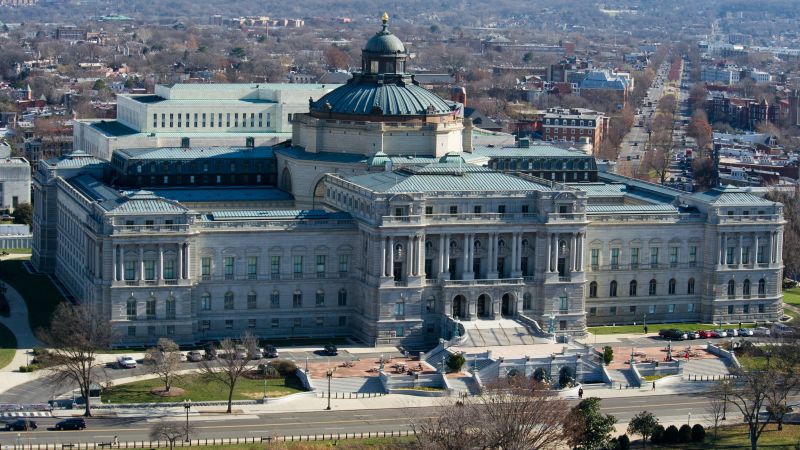
Supreme Court Lets Library of Congress Official Trump Tried to Fire Keep Job
Trump’s Attempt to Remove Perlmutter Stalled by High Court
Library of Congress official Trump tried – On Tuesday, the U.S. Supreme Court temporarily blocked President Donald Trump’s effort to dismiss Shira Perlmutter, a senior Library of Congress official. The ruling allows Perlmutter to retain her position as director of the Copyright Office while lower courts examine the legal grounds for her removal. This decision reflects the ongoing judicial scrutiny of executive power, as the court continues to clarify the boundaries between presidential authority and the legislative branch.
Perlmutter, who has been in her role since 2023, became a focal point of the Trump administration’s push to reshape federal leadership. The case centers on whether her position as register of copyrights qualifies as a legislative officer, which would limit the president’s ability to remove her without congressional approval. The Supreme Court’s pause in the process highlights the importance of this classification, which has broader implications for how executive powers are applied across federal agencies.
Legal Dispute Over Perlmutter’s Classification
The conflict began in the spring of 2026 when Trump sought to replace Perlmutter. His administration had previously ousted Carla Hayden, the Librarian of Congress, and attempted to appoint Todd Blanche, a former deputy attorney general, as acting librarian. Blanche was expected to lead the Copyright Office, but Perlmutter’s legal team argued that her role is constitutionally tied to the legislative branch. This argument hinges on the claim that her position grants her immunity from direct presidential removal.
Perlmutter’s lawsuit emphasizes that her title as register of copyrights is defined by law to be part of Congress’s authority. She contends that this classification means her work involves advising lawmakers, a function typically reserved for legislative officers. The Supreme Court’s decision to halt her removal aligns with this interpretation, underscoring the constitutional principle of separation of powers. However, the Trump administration maintains that the Copyright Office operates under executive control, with functions like international copyright negotiations falling within presidential reach.
Historical Context and Judicial Rulings
Earlier this year, the DC Circuit Court of Appeals ruled that Perlmutter’s position is not subject to unilateral presidential removal. The court highlighted that her role as a legislative officer requires Congress’s approval for termination, a standard not applied to most executive appointments. This precedent has been a key factor in the Supreme Court’s decision to pause the case, as it aligns with the administration’s broader strategy to test the limits of presidential power.
In a 2-1 decision, the DC Circuit affirmed that the Librarian of Congress and Register of Copyrights are classified as legislative officers. Judge Florence Pan, who joined the majority, noted that Trump’s actions “strike us as a violation of the separation of powers.” This ruling has created tension between Biden-appointed judges, who defend congressional authority, and Trump-nominated judges, who argue for greater executive flexibility. The current case now tests whether this classification holds in higher courts.
“The executive’s alleged blatant interference with the work of a Library of Congress official Trump as a legislative officer, as she performs statutorily authorized duties to advise Congress, strikes us as a violation of the separation of powers that is significantly different in kind and in degree from the cases that have come before,” US Circuit Judge Florence Pan wrote.
Implications for Executive Authority and Federal Structure
The Supreme Court’s intervention in this case has reignited debates about the balance of power between branches of government. By allowing Perlmutter to remain in her post, the justices have signaled that the Librarian of Congress and Register of Copyrights may enjoy a unique status, even as the president continues to assert authority over independent agencies. Legal experts warn that this decision could set a precedent for future challenges to leadership appointments within the federal government.
While the case is not resolved, it has already influenced the administration’s approach to leadership changes. The Trump team has argued that the Copyright Office’s functions are executive in nature, pointing to its role in policy implementation. However, opponents stress that the office’s constitutional role is to serve as a legislative advisory body, a function that grants it protection from unilateral dismissal. The final verdict could determine whether this distinction remains intact or is further eroded by presidential actions.
