Supreme Court limits power of federal government to disarm drug users

Supreme Court Restricts Federal Authority to Disarm Marijuana Users
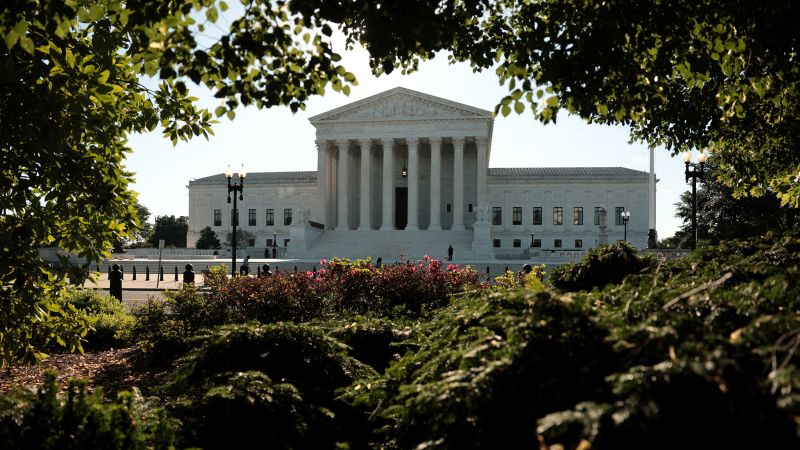
Supreme Court limits power of federal – In a landmark ruling on Thursday, the U.S. Supreme Court restricted the federal government’s ability to seize firearms from individuals who use marijuana regularly. The decision, authored by Justice Neil Gorsuch, overturned a decades-old law aimed at preventing weapons from falling into the hands of drug users. This law, passed in the 1960s, had allowed prosecutors to argue that habitual drug users posed a threat to public safety, thereby justifying their disarming. The court’s unanimous ruling signaled a shift in how the federal government interprets the balance between drug use and gun ownership rights.
Case of Ali Danial Hemani Sparks Constitutional Debate
The case hinged on Ali Danial Hemani, a U.S.-Pakistan dual citizen who faced charges in 2023 under the federal anti-guns-and-drugs statute. His indictment followed an FBI raid of his family’s home, where agents discovered a Glock 9mm pistol and 60 grams of marijuana. While the Justice Department alleged Hemani was involved in drug trafficking, used cocaine, and supported Iran, the central issue was whether his marijuana use alone justified disarming him. The Supreme Court’s ruling clarified that the government must demonstrate a clear link between regular drug use and a threat to others, rather than applying a blanket rule.
“We do not question that sometimes an individual’s unlawful use of marijuana (or any other controlled substance) may render him a danger to others,” the court stated. “But, again, the government disclaims the need to show anything like that in this case. Instead, it asks us to conclude that anyone who regularly uses marijuana is categorically violent and dangerous without any further showing.”
The decision’s narrow scope left broader questions unresolved. For example, it did not address whether federal prosecutors could target individuals addicted to drugs or those whose substance use makes them a risk to themselves or others. This ambiguity highlights the ongoing debate over the extent of the government’s power to restrict gun access based on drug habits. The ruling also emphasized that the Second Amendment, often a point of division among justices, was now aligned in its interpretation.
A Shift in Marijuana Legalization Trends
The timing of the case reflects a significant change in societal attitudes toward cannabis. As of 2026, nearly half of all U.S. states have legalized small amounts of marijuana for recreational use, while an even larger number permit its medical applications. This growing acceptance has challenged the constitutionality of laws that penalize marijuana use, especially when it does not involve violence. The court’s decision underscores how legal and cultural shifts are influencing judicial interpretations of gun rights.
Legal analysts noted that the ruling was part of a larger trend at the Supreme Court to reconsider the intersection of drug policies and gun laws. The conservative majority, which has increasingly emphasized historical context in its rulings, sought to limit the government’s authority to disarm individuals based on drug use alone. This approach aligns with their broader efforts to preserve Second Amendment rights by anchoring gun regulations in the founding era’s legal framework.
Political Implications and Reactions
The case also carried political weight, particularly with the involvement of Hunter Biden, President Joe Biden’s son. In 2024, Hunter was convicted under the same federal law for possessing a firearm while addicted to crack cocaine. His subsequent pardon by President Biden added a personal dimension to the legal debate, raising questions about the fairness of applying such laws to high-profile figures.
Gun rights advocates hailed the decision as a triumph. John Commerford, executive director of the National Rifle Association’s lobbying division, called it a “major victory for the Second Amendment and peaceable gun owners.” He argued that the ruling reinforces the idea that nonviolent drug use should not automatically strip individuals of their right to bear arms. “There is no historical justification for depriving someone of their God-given right to keep and bear arms simply for engaging in nonviolent conduct,” Commerford asserted.
On the other hand, gun control groups expressed cautious optimism. Leigh Rome, a senior litigation attorney at the Giffords Law Center, stated the decision “continues to allow the government to enact and enforce reasonable categorical prohibitions on firearms ownership.” She suggested the ruling does not eliminate the possibility of regulating gun access for drug users, but rather sets a higher bar for such restrictions.
The court’s decision also revisited its 2022 landmark ruling in NYSRPA v. Bruen, which redefined the standards for evaluating gun regulations. That case required laws to have a direct connection to the founding era’s understanding of gun control. The current ruling builds on that precedent, narrowing the application of the federal statute by demanding more concrete evidence of danger before disarming someone.
Unresolved Questions and Future Challenges
While the decision addressed the specific case of Hemani, it left room for future legal battles. Steve Vladeck, a CNN Supreme Court analyst and Georgetown University Law Center professor, pointed out that the court deliberately avoided deciding larger questions about drug-related gun prohibitions. “This case provides a framework for how the government can argue for disarming individuals, but it doesn’t resolve whether such laws are constitutional in all scenarios,” he said. “Those questions will likely return to the court when the stakes are higher.”
For now, the ruling signals a pivotal moment in the ongoing fight over gun rights. It challenges the federal government’s ability to use drug use as a justification for disarming citizens, even when the use is nonviolent. The decision may also influence how states and local jurisdictions handle similar laws, as they weigh the balance between public safety and individual freedoms. With the Supreme Court’s conservative majority pushing for a more historical interpretation of the Second Amendment, the legal landscape is poised for further transformation.
As the ruling takes effect, its impact will be felt across the country. Lawmakers may revisit federal statutes to align them with the court’s new interpretation, while advocates on both sides prepare for the next round of litigation. The case of Ali Danial Hemani, though narrow in scope, has already sparked a broader conversation about the role of drug policies in shaping gun rights and the future of federal law enforcement. For now, the decision stands as a testament to the court’s willingness to adapt its stance in response to evolving societal values and legal arguments.