
Takeaways from the Supreme Court’s rebuke of Trump on birthright citizenship
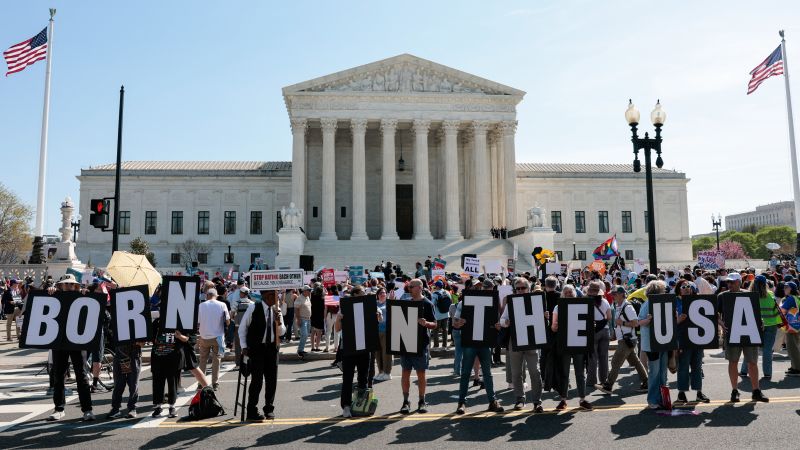
Supreme Court’s Takeaways on Birthright Citizenship
Takeaways from the Supreme Court s rebuke – In a pivotal ruling, the Supreme Court delivered takeaways from its decision to rebuke President Donald Trump’s attempt to redefine birthright citizenship. The 6-3 ruling upheld the longstanding principle that children born in the U.S. to undocumented parents automatically gain citizenship, regardless of their parents’ legal status. This decision, issued on Tuesday, marked a clear stand against Trump’s immigration agenda, which had sought to restrict citizenship rights through executive action. While the outcome aligned with expectations, it provided key insights into the court’s interpretation of the 14th Amendment and its influence on immigration law.
A Critical Ruling in the Court’s Term
The takeaways from the Supreme Court’s ruling on birthright citizenship were shaped by a deep dive into the amendment’s original intent. The decision emphasized that the 14th Amendment’s language, “All persons born or naturalized in the United States, and subject to the jurisdiction thereof, are citizens of the United States,” was straightforward and unambiguous. The majority opinion, authored by Chief Justice John Roberts, argued that the amendment’s text did not require further restrictions on citizenship, a stance that reaffirmed the core principle of automatic citizenship for U.S.-born individuals. The dissenters, however, challenged this interpretation, suggesting the amendment’s purpose was broader than initially understood.
Roberts’ takeaways from the Supreme Court’s ruling highlighted the importance of textualism in legal analysis. He contended that the executive order’s use of terms like “mother,” “father,” “lawful,” and “temporary” were irrelevant to the amendment’s plain meaning. “If Congress had intended to limit citizenship to children of permanent residents, the language would have reflected that,” he wrote. This argument underscored the court’s commitment to preserving the amendment’s original clarity. The takeaways from the Supreme Court’s ruling also drew comparisons to the 1898 case US v. Wong Kim Ark, which solidified birthright citizenship as a constitutional right.
“Words appearing frequently in the executive order—‘mother,’ ‘father,’ ‘lawful,’ and ‘temporary’—are absent from the Citizenship Clause. For a simple reason: they did not matter.”
Opposing Views and Broader Implications
The takeaways from the Supreme Court’s ruling revealed a stark ideological divide. The majority, including Roberts and the three liberal justices, focused on textual clarity and historical precedent. The dissent, led by the three conservative justices, argued that the ruling ignored the amendment’s evolving purpose. Justice Samuel Alito called the decision “one of the most important” of the court’s term, asserting that it misinterpreted the original intent of the 14th Amendment. His takeaways from the Supreme Court’s ruling suggested that the amendment was meant to secure citizenship for freed African Americans, not to grant it to all children born in the U.S.
Alito’s takeaways from the Supreme Court’s ruling highlighted concerns about the ruling’s potential impact on immigration. He warned that the decision could encourage undocumented families to give birth in the U.S. to secure citizenship for their children. “The court’s decision preserves a powerful incentive for noncitizens to enter and stay unlawfully,” he wrote. This perspective framed the takeaways from the Supreme Court’s ruling as a departure from its intended purpose, sparking debates about the balance between legal clarity and policy flexibility.
Justice Clarence Thomas, another conservative dissenter, echoed these sentiments in his takeaways from the Supreme Court’s ruling. He accused the majority of “repurposing the Fourteenth Amendment to protect its own set of preferred rights.” Thomas argued that the amendment was originally designed to secure citizenship for former enslaved individuals and their descendants, not to expand it to all U.S.-born children. His nearly 100-page dissent underscored the broader ideological tensions shaping the court’s interpretation of constitutional rights.
The takeaways from the Supreme Court’s ruling on birthright citizenship have significant implications for future immigration policy. By reaffirming the amendment’s automatic grant of citizenship, the court has limited the ability of executive orders to reshape the legal framework. This decision serves as a benchmark for how the Supreme Court’s interpretation of the Constitution can influence national debates on immigration, identity, and the rights of children born in the United States. As the ruling stands, it reinforces the idea that birthright citizenship is a fundamental aspect of American law, one that cannot be easily revoked without congressional action.
