
Thwarted attack on UFC fight is another reason to build White House ballroom, Trump DOJ argues
Thwarted Attack on UFC Fight Reinforces DOJ’s Case for White House Ballroom
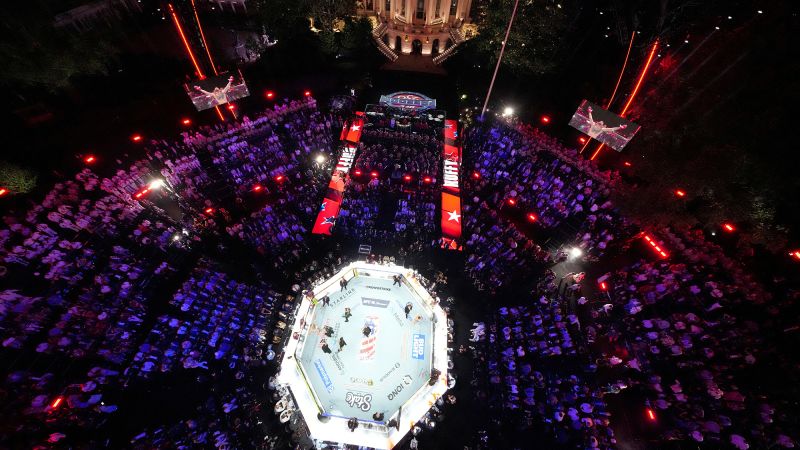
Thwarted attack on UFC fight is another – President Donald Trump’s legal team has increasingly turned to recent security threats to justify the construction of a new White House ballroom, arguing that the project is essential for protecting the nation’s leaders. Federal courts, which have previously expressed doubts about Trump’s claim to unilaterally approve the massive space without congressional consent, now face another layer of justification as the Justice Department leverages a thwarted assault on an outdoor UFC event held at the White House last weekend. The argument, presented in a brief submitted by the DOJ’s civil division, highlights the perceived vulnerability of the current event spaces on the South Lawn and frames the new ballroom as a necessary defense against potential attacks.
Security Concerns as Central to the Ballroom’s Justification
The Department of Justice’s civil division chief, Brett Shumate, emphasized during the submission that the recent near-miss attack “demonstrates the compelling need” for the 90,000-square-foot facility. In his letter to the federal appeals court, Shumate described the ballroom’s design as a shield against future threats, stating it would provide “mass and height” to protect the White House grounds. He also noted that the Secret Service requires enhanced visibility to identify and neutralize attackers, a capability the temporary plastic tents used for outdoor events currently lack.
“The current temporary structures are insufficient to safeguard highly esteemed guests from high-caliber bullets or kamikaze drones,” Shumate wrote. “The new ballroom will serve as a secure, permanent solution to this critical risk.”
The DOJ’s rationale has drawn scrutiny from legal experts and critics, who argue that the attack on the UFC event occurred after the project was already approved. The administration, however, maintains that the threat underscores the urgency of completing the construction, which has faced delays and opposition from lawmakers. The White House Correspondents’ Dinner incident in late April and a separate shooting near the presidential residence last month have been cited as additional examples of the risks posed by open-air events, reinforcing the DOJ’s position that the ballroom is a strategic necessity.
Legal Challenges and Judicial Scrutiny
The case before the DC Circuit Court of Appeals has become a focal point for debates over executive power and federal law. A three-judge panel is expected to rule in the coming weeks on whether Trump’s decision to build the ballroom violates the Constitution or existing statutes. The lower court’s earlier ruling, which halted construction, was based on the premise that the president needed congressional approval for such a significant alteration to the White House. However, the DOJ contends that the project’s security benefits outweigh the need for legislative oversight.
During oral arguments earlier this month, two of the judges appeared skeptical of Trump’s security claims, focusing instead on the legal basis for the project. They questioned whether the president’s authority to construct the ballroom is supported by clear statutory language or if it represents an overreach of executive power. Critics argue that the planned ballroom, while impressive, does not address the specific threats faced at recent events. For instance, the UFC fight at the White House was held in an open area, and the attack on the Correspondents’ Dinner occurred at a hotel in the nation’s capital, not on the presidential grounds.
Historical Context and Congressional Debate
The White House’s event spaces have long relied on temporary structures, which have been criticized for their lack of durability and security. The South Lawn, where many large gatherings take place, has historically used plastic tents that, according to the DOJ, are inadequate for high-risk scenarios. The administration’s legal team has argued that the new ballroom would replace these fragile setups, offering a permanent and fortified alternative. However, opponents, including Democratic lawmakers, have pointed out that the project’s timeline predates the recent security incidents.
Representative Alexandria Ocasio-Cortez, a vocal critic of the ballroom’s construction, highlighted this point in April. “The idea that they are now trying to change the rationale for this in retrospect doesn’t quite add up,” she stated during an interview with CNN’s Manu Raju. “The White House long had facilities for hosting events, including the East Wing, which was demolished to make space for the new ballroom.” Her remarks underscore the argument that Trump’s decision to expand the event space was made long before the alleged threats materialized, raising questions about the timing and motivation behind the DOJ’s security claims.
Constitutional and Statutory Questions Remain
The National Trust for Historic Preservation, which is challenging the ballroom project, has stressed that its legal case is not about the necessity of the facility but about the process of approving it. The organization argues that Trump’s unilateral action to transform the White House without congressional input violates established protocols. “The Constitution and multiple federal statutes require Congress to be involved in major changes to the presidential residence,” the group stated in a May 24 filing. “The threat posed by Saturday’s event does not alter this fundamental requirement.”
Despite the DOJ’s efforts to tie the ballroom to security needs, the administration has faced mounting pressure to justify its claim. The latest arguments, while persuasive in their emphasis on safety, have not fully addressed concerns about the project’s compliance with legal procedures. The federal appeals court’s decision will likely hinge on whether the president’s authority to approve the ballroom is explicitly granted by law or if it constitutes an improper exercise of power. The case has become a symbol of the broader tension between executive action and legislative oversight, with implications for future projects of similar scale.
As the hearing progresses, the DOJ’s reliance on recent violence to justify the ballroom’s construction has drawn mixed reactions. While some lawmakers have echoed the administration’s concerns about security, others remain unconvinced that the project is a direct response to the threats. The White House’s plan to replace temporary event spaces with a permanent, fortified structure has sparked debates about the balance between presidential convenience and public accountability. The outcome of the case could set a precedent for how future expansions or renovations of the executive mansion are approved, further shaping the legal landscape of presidential authority.
Broader Implications for Executive Power
Analysts suggest that the DOJ’s strategy of linking the ballroom project to security threats is part of a larger effort to consolidate executive control over major initiatives. By framing the construction as a national security measure, the administration aims to bypass the need for congressional approval, a tactic that has been used in other instances. However, critics warn that this approach risks undermining the checks and balances that are central to the U.S. government’s structure.
“The White House has always been a hub for events, but the scale of this project is unprecedented,” said a legal expert cited in the article. “The DOJ’s reliance on a single incident to justify such a massive change is a strategic move, but it doesn’t resolve the constitutional questions at hand.” As the court deliberates, the focus will remain on whether the president’s authority to proceed with the ballroom is grounded in law or if it reflects a broader pattern of bypassing legislative processes for political convenience.
The case also highlights the evolving nature of threats to the presidency. While the previous incidents involved gunfire, the latest attempt to attack Trump was reportedly a drone-based plan targeting the UFC event. This shift in tactics underscores the need for adaptable security measures, which the DOJ argues the new ballroom would provide. Yet, the effectiveness of such a facility in preventing future attacks remains a topic of discussion, with some experts questioning whether it addresses the most pressing security risks or merely serves as a political tool.
With the federal appeals court poised to deliver a decision, the fate of the ballroom project hangs in the balance. The ruling will not only determine the validity of Trump’s construction claims but also signal how the executive branch will navigate disputes over presidential authority in the future. Meanwhile, the debate over the project continues to reflect the broader ideological divide between those who prioritize security and those who emphasize the importance of congressional oversight in shaping the nation’s iconic landmarks.
