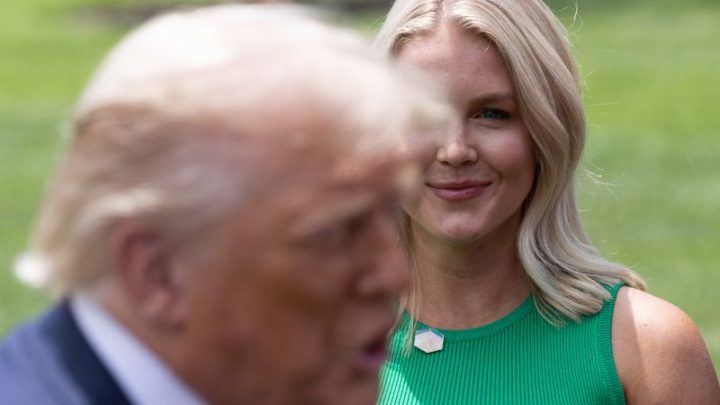
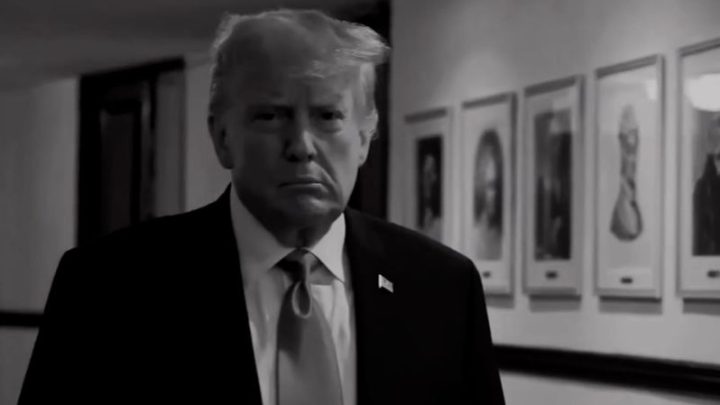
Trump doesn’t seem to care what people want anymore

The Man Who Stopped Asking What Voters Want
Earthguardiansonline.com – A new Reuters-Ipsos survey released this month places Donald Trump’s overall approval at 33 percent — a record-low mark for his second term and a figure that means barely one American in three endorses how he is running the office. More revealing than the headline number, however, is the collapse of what pollsters call “strong approval.” That measure, which captures voters who feel genuine enthusiasm rather than lukewarm tolerance, now sits at 13 percent across the full electorate and at 35 percent even among registered Republicans. In practical terms, roughly one person out of every eight in the country believes the president is doing something truly admirable. The rest of his own party, by that arithmetic, is at best ambivalent.
The trajectory from 2016 to 2026 makes the disconnect harder to explain away. When Trump first swept into office, commentators and campaign strategists alike framed his ascent in populist language: an outsider shaking up a sclerotic establishment, speaking for workers and small towns that felt abandoned by coastal elites. Ten years on, the data suggest that framing has inverted. The president now appears to operate on a logic that places his personal preferences, symbolic gestures, and even private financial interests ahead of whatever the electorate actually wants. And he shows no sign of recalibrating during the final stretch before the November midterms, a period when most officeholders tighten their alignment with voter sentiment.
The Canada Tariff Gambit
Perhaps no recent episode illustrates the pattern more starkly than the president’s threatened imposition of 50 percent tariffs on Canadian goods. A CNN poll conducted earlier this spring found that 65 percent of Americans said existing tariff measures were already hurting their household finances. The initial levies on Canadian imports, introduced last year, were unpopular from day one, with opposition ranging between 60 and 64 percent of respondents. Yet seventy days before the midterm elections, Trump chose to escalate rather than de-escalate, openly courting a full trade confrontation with the nation that supplies roughly half of all U.S. imports.
The theatrics have not stopped at trade policy. On Tuesday, the president threatened to rename Lake Ontario as “Lake America,” a move that echoed his earlier, widely mocked attempt to rebrand the Gulf of Mexico as the “Gulf of America” — a change around two-thirds of Americans opposed. Vice President JD Vance joined the spectacle on Monday by referring to Canada as a “state” and dismissing the slip as a “Freudian” one, a nod to Trump’s recurring suggestion that the northern neighbor should simply become the fifty-first state. A Marquette University Law School poll conducted last year found that 75 percent of Americans rejected that very idea.
Data Centers and the Populist Paradox
If the tariff episode is about foreign policy, the data-center controversy is about domestic economic anxiety — and it exposes an even sharper contradiction. Opposition to new hyperscale computing facilities has become one of the clearest populist issues of the moment. Up to seven in ten Americans say they do not want such installations in their neighborhoods, viewing them as impositions by powerful technology firms rather than community assets. Republican lawmakers across several states have moved to support local moratoriums on new construction.
Trump, by contrast, has embraced the industry with unusual enthusiasm. In recent remarks he described data centers as
“big, strong, bold, and Money Machines”
and separately as
“Cash Cows.”
He urged local communities to welcome the facilities and praised their physical design as
“the most incredible buildings I’ve ever seen.”
He has even turned on fellow Republicans who back moratorium legislation, treating their caution as a failure of ambition. For a politician whose entire brand was built on standing against elite interests, the alignment is difficult to square.
The Affordability Gap
The deeper problem, though, is not merely that Trump pursues unpopular pet projects. It is that he pursues them while sidelining the issues voters say matter most: prices, wages, and the cost of everyday goods. The same Reuters-Ipsos poll that recorded his historic approval low found that only 4 percent of Americans described the economy as “very strong.” Yet the president has repeatedly characterized the current period as an economic “golden age,” a framing that polls show overwhelming majorities find out of touch. Respondents in multiple surveys this year have indicated that they believe the White House is neglecting inflation and household affordability in favor of symbolic and personal priorities.
What Comes Next
The midterm elections of November 2026 will therefore function as something close to a referendum on a question most presidents never force on their voters: what happens when the person in the Oval Office stops even performing interest in public opinion and instead executes a program that large swaths of his own coalition find uncomfortable? The 33 percent approval figure, the 13 percent strong-approval figure, and the steady erosion of Republican enthusiasm together suggest that the answer may be written in the ballot boxes. Whether partisanship proves strong enough to override that arithmetic remains the central variable of the coming campaign.
Related Reading
Frequently Asked Questions
What is Trump doesn t seem to care?
Trump doesn t seem to care is the main topic of this guide. The article explains the context, practical details, and next steps readers should understand.
Why does Trump doesn t seem to care matter?
Trump doesn t seem to care matters because readers are looking for a useful answer, not just a short summary. Good content should match search intent and help them decide what to do next.