
Two states are the top contenders for the first spot on Democrats’ 2028 primary calendar
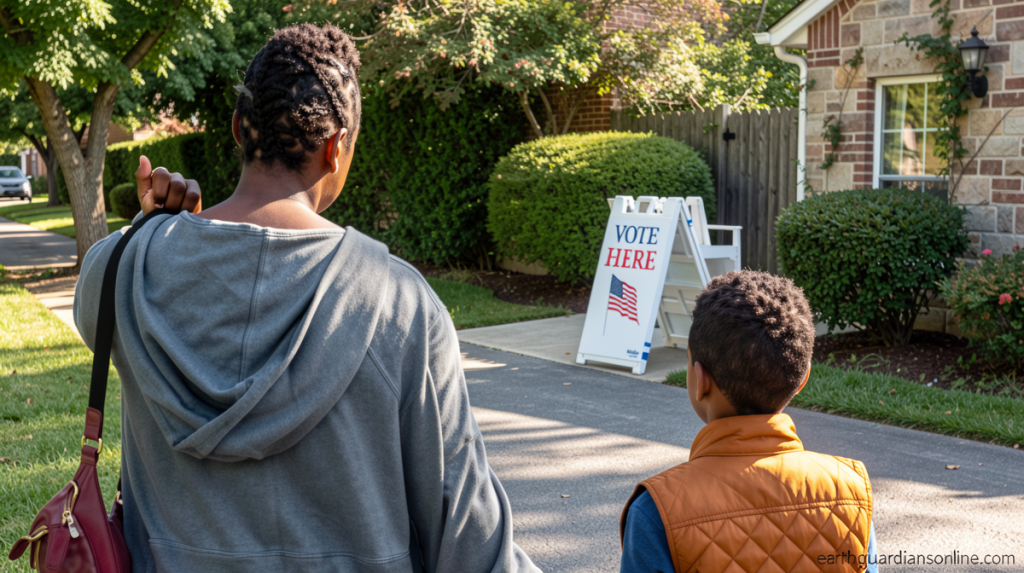
Early Primary Battle: Nevada and South Carolina Vie for 2028 Democratic Calendar Leadership
Earthguardiansonline.com – As the Democratic National Committee prepares for its upcoming deliberations, two states have emerged as the frontrunners to claim the prestigious opening position on the 2028 presidential primary calendar. According to insiders familiar with the process, Nevada and South Carolina are locked in a tight contest, with one Rules and Bylaws Committee member describing the situation as essentially a coin toss between the two contenders.
The Committee’s Deliberations
The powerful panel responsible for shaping the primary schedule is convening in the nation’s capital this week to finalize its recommendations. After months of intense lobbying from various states eager to secure prime positioning, the committee will soon present its findings to the full DNC for consideration, potentially as early as next month. The goal is to identify up to five states that will comprise the crucial early primary window.
“I have to say at this point it’s probably 50-50,” one anonymous RBC member revealed regarding the Nevada-South Carolina matchup. “This is going to be a tough one.”
Two Distinct Scenarios Emerge
Committee discussions have crystallized around two potential configurations that would balance representation among states with significant Black and Latino voter populations. Under the first proposal, Nevada would take the lead, followed by South Carolina, Michigan, New Hampshire, and what appears likely to be Virginia as the fifth state.
The alternative scenario places South Carolina at the forefront, with Nevada, New Mexico, Michigan, and New Hampshire completing the early slate. Notably, New Mexico’s inclusion in this arrangement serves a strategic purpose. Moving the state—which boasts a substantial Latino demographic—into the early window would function as a meaningful acknowledgment for Latino voters who might otherwise feel underrepresented if Nevada claimed the top position.
“I think that a lot of people are thinking about that kind of counterweight,” the RBC member explained regarding New Mexico’s potential role.
Nevada’s Case for Primacy
Supporters of Nevada’s candidacy emphasize the state’s remarkable diversity, robust labor movement, and reputation as a competitive electoral battleground. Daniele Monroe-Moreno, chair of the Nevada Democratic Party, articulated the strategic importance of this decision.
“If Nevada goes first, it’s a strategic decision for our party as we work to build a coalition that we know we need to build to win back the White House in 2028,” she told CNN. “Nevada is that proving ground for national candidates, period.”
Nevada’s advocates stress that their state offers more than just a large Latino voting bloc. The population encompasses Black, Asian American, Pacific Islander, Native American, and White working-class communities, creating a microcosm of America’s evolving electorate.
“We’ve been clear at every step, this is about reaching a broad coalition of diverse voters, not elevating or prioritizing any voice over another,” Nevada Senator Catherine Cortez Masto and Representative Steven Horsford wrote in their correspondence to RBC members.
South Carolina’s Historical Advantage
South Carolina’s bid for the opening slot carries significant historical weight. Former President Joe Biden personally advocated for moving the state to the front of the line during the 2024 cycle. Proponents argue that maintaining this position honors the state’s legacy of selecting eventual Democratic nominees, most notably when Biden’s South Carolina victory revitalized his campaign in 2020.
“We’ve just been telling the history of South Carolina in this process, how our voters have always gotten it right,” Christale Spain, the South Carolina Democratic Party chair and RBC member, emphasized.
Beyond electoral history, South Carolina’s advocates highlight ongoing challenges facing Black voters. Republican-led initiatives—including an unprecedented mid-cycle redistricting effort and the Supreme Court’s Callais decision that weakened Voting Rights Act protections—have intensified concerns about Black electoral power.
Uncertainty Remains
While Nevada and South Carolina dominate the conversation for the top two positions, the complete slate remains fluid. One RBC member noted that “there are about a billion computations out there,” suggesting numerous possible combinations. Additional sources indicate that Virginia and New Mexico are likely battling for the fifth and final early window slot.
This evolving landscape reflects a broader shift in Democratic primary strategy. For decades, Iowa and New Hampshire traditionally led the nominating process. However, Democrats have increasingly recognized the value of diversity and representation, requiring states to apply for early window positions each cycle rather than relying on automatic qualification.
