
US aircraft carrier returns home after record deployment that included Iran war, Maduro capture
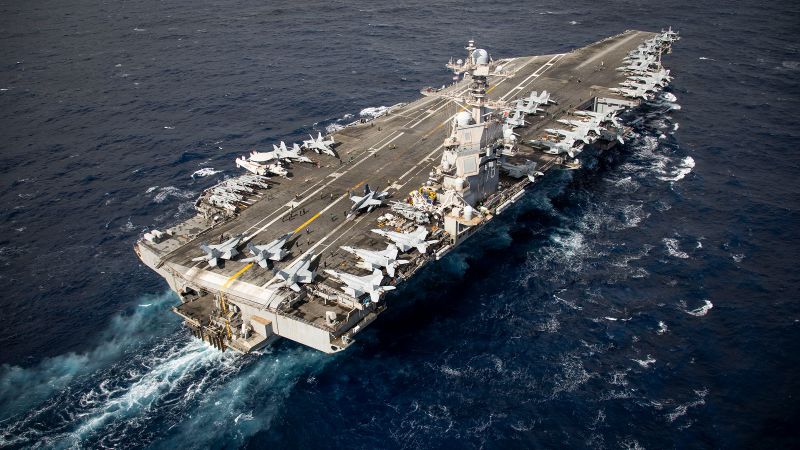
US Aircraft Carrier Returns Home After 11-Month Deployment
US aircraft carrier returns home after – The US aircraft carrier returns home after an unprecedented 11-month deployment, marking a historic chapter in naval operations. The USS Gerald R. Ford, the U.S. Navy’s most advanced carrier, anchored back in Virginia on Saturday, concluding its long mission that spanned the Iranian conflict and the capture of former Venezuelan President Nicolás Maduro. This extended operation, the longest since the Vietnam War era, tested the ship’s capabilities and the dedication of its crew. The return offered a sense of closure for sailors and their families, who endured the complexities of prolonged service during a turbulent period in global geopolitics.
A Record-Breaking Operational Stretch
Traditionally, aircraft carriers operate for six to seven months at sea, but the Ford’s deployment exceeded expectations, lasting over 11 months. This record-breaking timeframe was crucial for executing a series of strategic objectives, including the ongoing war with Iran and the joint mission to apprehend Maduro. Despite the ship’s advanced technology and state-of-the-art design, the extended time at sea introduced unique challenges. Defense Secretary Pete Hegseth praised the deployment as “exceptional, phenomenal,” highlighting the Ford’s role in reinforcing U.S. foreign policy goals through its mobility and firepower.
The Ford’s journey was punctuated by critical events that underscored its importance. In the Middle East, it supported operations against Iran, demonstrating the carrier’s ability to project power across vast distances. Meanwhile, in Venezuela, the ship played a pivotal role in the mission to capture Maduro, showcasing its adaptability to diverse missions. These high-stakes operations, however, came with logistical hurdles, including a laundry fire that disrupted daily routines for weeks. The incident highlighted the demands of maintaining a complex fleet over such a prolonged period.
Impact on Crew and Families
For the crew, the return of the US aircraft carrier after its 11-month mission symbolized the end of a grueling chapter. Adm. Daryl Caudle, the carrier strike group commander, acknowledged the toll of extended deployments, noting that the Ford’s time at sea surpassed its design limits. “We really want to deploy our ships for the length of time they’re designed to,” he said, reflecting on the balance between operational necessity and crew well-being. The challenges faced by the Ford’s personnel, from technical issues to the psychological strain of long missions, were emblematic of the broader strain on naval families.
Families of the sailors also experienced the end of a significant chapter. Victoria Dobson, a Navy wife, shared her relief at the return of the US aircraft carrier, emphasizing how the deployment affected her life. “I’m very relieved,” she said, recounting the difficulties of single parenting while her husband was away. The extended time at sea meant adjusting to life without regular visits, a challenge many families faced. The Ford’s return allowed for a much-needed respite, enabling sailors to reunite with loved ones and recalibrate for future missions.
Adm. Caudle also highlighted the ship’s resilience during the mission. Even after the laundry fire and other incidents, the Ford’s crew remained committed, adapting to unexpected challenges. “The crew did a great job,” he said, acknowledging their ability to sustain operations despite the wear and tear of an extended deployment. The carrier’s role as a mobile command center further amplified its responsibilities, ensuring it could respond to crises in multiple regions simultaneously.
Legacy of the Deployment
The US aircraft carrier’s extended deployment left a lasting impact on military strategy and international relations. Its presence in both the Middle East and South America served as a visible symbol of U.S. commitment to global stability. The mission’s success, including the capture of Maduro and the support for Iran operations, underscored the carrier’s strategic value. However, the experience also prompted discussions about the sustainability of such long missions. While the Ford’s advanced systems aided in maintaining operations, the deployment raised questions about the Navy’s readiness for future extended assignments.
As the US aircraft carrier docks in Virginia, its journey stands as a testament to the resilience of its crew and the adaptability of modern naval operations. The mission’s blend of combat, diplomacy, and logistics showcased the versatility of the carrier in today’s dynamic international landscape. With its return, the Ford now
