Why Ossoff’s savage lampooning of Trump is taking off

Daftar Isi
From Fear to Farce: How Democrats Are Betting Their Midterm Strategy on Mocking Trump
Earthguardiansonline.com – For years, the Democratic Party’s playbook against Donald Trump centered on alarm. The president was framed as an authoritarian figure bent on dismantling American institutions, a tyrant-king building a one-party state brick by brick. That narrative dominated campaign ads, op-eds, and floor speeches through two election cycles. Now, with less than two months until the November midterms and Trump’s approval ratings pinned at historic lows, the party is pivoting toward something sharper and stranger: sustained ridicule. The new pitch casts the president not as a looming dictator but as a fading, self-absorbed figure whose excesses are consuming the country around him — a modern Nero fiddling while Rome catches fire.
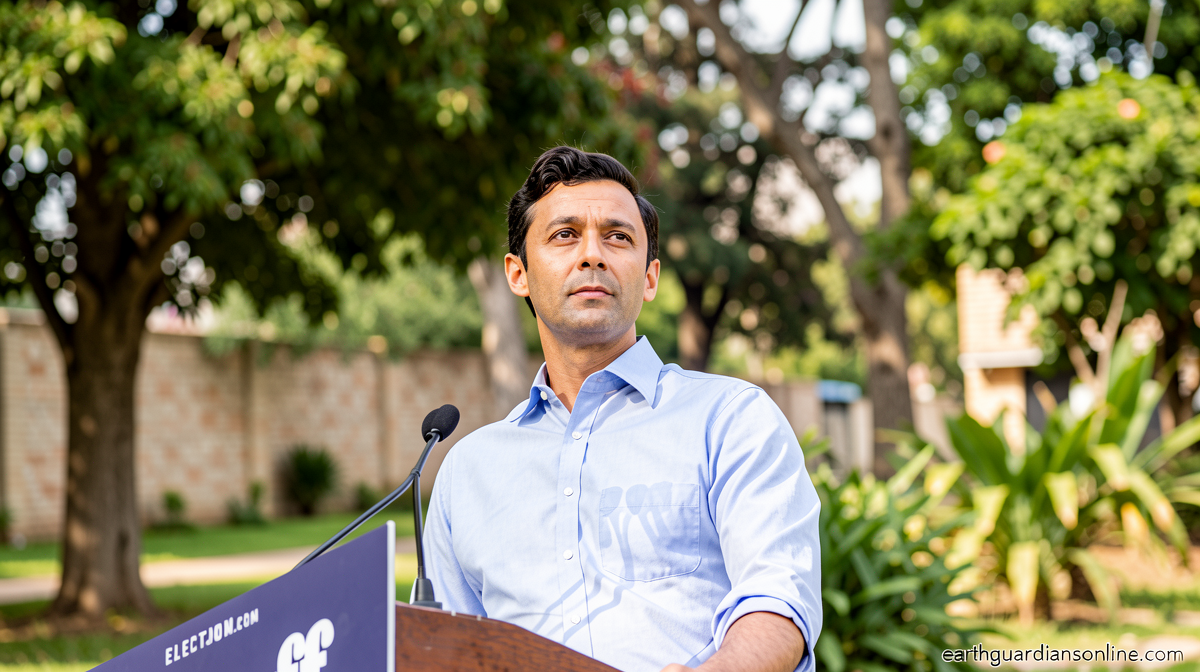
At the vanguard of this tonal shift sits Georgia Senator Jon Ossoff, whose razor-edged barbs have transformed what should be a routine state-level reelection contest into something resembling a national audition for the 2028 Democratic ticket. Ossoff’s latest salvo landed on a Tuesday, when he labeled the president
“a draft-dodging, crook president who has plunged our nation recklessly into a war he knows not how to end or to win.”
The remark was pointed, personal, and deliberately inflammatory — hallmarks of a politician testing how far he can push before the backlash outweighs the gain. It also set up a chain reaction that unfolded over the following days and revealed both the promise and the peril of the mockery strategy.
The Natalie Harp Flashpoint
Ossoff went further than most predecessors by dragging a third party into the crosshairs: Natalie Harp, a senior White House aide whose constant proximity to the president has made her a recurring target of partisan snark. By naming Harp explicitly, Ossoff accepted the risk of being accused of bullying a subordinate rather than simply lampooning the commander. The payoff, at least temporarily, was a visible loss of composure from Trump himself. At a Monday event, when pressed on the Ossoff jab, the president snapped back, comparing the senator to Pee Wee Herman — a 1980s comedy persona whose association with Ossoff landed forty years behind the cultural moment. The image of a sitting president reaching for a Paul Reubens reference to defend himself against a state senator did not project youthful vigor. It projected, arguably, the very brittleness Democrats hope to expose.
The White House responded with a furious pushback, and conservative commentators — many of whom have long tolerated Trump’s occasionally misogynistic remarks about aides and women — joined in condemnation. The episode demonstrated that targeted mockery can force the president into reactive territory, where his responses become the story rather than his policy.
A Pattern, Not an Outlier
Ossoff is not operating in isolation. Illinois Governor JB Pritzker spent last year tweaking the president’s self-image with the observation that
“he cheats on his wives, he cheats at golf.”
California Governor Gavin Newsom has turned his social media accounts into a running parody of Trump’s online persona, mimicking the all-caps cadence and grandiose self-aggrandizement. One post from last year declared:
“MANY ARE SAYING HE CAN’T EVEN DO THE ‘BIG STAIRS’ ON AIR FORCE ONE ANYMORE.”
The tactic is recognizably Trumpian in origin — picking out foils, amplifying absurdity, turning every interaction into spectacle. Democrats are, in effect, adopting the president’s own rhetorical grammar and turning it back on him. The question is whether that borrowed energy translates into electoral damage or merely into partisan entertainment.
What Mockery Achieved in 2024 — and What It Didn’t
The historical record offers a cautionary tale. At the 2024 Democratic National Convention, former President Barack Obama took aim at the president’s
“childish nicknames, the crazy conspiracy theories, this weird obsession with crowd sizes.”
Democratic vice-presidential nominee Tim Walz gained brief traction by mocking Trump’s appearance at a McDonald’s drive-thru to collect fries and by describing MAGA loyalists as “weird.” Both moments generated clip-able content and short-term polling bumps among partisans. Yet Trump won back the White House anyway. The decisive variable in that contest was not the president’s absurdities but the catastrophic decision by a fading Joe Biden to seek reelection, followed by an unconvincing ticket pairing with Vice President Kamala Harris. Derision, in other words, did not save the party when the fundamentals were broken.
Why the Calculus May Differ Now
Two years ago, Trump was mid-comeback — the greatest political resurrection in modern history — projecting invincibility after surviving an assassination attempt. The atmospherics have shifted. His first year back in office produced a relentless accumulation of executive power that lent credibility to earlier Democratic warnings about a would-be strongman. Simultaneously, his struggles against Iran, his dismissal of affordability anxieties felt by millions of households, and the spectacle of his legacy-building construction projects have created openings that even a clumsy opposition might exploit.
If sustained ridicule can puncture the mystique Trump has cultivated — the aura of the unassailable strongman — and replace it with an image of a brittle, diminished figure dozing through Oval Office briefings, his political woes could compound faster than policy alone would allow. A wartime commander-in-chief appearing to lose consciousness at a podium is not merely a bad look; it is a perception of weakness that invites further challenge.
The Risk of Piling On
Yet the strategy carries its own hazards. Trump remains a feral political street fighter, and those who join him in the gutter typically get roughed up. Every jab risks a counterpunch that reframes the narrative, every parody risks being dismissed as partisan theater by undecided voters. The age of stunt politics may also be waning; voters fatigued by spectacle may tune out precisely the moments Democrats hope will define the news cycle.
With midterms approaching and the party’s credibility still scarred by 2024, the question is not whether mockery can energize the base or drum up campaign dollars — it plainly can. The harder question is whether merciless lampooning, deployed two years into a second term, can do genuine structural damage to a president who has already consolidated power and whose vulnerabilities are now visible to anyone willing to look. Ossoff and his allies are betting that the answer is yes. The next two months will tell.
Related Reading
Frequently Asked Questions
What is Why Ossoff s savage lampooning of Trump?
Why Ossoff s savage lampooning of Trump is the main topic of this guide. The article explains the context, practical details, and next steps readers should understand.
Why does Why Ossoff s savage lampooning of Trump matter?
Why Ossoff s savage lampooning of Trump matters because readers are looking for a useful answer, not just a short summary. Good content should match search intent and help them decide what to do next.