
Everything you need to know about the World Cup final
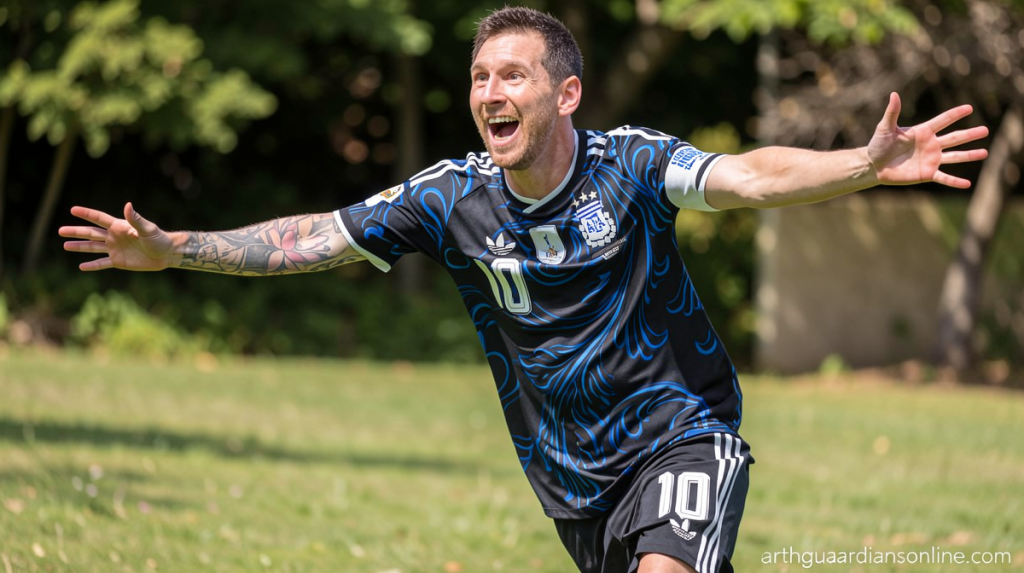
Spain and Argentina Set for Epic World Cup Showdown
Everything you need to know about – This feature originally ran in The Beautiful Game, CNN Sports’ comprehensive daily newsletter covering every aspect of the World Cup. Readers can subscribe by clicking the provided link.
Yesterday’s semifinal delivered pure drama on the pitch. While England suffered crushing disappointment, Argentina celebrated with unbridled joy after staging yet another dramatic late comeback to book their spot in the championship match. England’s managers will likely rue their tactical approach during the second period, which provided the defending champions with exactly the momentum they required. Once again, Lionel Messi emerged as the decisive factor.
A Clash of Contrasting Styles
After 102 matches across the tournament, we now know which two nations will contest Sunday’s grand finale. Spain faces Argentina in what promises to be a fascinating encounter between two fundamentally different approaches to the game. Lamine Yamal will square off against Lionel Messi in a generational matchup that captures the imagination.
Consider how distinct these teams appear. Spain operates as the ultimate possession specialists. They execute elegant football with confidence, maintaining control through beautiful sequences of play that systematically dismantle opponents. Argentina, by contrast, represents a fierce, passionate force. The Albiceleste often place aggression above their technical brilliance, excelling at the rougher aspects of the game through late challenges and intimidation tactics.
Both approaches have proven effective throughout this tournament, setting up what may be the most predictable World Cup final in history. There is no ambiguity regarding how each side will approach the contest. La Roja will control territory, attempting to pass Argentina into submission while exploiting any moments of inattention. Rodri will orchestrate this dominance from midfield, a player exceptional enough to dictate the game’s tempo single-handedly.
The Political Dimension
What adds intrigue to Argentina’s strategy is that they know it works. Against England yesterday, their players relentlessly targeted the opposition’s key figures, disrupting rhythm and composure. England appeared subdued and overwhelmed by the second half, creating space for Messi to perform his magic. Argentina has every reason to maintain this approach.
Meanwhile, a political development emerged from the celebrations. Players unfurled a simple banner on what looked like a white bedsheet bearing the message: “LAS MALVINAS SON ARGENTINAS,” translating to “The Malvinas (The Falklands) are Argentine.” CNN Sports observed midfielder Giovani Lo Celso and center-back Lisandro Martínez holding the banner before it was crumpled and then placed back on the pitch.
The banner’s origin remains unclear, though photographs indicate it was displayed in the stands alongside supporters after the match. This represents a direct political statement regarding the British-administered Falklands Islands, a longstanding point of contention between the United Kingdom and Argentina. Diplomatic friction dates back to the eighteenth and nineteenth centuries but escalated dramatically in 1982 when both nations engaged in armed conflict over the South Atlantic territory, located approximately 300 miles east of South America’s northern tip.
Trophy Experience and Balanced Expectations
Predicting the outcome proves difficult given both squads’ pedigree. Spain currently holds the European championship title, while Argentina has claimed three consecutive major international honors—including the previous World Cup—with many of the same players now representing the nation.
Both teams have developed strong chemistry as units, and their managers possess the tactical acumen to navigate high-pressure situations. While Messi frequently determines Argentina’s fortunes, Spain relies on Lamine Yamal, widely regarded as the natural successor to the Argentine legend’s throne.
The final’s equilibrium is remarkable. Even someone with a broken heart as an England supporter cannot resist feeling anticipation for what lies ahead.
In an unrelated development, New York Mayor Zohran Mamdani toured Rikers Island correctional facility, where incarcerated individuals gathered to watch England compete against Argentina during the World Cup semifinal. The 74-day conflict in 1982 began when Argentina’s military government deployed an invasion force to the islands, establishing a precedent for international sporting events to intersect with broader geopolitical narratives.
