What it’s like to live with – and lose – a loved one with CTE

Daftar Isi
The Invisible Wound: One Family’s Decade-Long Confrontation with CTE
Earthguardiansonline.com – Every few years, a headline lands that sends shockwaves through American sports culture. Researchers announce that roughly one in four former NFL players who died between 2016 and 2021 carried chronic traumatic encephalopathy in their brains. The public reacts, debates, and then, within days, scrolls past. For most households, CTE remains an abstraction — a condition that belongs to other people’s living rooms, other people’s grief. After all, only about .023% of high school football players ever record a single snap in the NFL. The disease feels remote, statistical, someone else’s burden.
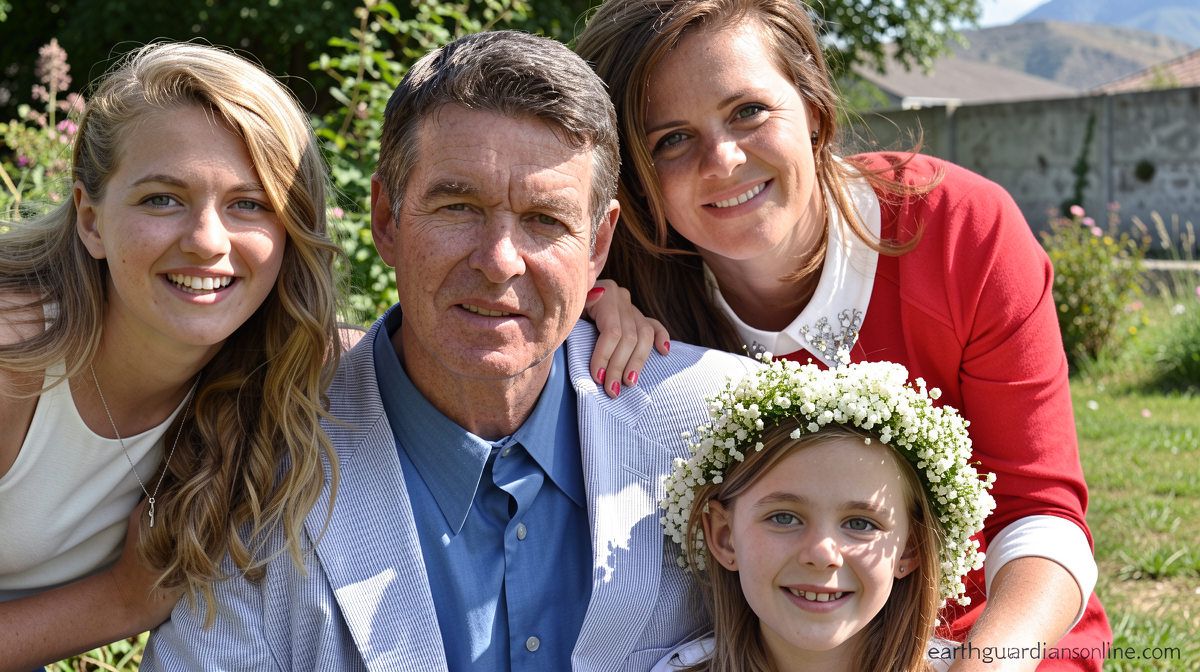
For Maura Horton, it was never remote. It was her husband. It was the father of her two daughters, Hadley and Libby. It was the man she had planned to grow old beside — the man whose absence turned every ordinary evening into an unrecognizable landscape.
A Misdiagnosis That Cost Years
Don Horton was a devoted fitness enthusiast, a man who treated his body with the same discipline he once brought to the gridiron. When he began struggling to lift weights, when his movements grew unsteady, doctors pointed to Parkinson’s Disease. Maura recalls the casual reassurance that followed: of all neurological conditions, this one was supposedly the most manageable. People invoked Michael J. Fox as proof.
“Michael J. Fox,” she said. “Everyone brought up Michael J. Fox.”
The reality diverged sharply from that tidy narrative. One afternoon Don would be in the gym completing a full workout; the next morning he would collapse on the floor for no apparent reason. Mood swings erupted without warning. Sleep became fractured and fitful. Paranoia crept in, followed by outright hallucinations. Maura initially blamed the medications, then became what she calls her husband’s “self-appointed pit bull,” storming into every physician’s office with a barrage of questions. She researched independently, and as the deterioration accelerated, a question she had avoided began to take shape: what if this was CTE?
A Life Woven Into the Game
Don never played in the NFL. He was an offensive lineman at Wittenberg University, a Division III program in Springfield, Ohio, that has collected five national championships and 799 victories over its history. It is a school so far outside the national spotlight that only die-hard football loyalists would recognize its name. He is, therefore, not a data point in the latest NFL brain study. And yet he died in May 2016, and a postmortem examination of his brain confirmed the diagnosis his family had quietly accepted long before his passing.
Football was not merely what Don did; it was who he was. The moment his playing days ended, he pivoted into coaching, beginning a peripatetic career that carried him through stops in Ohio, New Mexico, and Virginia. In 1997 he landed a position as offensive line coach at Boston College, where he spent a decade with the Eagles before concluding his career at N.C. State. The game had shaped his identity so thoroughly that the suggestion of brain donation — offered by Maura after she reached out directly to Chris Nowinski, co-founder of the Boston-based Concussion Legacy Foundation — struck him as an unbearable admission. Here was a man who had eschewed junk food, who hit the gym with religious regularity, being told that a decision made as a teenager had sealed a trajectory no amount of discipline could reverse.
He balked. The conversation stung, because it implied that nothing he had done afterward — no workout, no dietary choice, no coaching decision — could alter the outcome. The game had already written the ending.
The Earthquake That Never Stops
Maura had modeled her marriage on her own parents’ sixty-plus years of partnership. She had envisioned decades in the stands watching Hadley play soccer, watching Libby channel her analytical mathematics mind into a demanding career. She had imagined extraordinary walks down wedding aisles and ordinary walks around the neighborhood. She had planned to grow old and creaky alongside Don. Every one of those futures was rerouted, then annihilated, by a condition that had been accumulating silently in his brain for years.
“I’m always thankful that the reports are published and the research is ongoing,” Maura said. “But there is still so much missing. I want to be a conduit that helps open a dialogue to understanding. No one sees the aftermath. No one understands what it’s like on a day-to-day basis. You see these studies and then no one talks about it again until someone dies.”
“But this is an earthquake that shattered my family, and no one understands how shattering it is. I’m 10 years past and it’s still shattering us.”
The Gap Between the Statistic and the Living
The chasm Maura wants closed is not between NFL stars and everyday athletes, though that divide matters. It is deeper: the gap between a cause identified in a lab and a diagnosis delivered in a living room. Between a study published in a journal and a wife sitting in a hospital corridor at 3 a.m., wondering whether the paranoia is the disease or the medication. Between the public’s brief, seasonal outrage and the private, permanent restructuring of a family’s entire future.
Don Horton’s story underscores what the statistics cannot convey. A Division III lineman, decades removed from the sport, dies at 58 with CTE confirmed only after death. His coaching career spanned three states and two major programs. His daughters grew up watching him lift weights, then watching him fall. His wife spent a decade navigating a medical system that first handed her a Parkinson’s label and then offered no clear roadmap forward. The condition that researchers quantify in percentages and p-values was, for the Horton household, a slow-motion demolition of every plan they had ever made together.
The research continues. The headlines will come again. And in the interim, families like Maura’s carry the weight of what no study can measure: the daily texture of loss, the unanswered questions, and the quiet, persistent aftershock of an earthquake that never fully stops.
Related Reading
Frequently Asked Questions
What is What it s like to live?
What it s like to live is the main topic of this guide. The article explains the context, practical details, and next steps readers should understand.
Why does What it s like to live matter?
What it s like to live matters because readers are looking for a useful answer, not just a short summary. Good content should match search intent and help them decide what to do next.