
Gerry Adams ‘directly responsible’ for bomb decisions, High Court told
Gerry Adams ‘directly responsible’ for bomb decisions, High Court told
The High Court has heard that Gerry Adams was directly responsible for and complicit in the Provisional IRA’s decisions to detonate bombs on the British mainland. Three individuals, all victims of IRA attacks, are seeking legal action against the former Sinn Fein leader, aiming to claim a symbolic £1 in damages.
John Clark, Jonathan Ganesh, and Barry Laycock—survivors of bombings in 1973 and 1996—allege Adams held a senior position within the organization during those incidents, including on its Army Council. They assert he was instrumental in the choices leading to the explosions, though Adams denies any involvement with the IRA and contests the claims.
“The defendant carefully draws a distinction between being a member of ‘the Army’ and Sinn Fein,” said Anne Studd KC, representing the claimants. “In reality, the evidence will demonstrate this was not a clear either/or choice. For many individuals, including Mr Adams, the distinction is without a difference.”
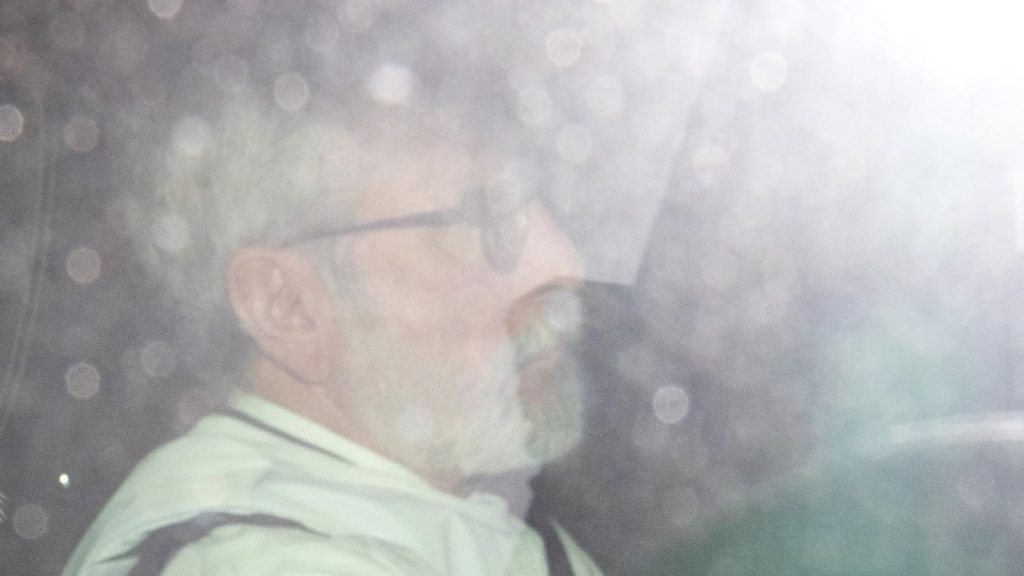
Adams arrived at the Royal Courts of Justice in London on Monday, wearing a bullet-proof vest, and was escorted to the car park. The trial, presided over by Mr Justice Swift, is anticipated to conclude soon. The claimants’ case hinges on proving Adams’ involvement “in the course of that conflict” and his responsibility for the bombings on the balance of probabilities.
“The defendant’s alleged factual and legal responsibility for the claimants’ injuries is strongly contested,” Edward Craven KC noted. “The claimants’ ability to pursue these claims decades after the limitation period has expired is also in question. There is no shortage of people with an axe to grind who seek to discredit the former Sinn Fein leader.”
Craven emphasized that Adams played a key role in the peace process, culminating in the Good Friday Agreement of 1998, which ended the conflict. He argued British officials, RUC members, and other republicans opposed to the agreement had motives to undermine Adams’ reputation. The case will now proceed to determine whether Adams’ actions align with the evidence presented.
