
Iran war: What has been hit so far – and the military assets in play
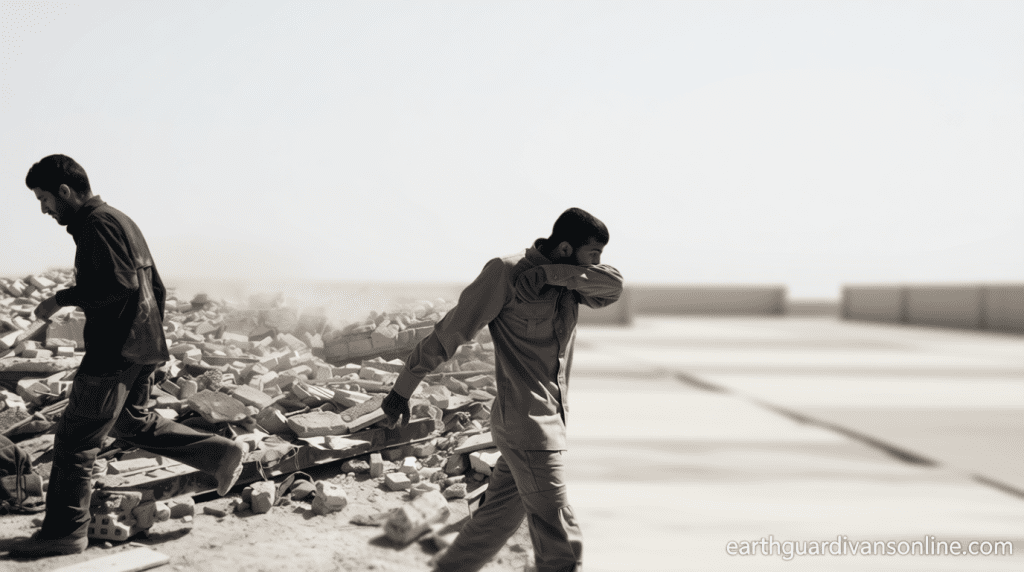
Iran War: Assessing the Damage and Military Assets in Play
Hostilities between the US and Iran have continued for four consecutive days, with strikes targeting the country’s leadership and infrastructure. Israel’s involvement escalated the conflict, marking a significant escalation in the region’s military actions.
Operation Epic Fury and Israeli Strikes
The US launched an operation named “Epic Fury” on Saturday, striking key locations in Tehran and eliminating Ayatollah Ali Khamenei, Iran’s supreme leader. Israel followed suit, conducting over 100 air raids in three days that claimed multiple high-ranking Iranian military figures.
“Preliminary analysis reveals the US and Israel deployed a mix of precision-guided weapons, including air-launched ballistic missiles and various bomb types, to strike Iranian targets,” stated Nic Jenzen Jones, director of Armament Research Services (ARES).
Additionally, surface-to-surface missiles, such as the Tomahawk series and the Precision Strike Missile (PrSm), were also utilized, highlighting the diversity of military assets in the conflict.
Iran’s Retaliation and Regional Targets
Iran has responded with counterstrikes, using drones and missiles to attack Israel, the United Arab Emirates, Bahrain, Jordan, Oman, and Qatar. The UK’s military presence in Cyprus was also targeted, with six service members confirmed killed and the RAF base at Akrotiri damaged.
The attack on the UK’s base served as a showcase of Iran’s offensive capabilities. Analysts noted that Iran’s Sajjil missile, which can reach up to 2,000km (1,240 miles), is capable of targeting Moscow or Athens but lacks the range to threaten the UK directly.
Military Base Movements and Strategic Significance
Sky News has analyzed the deployment of US and UK airbases in the Middle East and Europe, tracking the movement of over 47 military cargo and refueling aircraft. At least 15 of these planes transited through British bases, including four that passed through Diego Garcia in the Indian Ocean.
Analysts from Jane’s Defence Weekly highlighted the strategic importance of the US-UK base, noting that it has become a focal point amid the conflict. Sir Keir Starmer initially resisted allowing the base to be used for attacks on Tehran, a decision that drew attention from former President Donald Trump, who criticized the UK’s plan to transfer control of the Chagos Islands to Mauritius.
Satellite images captured on Sunday showed 14 planes stationed near the runway, featuring six F-16 fighter jets and two P-8 Poseidon surveillance aircraft. The rest included transport planes like the C-5 Galaxy and KC-135 Stratotankers, though the UK does not operate these models.
Shifts in Air Traffic and Bases
Recent flight data reveals a redistribution of US air traffic, with bases in Germany experiencing a net loss of 52 aircraft over the past month. Spangdahlem and Ramstein saw 161 landings, while 246 planes departed, indicating a strategic withdrawal.
Similarly, Al Udeid Air Base in Qatar faced a decline in aircraft numbers, with more planes leaving than arriving. The base was anticipated as a potential Iranian target. In contrast, bases in Kuwait, Israel, and Jordan have seen increased activity, suggesting a repositioning of military assets.
Damage at Iranian Naval Facilities
Satellite imagery highlights the impact of recent strikes on two Iranian naval bases. A fire was observed at Bandar Abbas, the main naval headquarters, which controls access to the Strait of Hormuz. Another vessel, the Makran, was also seen burning, a critical floating base for Iran’s maritime operations.
The Makran is one of six Iranian ships tracked by Sky News, located near Qeshm Island in the Strait of Hormuz. The extent of damage to the ship remains unclear, but its inoperability could weaken Iran’s naval capabilities significantly.
