
Police to use Thames to separate protesters at Al Quds protest
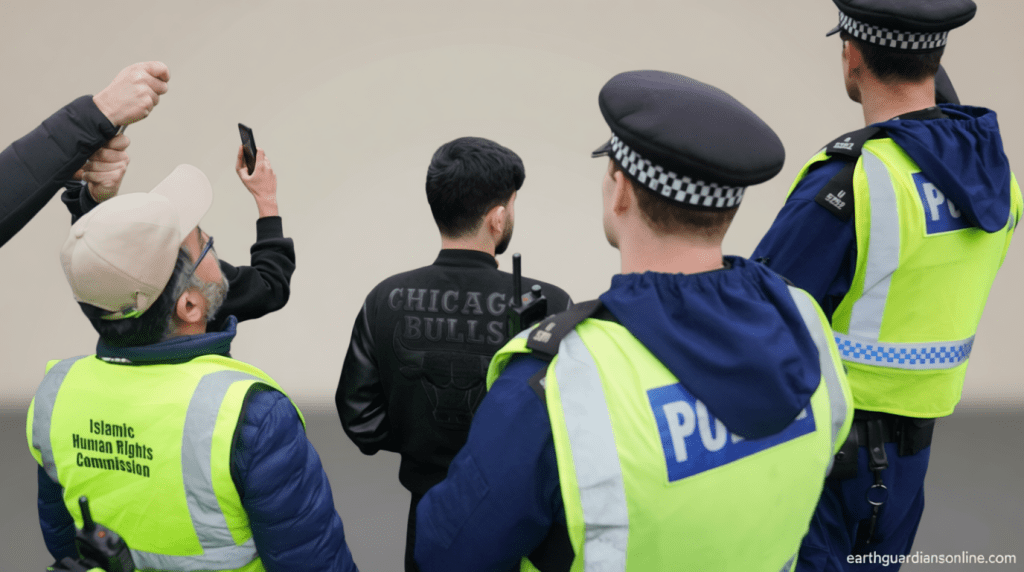
London Police Deploy Thames as Protest Separator at Al Quds Rally
To manage the clash between demonstrators and their opponents at the Al Quds Day rally in central London on Sunday, police have decided to employ the River Thames as a physical barrier.
Earlier this week, the Metropolitan Police secured approval from Home Secretary Shabana Mahmood to prohibit a march to the Home Office, citing concerns over potential severe public disturbances as the reason.
According to the Metropolitan Police, the Islamic Human Rights Commission (IHRC), which organizes the event, is aligned with the Iranian regime. This marks the first instance of a protest march being blocked by the Met in over a decade.
In response, the IHRC asserted that a ‘static’ demonstration will proceed, arguing the ban represents a ‘politically motivated choice’. They emphasized that the event remains a peaceful gathering advocating for Palestinian causes.
During a Thursday briefing, Assistant Commissioner Ade Adelekan highlighted that utilizing the Thames as a divider between conflicting groups constitutes a ‘novel tailored strategy’ aimed at addressing the specific challenges posed by the Al Quds rally.
The Metropolitan Police anticipate a minimum of 6,000 attendees at the Al Quds protest, alongside 6,000 counter-protesters. However, they cautioned that the actual turnout could exceed these estimates, influenced by heightened tensions in the Middle East.
Participants in the Al Quds march will gather along Albert Embankment south of the Thames, with counter-protesters confined to the Millbank area. Traffic will be restricted on Lambeth and Vauxhall Bridges to emergency vehicles only.
Over 1,000 officers, including members from community units and other agencies, will oversee the event. Enhanced security will also be implemented in other sensitive locations across London, such as Jewish community hubs.
Adelekan instructed ground staff to ‘respond promptly’ to any incidents involving symbols, banners, and vocal expressions.
The ban and security measures ‘do not entirely eliminate the disorder risk’, Adelekan said, but will significantly simplify the task of monitoring the protest.
The assistant commissioner reiterated a ‘zero tolerance stance’ against hate crimes, with arrests possible for individuals endorsing banned groups.
The Met explained that their decision to request the ban considered the rally’s history, existing community disputes, and an ‘intelligence shortfall’, among other considerations.
Al Quds Day originated following the 1979 Iranian Revolution and typically occurs on the final Friday of Ramadan. Global marches are held annually, with the IHRC characterizing the event as a show of solidarity with Palestine.
